JamzNG Latest News, Gist, Entertainment in Nigeria
While my country is established, Great Britain, its western allies and their companies should deepen this partnership.
While the ghosts of the 1930s persecute the global perspectives, the scramble for commercial agreements seized the control of government agenda. The United States exploited his “tariff war” to guarantee better conditions, pushing both friends and enemies to the negotiation table. British affairs with the United States and India have provided some refuge with a prevalent darkness.
Less reported – but with a similar potential – was the signature by last year of the improved and commercial partnership company and of the investments between the United Kingdom and Nigeria, the first agreement of the first with an African nation. Quiet upon his arrival, the pact could still echo stronger.
As someone who has built multinational activities throughout Africa, I know the vast opportunity that the continent offers, and in particular Nigeria, which alone represents a fifth of 1.2 billion people from sub-Saharan Africa. But I also understand the limits that we have often placed on ourselves when it comes to guaranteeing investments.
Lowering the barriers to trade is crucial and for that ethip of Great Britain it seems prescient. However, investments and corporate potential will remain discounted as long as African nations cling to state intervention – from subsidies and price controls to distortions of the exchange rate, all that have constantly raised dysfunction and economic instability. Fortunately, Nigeria has now decidedly shot a corner, embracing the market economy under a liberalizing government.
In Morocco this week, Foreign Secretary David Lammy has indicated that Great Britain’s position is also moving. Defining its strategy for Africa, he said that British policy must go from investments aid. “Trade-Not-Aid” is not a new idea, but it is the first time that a British government echoes the question that the African continent has expressed for years.
In doing that turn, Nigeria is taking command for a continent to follow. So many Nigerian administrations that I have known have been hostage for economic events, doubled several times on the state intervention rather than having the sentence for the reform. This administration is proving to be different. After two years of difficult reforms, Nigeria – under President Bola Tinubu – is now ready to keep the promise of its vast natural resources, rapidly growing over 200 million people and strategic coastal position along the Gulf of Guinea.
First of all, the Tinubu administration has removed a subsidy for the paralyzing fuel, the most significant political reform over the years. At 25-30 cents per liter, petrol in Nigeria was among the cheapest in the world. But the subsidy was failing the government: by 2023, it consumed over 15 % of the federal budget – approximately equivalent to the proportion that the United Kingdom spends every year for the NHS.
When President Tinubu abandoned the fuel subsidy on his first day in office, the criticisms followed quickly. Prices, at least for the moment, have increased. However, the statistics must be understood in the light of the wide -ranging distortions created by the subsidy.
Officially, fuel consumption in Nigeria has decreased from 40 to 50 %. But this is not due to the fact that the use of petrol of the Nigerians has reduced this amount. In reality, the country was subsidizing the region, with cross -border fuel smugglasses that are derived from the arbitration. The illegal trade was so clear that during a visit to the nearby Niger a few years ago, the then president Mohamed Bazoum even joked, thanking Nigeria for low -cost fuel. Although the move was politically unpopular, the subsidy had become unsustainable. Now, the expense is redirected to development and infrastructure, laying the foundations for long -term growth.
Secondly, the country has gone from a fixed exchange rate to a market. Previously, only selected groups could access the official rate, in particular those with political connections; The rest had to rely on an informal parallel market more expensive determined by demand and demand. But selling dollars to an artificially low rate only rooted scarcity, a problem aggravated by an opaque exchange mechanism that discouraged foreign investments.
Every two weeks, we made a 12-hour guide to Abuja to look for allocations of dollars for import-care of imports at the Central Bank for three or four days. Now I don’t need to go anymore. I met the new governor only once every two years, because I didn’t have to. Monetary orthodoxy has finally arrived, bringing with it the liquidity on which both national and foreign companies depend on regulating commercial and restricted investments.
Thirdly, politics chains are appreciated by business, bringing greater certainty, equity and landscape stability. Five years ago, I woke up one morning to find that the port concession for my adventure had been revoked. It was discovered that my company was overcoming a friend of an official of the Authority of the Nigerian ports. In the end, it took the personal intervention of the then President Buhari to save the company.
If I had not been politically connected, the company would have folded – together with the 4,000 jobs provided – at a time when the creation of jobs was and remains the most urgent challenge of Nigeria. Today, these connections are no longer necessary. The playing field is leveled, flattening the political crests and the drops that once distorted the game.
Many of these reforms have required political courage to resist the strength of criticism. The prices increased when the distortions were removed, but the administration has kept stopped, even if the interests acquired cooperated the public discontent for their purposes.
In fact, many of the benefits of the reform must yet be warned by the wider audience. But the economic fundamentals must be fixed before becoming possible. That delivery time often tries the market reformers to reverse the course or avoid the reform completely. Now that Nigeria has exceeded the most difficult phase, its direction should be clear for investors.
For Great Britain, the largest commercial partnership and investments with Nigeria was a strategic bet on the reform, resilience and long -term reward. Nigeria is now delivering its part of the deal. While my country settles, the United Kingdom, its western allies – and their companies – should deepen this partnership.
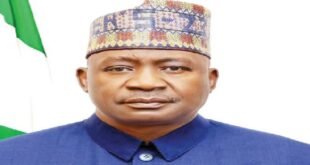
■ Abdul Samad Rabiu is a businessman and Nigerian philanthropist.
[First published in the Sunday edition of the London-based The Telegraph.]
Stay forward with the latest updates!
Join the Conclaveng on WhatsApp and Telegram for notices of news in real time, rupture stories and exclusive content delivered directly to the phone. Don’t miss a title: Sign up now!
Join our WhatsApp channel
Join our Telegram channel