JamzNG Latest News, Gist, Entertainment in Nigeria
Curators independently decide what topics and products we feature. When you purchase items through our links, we may earn a commission. Promotion and products are subject to availability and retailer requirements.
This is what “setting up the patio” means to most people: taking out or uncovering the furniture, wiping down the table, putting down the pillows, and calling it a day. Then, the first warm Saturday arrives, the guests show up, and someone sits down and looks for Halloween-style cobwebs. Good grief! And speaking of October, there are mossy stains on the sidewalk that have been building since the fall…and the list of patio opening day scares continues to grow. Most spring patio prep focuses on getting ready for the party, not getting important cleanup work done. So to kick off spring, here are five such jobs—what to do, why it works, and what it’s actually used for.
1. Catch the Cobwebs Before Doing Anything Else
Unless you want to hang out with spiders and encounter cobwebs, do this work first. Before anything is installed on your patio or deck, cobwebs must be removed. Start at the beginning, work your way down, and prepare yourself emotionally for what (or who!) you might encounter. After a Canadian winter, the cobweb situation on any patio is worse than expected. There is also an egg sac. That’s all there is to say about it.
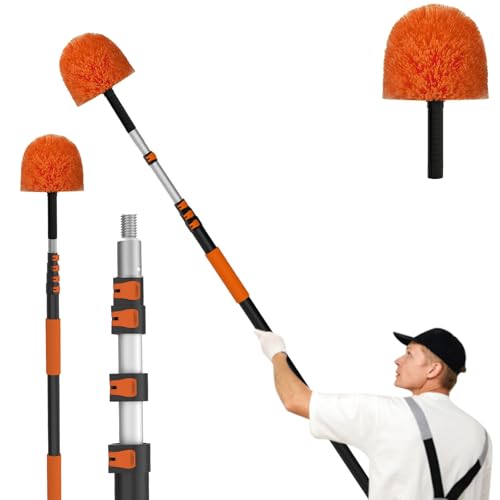
This Extendable Spider Web Duster with Extension Pole can be adjusted from 5 to 20 feet, which means roofs, rafters, fence posts, pergola corners and outdoor light fixtures can be cleaned and all without a ladder. It has a lightweight pole and dense, upright bristles designed for sticky outdoor netting. Start at the top, sweep downwards, and flush when finished.
2. Turn the Furniture Over
Quick question: when was the last time the underside of a patio chair was cleaned? The joint where the leg meets the frame? The hollow tubes of metal furniture that trap moisture, debris, what about webbing, and dirt from October to March?
The underside of outdoor furniture is where mold and mildew grow. This is where insects and pests nest, where dirt accumulates from season to season, and where evidence of every freeze and rainstorm accumulates. And no one remembers to clean it, which is why it has to be on the list.

Remove all the pads, turn each piece over and scrub the bottom properly. This Electric Rotary Scrubber extends up to 43 inches, so tricky corners can be reached without kneeling, bending, or touching anything too unpleasant. Use plenty of water and dish soap, and upgrade to a mold and mildew cleaner (I’ll have you covered in a minute!). The rotating brush head gets into the seams, crevices and webbing so the fabric can never be completely clean. It’s cordless, IPX7 waterproof, and can be used for 90 minutes on a charge. This will be a huge hassle for you and all you need to do is rinse the furniture and let it dry in the sun.
3. Spray the Mold and Go
Every patio in Canada develops some version of it: black and green stains on the concrete, mold on the deck boards, algae creeping across the sidewalk. The usual approach is to manually scrub it with bleach (tiring, not the safest option), blast it with a pressure washer at the wrong PSI and etch the surface (a costly mistake), or just leave it there and hope no one looks under it. Neither of these options is a good choice.
There’s a better approach, and it’s so easy, it’s almost hard to believe.
© 2026 Global News, a division of Corus Entertainment Inc.