JamzNG Latest News, Gist, Entertainment in Nigeria
The Nigerian government has told the South African authorities in no uncertain terms that the killing of other Africans, and especially Nigerians living in South Africa must stop.
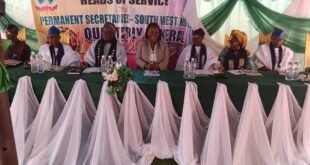
The Minister of State for Foreign Affairs, Ambassador Sola Enikanolaiye, represented
President Bola Tinubu earlier told South Africa’s Minister of International Relations and Cooperation, Ronald Lamola, in Abuja on Monday, that 98 Nigerians had been killed in the last four years and therefore such acts must stop.
Lamola was sent by President Cyril Ramaphosa as a special envoy to Abuja to improve the situation following repeated attacks by South Africans against foreign nationals, including Nigerians.
More than 1,500 Nigerians have been evacuated by the Federal Government from the former apartheid enclave.
The special envoy conveyed a message from Ramaphosa to President Tinubu before meeting with top officials led by Ambassador Enikanolaiye.
Enikanolaiye told Lamola and other South African officials that President Tinubu directed the meeting to address what he described as persistent “Afrophobic attacks” targeting Nigerians and other African migrants in South Africa in an honest manner.
“We have seen a pattern that concerns the Nigerian government,” said Ambassador Enikanolaiye, citing outbreaks of anti-migrant violence since 1995, with official records showing that 98 Nigerians have been killed in mob and hate attacks in the Rainbow nation since 2022.
The minister, who said Pretoria needed to take urgent and concrete steps to stop the attacks, warned that the attacks threatened a decades-long strategic partnership between Africa’s two largest economies.
Enikanolaiye recalled the evacuation of many Nigerians during the recent attacks, and described the experience as emotionally traumatic.
“I shed tears when I received the first wave of refugees. I saw children, women and the elderly returning home with nothing after their property had been looted and destroyed. That was not the Africa we wanted,” he said.
The minister told the South African delegation that many of the victims were legal residents and questioned the failure of their security agencies to intervene during some of the attacks.
Such incidents, he said, raise concerns about state responsibility and the safety of foreigners.
While reiterating that Nigeria does not condone criminality, Enikanolaiye told the South African delegation that anyone accused of crimes should be arrested, tried and punished through the judicial process rather than being tried en masse.
“Nigeria will not support drug trafficking or any criminal activity, but those accused of crimes must be treated in accordance with the rule of law, the South African Constitution and international human rights standards,” the minister said.
He recalled Nigeria’s support for South Africa’s liberation from apartheid and the close collaboration between the two countries in transforming the Organization of African Unity (OAU into the African Union (AU), as well as advancing the New Partnership for Africa’s Development (NEPAD).
Enikanolaiye however reiterated Nigeria’s commitment to maintaining good relations with South Africa and expressed optimism that the two countries would strengthen dialogue, rebuild trust and protect the ideals of African solidarity.
The special envoy said the visit aims to reaffirm the historic friendship and solidarity between the two countries while addressing concerns over violence against foreign nationals.
Lamola acknowledged Nigeria’s important role in supporting South Africa’s fight against apartheid, and described the country’s contribution as a sacrifice deeply appreciated by the South African people.
“We remain indebted to the Nigerian people for their sacrifices,” the special envoy said, adding that Ramaphosa and his government remain firmly opposed to xenophobia, racism, discrimination, homophobia and all forms of intolerance.
But the South African Minister stated that Ramaphosa’s government had a sovereign responsibility to enforce immigration laws and combat irregular migration and criminal activity, including drug trafficking, internet fraud and other offences.
According to him, migration has become a continental challenge that requires African countries to work together within the framework of the African Union protocol on orderly and regular migration.
“We believe that Nigeria and South Africa have a shared responsibility to respond to these challenges on the African continent,” he said, noting that details of President Ramaphosa’s message would be discussed in a closed session.