JamzNG Latest News, Gist, Entertainment in Nigeria

Before the advent of Governor Dikko Umar Radda as governor of Katsina State, the state had missed many opportunities for transformation due to unfortunate incidents of terrorism.
As a state, sharing the same border with Niger Republic and many business opportunities, Katsina has become a victim of terror and killings in several villages in the state.
This has affected different sectors of the state economy, agriculture, education and even infrastructural development in many villages.
As a result, fear and lack of confidence in the authorities’ ability to protect people’s lives and well-being have been exaggerated.
It was such that several routes in the state were avoided due to security reasons due to the activities of terrorists leading to loss of lives.
The advent of Radda as the governor of the state created a new dimension that established a new hope among the inhabitants of the state.
He had just commemorated his third year in office, lauding his achievements in restoring new hope and confidence in the people of Katsina.
Despite the situation he found the state in upon his arrival, the governor, who sees education as a cardinal sector of the administration, invested more in the state sector, spending ₦120 billion.
He built 170 lower secondary schools in communities that previously had none. He managed to rehabilitate 300 schools and renovate 150 primary schools.
In an effort to promote modernization in the state, Radda has established computer and ICT-based testing centers in both rural and urban communities, thereby providing access to residents, regardless of their location.
Model and smart secondary schools have been built in the three senatorial zones of Radda, Jikamshi and Dumirkul in Katsina State. The schools have robotic labs, artificial intelligence facilities, 24-hour electricity supply and internet service. These can be described as the first of its kind in the entire geopolitical region.
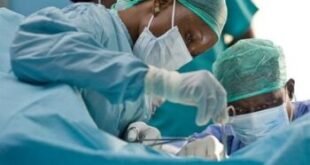
In the healthcare sector, Radda has also modernized the operating theaters of the state’s main specialist hospitals, including the General Amadi Rimi Specialist Hospital, the Turai Umar Yar’Adua Mother and Child Hospital and the Katsina General Hospital.
It also has the record of having put in place the most advanced diagnostic facility in Northern Nigeria.
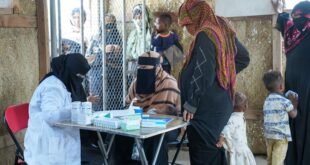
Radda has managed to reduce the maternal mortality rate in the state by upgrading primary health centers to at least secondary level. Those in the ward now function as primary health centers.
It has provided an ambulance in each of the health centers capable of transporting a bleeding woman who is giving birth to the sub-health center. Nine sub-health centers have already been completed in Sari, Dandume, Charanchi, Mani, Daura, Zango, Mai’adua and Kafur. They have all been commissioned.
Radda also founded an imaging center where there is a machine for cancer treatment, as in all of Africa it is found only in South Africa. It also installed an MRI machine, of which there are only two in sub-Saharan Africa after Katsina. Also, the city crawl pit in place is one of the best. With these, Katsina has the largest public dialysis center in this part of the country with cutting edge technology.
Radda is building a pharmaceutical manufacturing plant to produce oral medicines for children. He believes that instead of buying from others, others will come to Katsina to buy from them and this will increase the size of the job market.
The RUTF Tom Brown factory for malnourished children is under construction and the state governor has made a lot of investments in that direction.
The Federal Government has continued to recognize Katsina State as a major contributor to national food security.
In the agricultural sector, when Radda arrived, there were only 70 Agric Extension workers in the entire state. There are currently 800. The governor has invested N2.5 in the modernization of agriculture. He has built a multi-million naira agricultural mechanization center which has so far trained and empowered over 1000 youths with skills and opportunities.
Furthermore, 34 additional mechanization centers have been established at the local government level. Through the Katsina Sustainable Agriculture Platform (KASPA), 400 tractors and 10 combine harvesters, as well as thousands of planters, were deployed.
Most of these agricultural mechanization tools are assembled locally at the Central Mechanization Hub in Tashar Bala, Batagarawa, thus creating jobs for the people. All this to name just a few.
As the world embraces sustainable energy solutions, Governor Radda is not left behind in this regard. His administration launched a $19.89 billion renewable energy program that is providing 20.1 megawatts of solar power capacity and 10.1 megawatt-hours of battery storage statewide.
Of these, eleven critical public institutions, hospitals, waterworks and universities have been connected to reliable solar energy.
A 1 megawatt solar system has been installed in Danja Dam, Ajiwa, Zobe and Funtua. Katsina State is not waiting for the national grid to improve, it is improving itself.
The infrastructure put in place by the government is also noteworthy. These include the 600-year-old Gobarau minaret and Katsina museum among others to not only preserve the historical heritage but also attract visitors to the state.
This artifact was built during the reign of Muhammad Korau, 1348-1398. It was built by local artisans using sun-baked clay and mud. This is the tallest building in Katsina where the first Katsina Central Mosque was located.
The minaret served as a tower used to spot enemies advancing towards the city. It says a lot about the level of civilization of the city.
The massive dualisation and lighting of roads across the State is worth mentioning. Places like Kofar Sauri road, Kofar Marusa road and Kofar Kaura road. The 24 kilometer Eastern Ring Road is open and functioning
These can rightly be mentioned as an important step towards neutralizing terrorism and banditry in some of the affected parts of the state as children of all social levels have access to developmental opportunities.
Indeed these and many others have positively affected the State as it has achieved a level of security since the advent of Governor Radda.
There were markets, schools, hospitals and roads in the state which were closed due to terrorism and banditry, now they have all been opened and activities are brisk.
Radda has been able to address the problems from two angles: through strong security operations and by engaging communities by rehabilitating willing former criminals and addressing the poverty that fuels crime.
The secret behind the reduction of violence in Katsina State was partly achieved by employing youth from insecurity-hit villages and training them in security techniques. This is because they know their place more than anyone else and at the same time they are victims of it.
They were trained and given all necessary weapons and ammunition permitted by law. They are made to work in synergy with conventional security operators. They are provided with motorcycles and cars with supplementary maintenance, while they are given sufficient allowances.
Governor Radda began his fight against insecurity from the moment he stepped up to claim the governorship. When he arrived at the office he hired people from the affected areas. Those who face insecurity because they not only know the locals but are also very familiar with the terrain.
Secondly, he explains that the reason he took this measure is that the direct victims of the attacks are their parents, relatives and collaborators.
It is different from the measure that brings people from other regions or states to fight the criminal act. He trained them properly and gave them everything they needed. None of them complains of being without ammunition since they were fielded and received sufficient allowances as well as were armed according to the law.
Criminals carry an AK47 while the law does not allow them to carry it. For this reason they work in synergy with national security agencies.
However the governor purchased the AK47 for the conventional police which helps in the fight against insecurity. Radda purchased armored vehicles and distributed them everywhere.
Indeed, much has been seen from Governor Radda and much has been achieved under his leadership.
Radda has served the state long enough to understand the state’s needs and how best to meet them. He had served as a government employee, local government chairman, and other political positions at the federal level.
It is clear that the transformation observed in Katsina State, despite the insecurity bleeding into parts of the state, can best be described as the practical interpretation of experience.