JamzNG Latest News, Gist, Entertainment in Nigeria
Sima Alami, adolescent and youth program officer at the United Nations agency for sexual and reproductive health, UNFPAprovides a real picture defined by alarming statistics.
“We have more than a million children in Gaza who need mental health and psychosocial support services,” he said UN News.
The scale of the trauma is staggering.
96% of children in Gaza feel death is near
According to UNFPA data quoted by Ibu Alami, 96 percent of children in Gaza feel that death is near. “This reflects the depth of fear and trauma they experience every day,” he stressed.
Among teenagers and young adults, who are often overlooked in humanitarian crises, the psychological impact is equally severe. About 61 percent suffer from post-traumatic stress disorder (PTSD), 38 percent suffer from depression, and 41 percent suffer from anxiety. “Alarmingly, one in five adults think about suicide almost every day,” he added.
“This is not just psychological pressure,” emphasized Mrs. Alami. “This is a widespread mental health emergency.”
Girls are at high risk
In this crisis, girls are the most vulnerable group. In Gaza, child marriage, which was previously decreasing, is now increasing sharply. The figure has fallen from 25.5 percent in 2009 to 11 percent in 2022, but is now rising again as many families struggle to survive.
A recent UNFPA study found that 71 percent of respondents in Gaza reported increasing pressure to marry girls under 18. In just a short monitoring period, more than 400 marriage licenses were issued to 14- to 16-year-old girls in emergency courts, but this number is likely underreported.
“Some families see marriage as a survival strategy amidst displacement, poverty and insecurity,” explained Ibu Alami. Others believe it provides shelter in overcrowded shelters or helps ease economic hardship following loss of livelihood.
Child marriage makes girls vulnerable to violence
The consequences were severe. By 2025, around 10 percent of new pregnancies recorded in Gaza will be among teenage girls, a significant increase compared to pre-war levels.
At the same time, access to health services has shrunk drastically. Only 15 percent of health facilities in Gaza are currently capable of providing emergency obstetric and neonatal services, increasing the risk of complications for young mothers and their babies.
Child marriage also makes girls vulnerable to violence.
“Several evidence shows that 63 percent of girls who marry at a young age have experienced physical, psychological or sexual violence,” said Ibu Alami. Reports show increasing divorce rates and widespread severe psychological distress among married minors.
In the most extreme cases, the consequences can be life-threatening. “More than 100 cases of suicide or attempted suicide have been recorded among survivors of violence,” he said, while underlining that child marriage is a form of gender-based violence.
Children who don’t get enough food attend a nutrition clinic in Deir al Balah in Gaza.
Persistent insecurity in the West Bank
Although Gaza remains the center of the crisis, conditions in the West Bank are also deteriorating. Increasing violence, military operations and settler attacks have driven displacement, particularly in refugee camps, while movement restrictions and checkpoint closures have disrupted daily life and forced many schools to close.
Children and teenagers live under constant stress.
“They face fear of raids, restrictions on movement, and uncertainty regarding livelihoods and access to services,” said Ms. Alami. “This creates chronic anxiety and a constant sense of insecurity.”
These pressures can have long-term consequences, shaping behavior and mental health well into adulthood. Some of the younger generation are even considering leaving Palestine altogether.
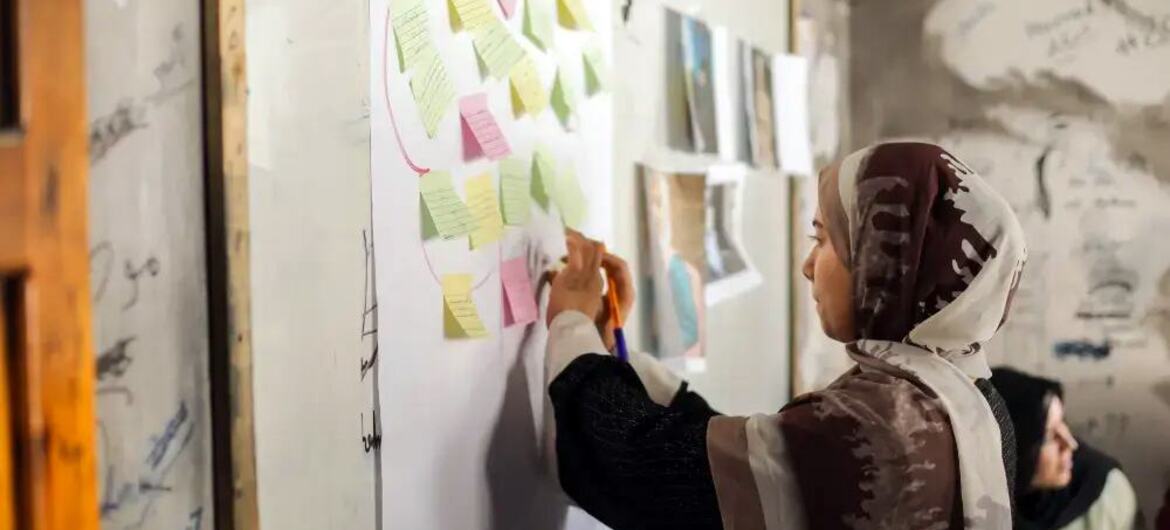
To provide a safe environment where girls can seek immediate and long-term relief from gender-based violence, UNFPA supports safe spaces, youth centers and girls’ camps throughout Gaza.
Safe spaces offer a lifeline
Amid these challenges, UNFPA has expanded support services. Over the past three years, the agency has reopened and supported more than 35 safe spaces for women and girls, providing case management and multi-sectoral responses to gender-based violence.
More than 120,000 dignity and hygiene kits have been distributed, and across Palestine, more than 15 multi-purpose youth centers operate, with 11 dedicated to girls.
“These spaces provide psychosocial support, education and life skills while increasing community involvement and a sense of belonging,” said Ibu Alami. Youth are not just beneficiaries, he added, but are also “active partners” in designing and implementing initiatives.
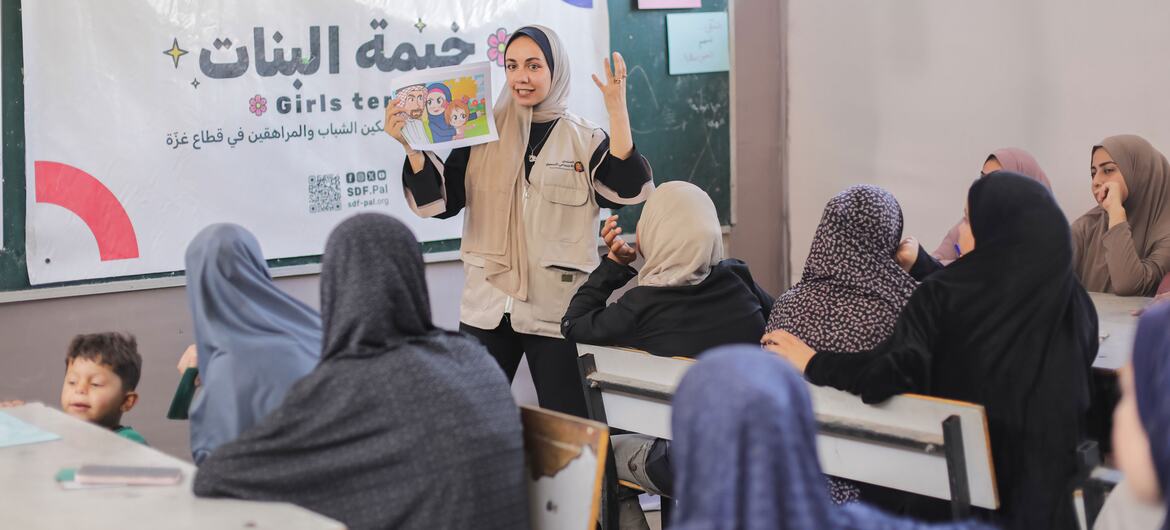
A volunteer from the Social Development Forum hosted a session on the Girls’ Tent initiative.
Services include group sessions, psychological first aid, individual counseling and a digital helpline known as Youth Windowoffers free remote support to marginalized young people.
However, the challenges are still very big. Displacement, limited resources and poor conditions, particularly in Gaza, where some safe spaces operate in tents exposed to extreme weather, continue to hamper operations.
“Many families prioritize survival over mental health,” Ms Alami said, highlighting the need for an integrated response that links psychosocial support with food, health and education services.