JamzNG Latest News, Gist, Entertainment in Nigeria
An Abuja-based political scientist, statesmanship expert and preventative peacebuilding practitioner, Dr. Ayokunle Fagbemi, has drawn attention to the fact that the current APC-led federal government has about seventy-two hours to enable the President Bola Ahmed Tinubu to initiate mediation and mitigation directives, proclamations and policy modulations that can forcefully avert the looming #EndBadGovernance 2.0 tagged “Fearless in October Protest” as a logical response to stabilize the Nigerian state.
Fagbemi, who is also the Executive Director of the Center for Peacebuilding and Socioeconomic Resource Development (CePSERD), said this during the keynote speech at the National Association of Sea Dogs, Pirate Brotherhood, Zuma Deck organized the Citizens Forum on “Energy Crisis in a Biting Economy: What Citizens Say”, held on Saturday, September 28, 2024 at the NICON Luxury Hotel, Abuja.
Fagbemi urged President Tinubu to make necessary changes to his speech marking the 64th anniversary of Nigeria’s independence to avert the widely proposed and anticipated “fearless protest in October”, scheduled to begin on October 1, 2024.
He asked Tinubu to activate measures that can restore the responsiveness and integrity of his administration as necessary precursors to renew citizens’ confidence, trust and understanding that citizens are only actively engaged in participatory governance with regards to the energy crisis prevalent.
Fagbemi, therefore, requested that as a sign of goodwill and in accordance with the constitutional privileges of the office of President Tinubu, namely: Section 175, on the prerogative of mercy and clemency and within the scope of jurisprudential interpretations of the relevant constituents of the criminal system and existing criminal codes under the Administration of Criminal Justice Act (ACJA), the President should consider and implement the following:
1) Issue presidential directive to the Attorney General of the Federation/Minister of Justice to insert “Nolle prosequi” against already accused protesters; and facilitate the release of ALL currently detained protesters nationwide using #EndSARs and #EndBadGovernance as case studies.
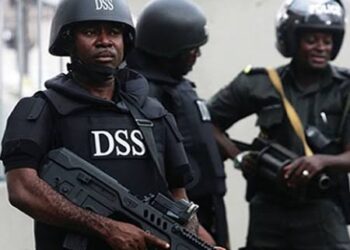
2) Issue a Presidential Directive to the Director General (SSS) to relocate citizen Nnamdi Kanu to a “secure apartment and safe haven” under the concurrent supervision of the Nigeria Correctional Service and with enhanced visitation rights of unrestricted access by his lawyers and medical teams awaiting the resolution of the legal obstacles to obtain his release and probable acquittal by the judiciary.
Fagbemi, as a seasoned statecraft practitioner, made numerous references to the existing legal and policy frameworks that if functionally and appropriately activated by concerned government agencies and incumbent public officials, the #EndBadGovernance protests should not have occurred.
It identified and examined the mandates of ten such agencies that their performance deficiencies adversely led to the protest due to what it called an inconsistent system of managing feedback information on the governance of the Nigerian state (data collection , analysis e) for the provision of demonstrative answers.
As a panacea, he therefore enjoined Mr. President to issue a Presidential Executive Order for activating an efficient framework on the performance of public institutions and monitoring the feedback of citizens’ reactions for proactive responses to leverage the activities of all government agencies as required by relevant legal regulations and policies. frameworks such as the National Monitoring and Evaluation Policy (2022),
SERVICOM, PCC, CSI, ReportGov.Ng, NOA, FCCPC, NERC, among others.
He, however, noted that for reasons of effectiveness and efficiency, it may be necessary to appoint a Senior Special Assistant/Coordinator (feedback information and intelligence analysis for proactive response) and strengthen the Office of the Special Adviser for monitoring performance and strengthen direct supervision by the Chief of Staff to
President and Secretary of the Government of the Federation.
Dr Ayokunle Fagbemi had earlier summarized his
understanding the main objective of “What citizens say” in the sense that they want to achieve energy security through a holistic resolution of related challenges:
➢ Citizens are committed and eager to facilitate the demystification of the “fuel subsidy regime” and the dismantling and exposure of the cabal responsible for Nigeria’s protracted energy crisis for arrest and prosecution.
➢ Citizens hope that Nigeria can achieve optimal levels of energy availability, accessibility and affordability.
➢ Citizens are convinced that crime and criminalities rooted in the oil and electricity sub-sectors of the energy system in Nigeria must be eradicated, perpetrators prosecuted transparently and appropriately sanctioned.
➢ Citizens say that the crusade against corruption must touch the energy sector if we want to achieve energy security.
➢ Citizens believe that to reach a significant threshold of energy availability, PBAT must provide the leadership necessary to fight the corruption that plagues the energy sector.
➢ Citizens feel that the energy crisis is continuously fueled by anti-citizens, pro-elites
and anti-development governance frameworks based on a problematic 1999 Constitution, existing legislations and biased policy frameworks or regulations.
➢ In lieu of sustainability, citizens are convinced that the FGN under PBAT must provide the necessary leadership for the Nigerian state to achieve strategic oil reserves for petroleum crude oil and premium motor oil.
As a seasoned practitioner of statecraft, Fagbemi therefore urged President Tinubu to be innovative in tackling corruption, elite conspiracy and coalition of forces that have held the power sector captive by issuing a Presidential Summons Order for a research study group to actualize the energy explosion proposal. Security bubble/crisis research study involving academia, civil society, technocrats, media professionals, among others.
Presidential intervention directive for the inter-ministerial collaborative pursuit of concerted information of public officials on the provisions of legal and policy frameworks and of citizens’ awareness and public information in this regard for positive action.
Head the secretariats of the Council of (i) National Defense Council, (ii) National Security
The Council and the Nigerian Police Council shall prepare an appropriate memorandum for deliberations before each council for the initiation of necessary procedural investigations, arrest, prosecution, sanction and securing conviction of perpetrators of criminal activities in the energy sector.
Likewise, Dr Fagbemi pleaded with the leadership of the National Assembly under Senator Godswill Akpabio and Rt. Honorable Tajudeen Abbas, to strictly abide by the constitutionally mandated scrutiny and refrain from conducting another form of investigation regarding the persisting energy security/crisis of Nigeria.
He stated that “any NASS investigation will be a distraction, it will become
counterproductive and will only create sensations that are simply harmonic vibrations that cannot achieve much.
However, he requested that the President of the Senate, as President of NASS, “require interested parties to provide NASS with authenticated data, reports and answers to specific questions on energy sector operations; and then, establish a research study group to review stakeholder proposals to NASS for independent verification and validation studies on those proposals and provide analytical legislative briefing notes for proactive interventions by NASS.
This approach “should help NASS overcome the sensational hype often associated with public hearing investigations and mitigate citizens’ negative perceptions of NASS’s integrity and trust deficit.”
He emphasized that “the proposed approach should help NASS receive expert reports from stakeholders that can easily correlate with the findings of our previous disruptive research proposed by the executive branch convened by PBAT and help NASS insulate the legislature from bricks and mortar , focusing on ensuring that they facilitate the enabling environment for efficiency in the sector.”
“NASS’s evocation of stakeholder self-reporting power, we believe, should help encourage the energy sector to optimally increase production, for example by increasing crude oil exploration to 2.5 million barrels per day , ensuring that some currently closed wells are discovered; and ensure that NNPCL refineries begin work to justify appropriation bills for their reactivation.
“The same should apply to the generation, transmission and distribution of electricity to citizens as end users.”
Fagbemi finally recommended that civil society and organized private sector collaboration (particularly IPMAN and DISCO) become responsive to citizen demands by articulating and aggregating them into synoptic nuggets that can help trigger interventions and ensure paradigm shifts.
He implored them as stakeholders to actively and transparently participate in the implementation of our proposed recommendations and charted the way forward.
The post Group on Tinubu: Avoid #fearless in October protest appeared first on TheConclaveNg.