JamzNG Latest News, Gist, Entertainment in Nigeria
It is known that the British military is considering deploying two types of drones to the Middle East after the US asked its allies for help to secure key shipping lanes in the region.
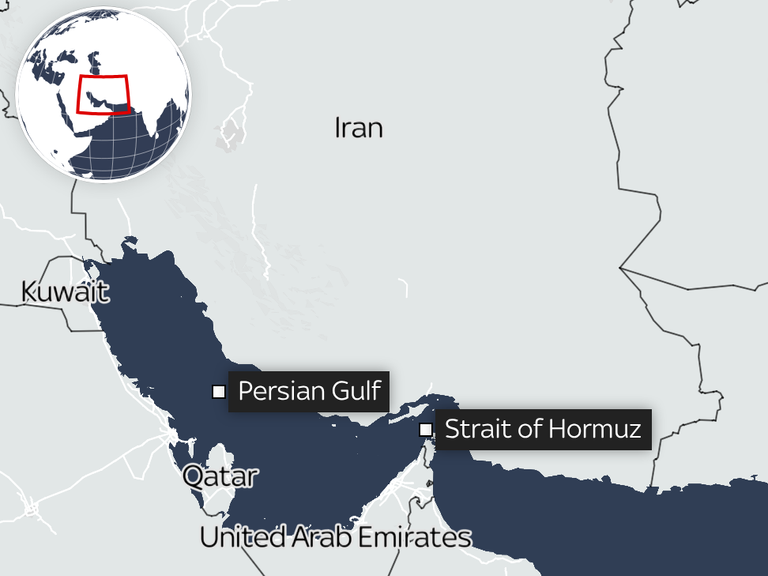
Donald Trump has urged Britain and other countries to send warships to the region to help secure the Strait of Hormuz in the aftermath Iran closing shipping lanes, causing oil prices to soar.
Iran latest – follow live updates
On Sunday evening, Sir Keir Starmer spoke to the US president about “the importance of reopening the Strait of Hormuz to end disruption to global shipping, which is increasing costs around the world.”
“We are currently discussing with our allies and partners various options to ensure the security of shipping in the region,” the government said earlier in a statement to Sky News.
What drones can be deployed?
When the situation in the Middle East escalated, a Ministry of Defense A Ministry of Defense spokesperson told Sky News that the government “will explore” the use of interceptor drones – which have proven successful against Iran’s Shahed-type drones used by Russia in Ukraine – for the UK’s armed forces in the future.
Energy Minister Ed Miliband said Sunday Morning with Trevor Phillips that another type of drone being considered for use is a mine-hunting drone.
“There are various things we could do, including autonomous mine hunting equipment. And that’s definitely something we’re considering,” he said.
He added the government was “intensely” looking at what it could do to help reopen the Strait of Hormuz, and promised the UK would “work with our allies” to do so.
What is a mine hunting drone?
Several oil tankers came under fire when they tried to pass through the strait, which lies south of Iran, and there was speculation that Tehran had begun laying mines in the passage.
The UK could deploy autonomous mine-hunting drones to counter this threat.
Defense Minister John Healey said earlier this week: “I have now had several autonomous mine-hunting systems in place in this region since before this conflict, and I have spoken to planners today about additional options that we could take with our allies if action is required.”
The Royal Navy has four mine-hunting drone systems in operation or development, including the Sweep system, which consists of an unmanned surface ship and an advanced payload, the SeaCat, which has two unmanned surface ships and three sets of unmanned underwater vehicles to search for underwater threats, and the MMCM program.
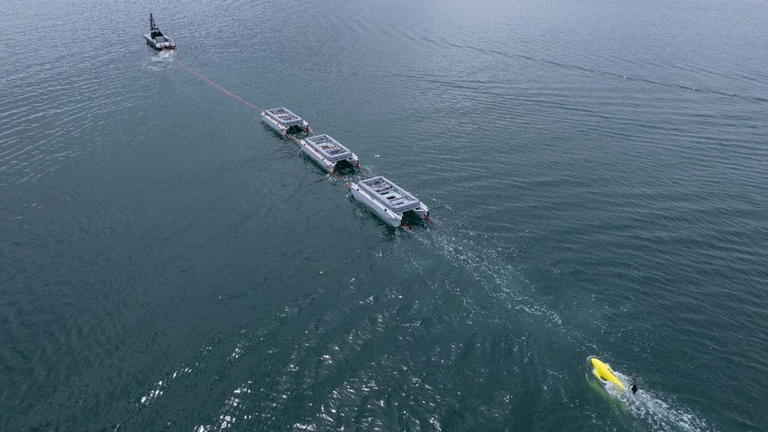
The Sweep System is in use. Photo: Ministry of Defense
Another system is the Wilton system, which contains manned and unmanned surface ships, mine detection payloads, and a remote command center. It is already operating in the Clyde region of Scotland and the Gulf, according to the Ministry of Defence.
“The Royal Navy does have this capability, which is developing very quickly,” Sky News said. military analyst Michael Clarke said.
Not tested in combat
With the Sweep system, instead of using dedicated minesweepers, the military could use robots – “but it’s a fairly young system”, Clarke added.
“As far as I know, this weapon has never been tested in combat. This may be its first test, if the government is ready to deploy it.
I don’t think what we can offer is a minesweeper. The last one, HMS Middleton, was withdrawn about a week ago, so we have no ships to offer.”
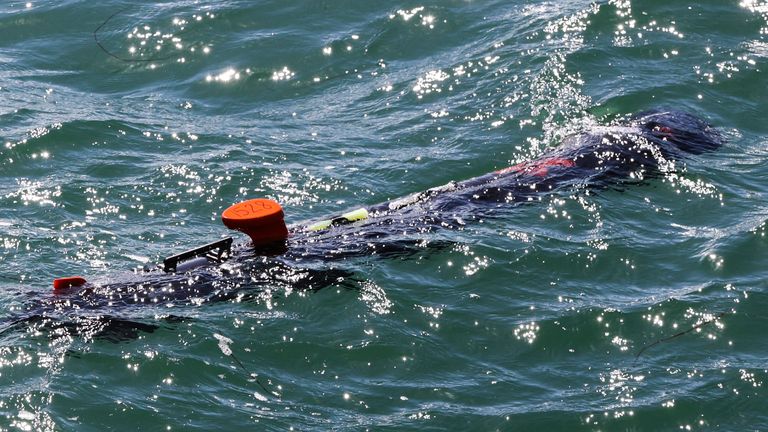
Mine-hunting drone during a Royal Navy exercise. Photo: Ministry of Defense
The drone was likely deployed from the Royal Navy’s Mine Exploitation and Threats Group, which is currently stationed in the Middle East, according to Sunday Time.
It is not known how many drones are operational and can be deployed, the newspaper reported.
How does it work?
The drone explores the seabed using sonar technology to detect explosive threats in water at depths of nearly 1,000 feet (304 m).
Minehunting systems can mimic the signature of a ship, tricking naval mines into safely exploding.
Read more:
How Iran can block the Strait of Hormuz
Why the US is wary of bombing Iran’s ‘crown jewels’
They can be operated remotely from land or sea, keeping sailors out of harm’s way, according to Jonathan Reed-Beviere, Minehunting Capability Program Director for Royal Navy.
What is an interceptor drone?
Interceptor drones are easier and cheaper to produce than long-range attack drones.
The production costs are less than 10% of Iran’s Shahed drone designed to be intercepted in Russia, which is estimated to cost up to £36,000.
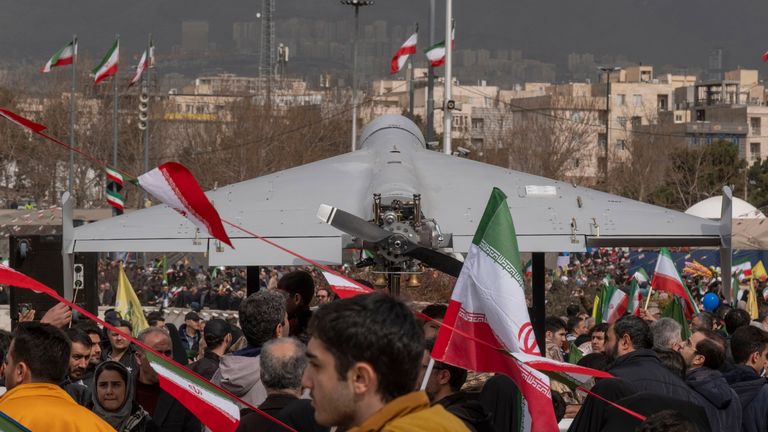
Shahed drone on display in Iran. Photo: Morteza Nikoubazl/NurPhoto/Shutterstock
The UK announced in September that it would do just that started large-scale production advanced interceptor drones to help Ukraine defend itself from Russian airstrikes.
The Octopus drone, designed by Ukraine with the support of British scientists, was highly effective in destroying the Shahed drones that Moscow continues to launch over Ukrainian cities, according to the Defense Ministry.
It is understood the UK government is now considering using interceptor drones against Iran’s Shahed drones in the Middle East.
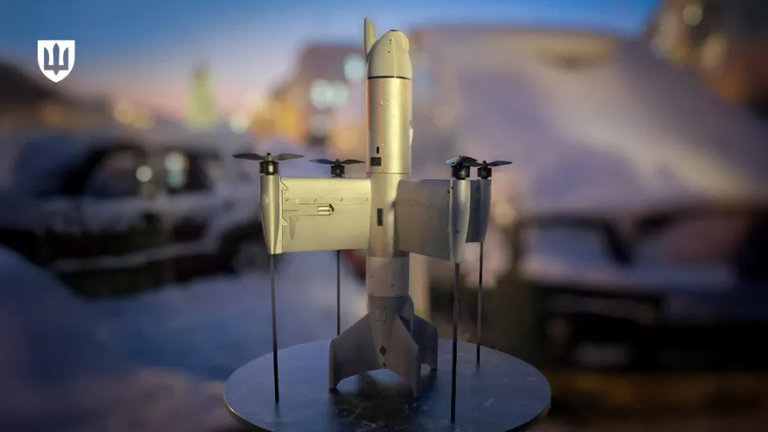
Octopus interceptor drone. Photo: Ministry of Defense of Ukraine
“While octopus production is intended for Ukraine, the situation in the Middle East has demonstrated the benefits of Ukrainian technology, and in the future we will explore its use for the UK Armed Forces,” a Ministry of Defense spokesperson said.
“Production of the UK-made Octopus interceptor drone has begun and we are accelerating this work to improve Ukraine’s ability to defend itself against Russian drone attacks.”
However, this option is understood to be at a much earlier stage of consideration than the possible deployment of mine-hunting drones.
Will leave Ukraine short
“Ukraine, with a fair amount of British help, has developed some very accurate and very powerful interceptor drones. They don’t need to blow anything up, just shoot them,” said military analyst Clarke.
“If they can be produced in large enough quantities, they could potentially have a sizable role in this conflict. If they can be moved to the Middle East quickly enough, and they can be ready within a few weeks, then they could have a potentially major impact.”
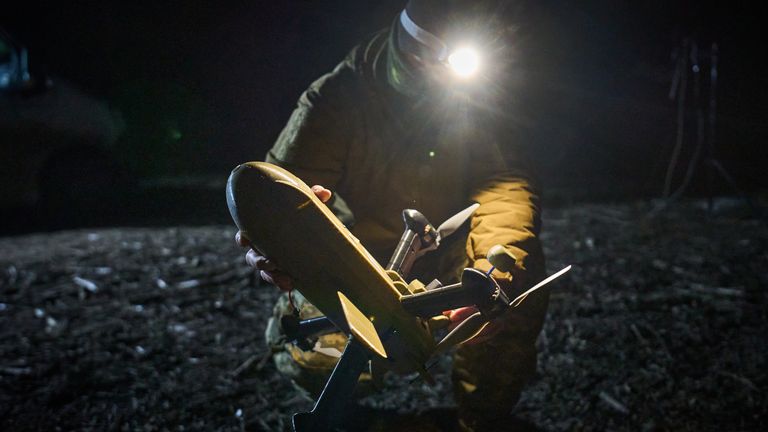
A Ukrainian soldier prepares an interceptor drone during a Russian airstrike on Ukraine. photo: AP
But Clarke said deploying interceptor drones to the Middle East would have a major downside.
“Ukraine needs all the drones they can get. It’s not good for them if drone stocks are diverted for political reasons and it would be a big sacrifice for Ukraine to send 20,000 to 30,000 drones to the Middle East and leave them short of supplies,” he said.
How do interceptor drones work?
Interceptor drones such as the Octopus drone can reach speeds of around 186mph (300kmph) at altitudes of up to 14,800ft (4,500m).
“Octopus interceptors use frontline battlefield data to defeat Shahed-style drones before they reach homes, hospitals and power plants,” the Defense Ministry said.
They do this by colliding directly with a target or detonating near the target after an incoming enemy drone is detected by radar.
Read more: Meet Ukraine’s underground drone interceptor force
They are equipped with four rotors, cameras and automatic targeting.
Interceptor drones can be launched from moving or stationary platforms sequentially and have sensors and navigation systems on board to enable them to rotate quickly in pursuit of targets.