JamzNG Latest News, Gist, Entertainment in Nigeria
Hundreds of mourners turned out amid heavy rain in Beirut to attend the funeral of three journalists killed in an Israeli attack in southern Lebanon.
Some people held aloft posters of the two famous Lebanese war correspondents, holding cameras and wearing body armor.
A number of women cried. “They killed the messenger of this war,” said one of them.
Elsy Moufarrej of the Union of Journalists in Lebanon has described the killing of journalists as a war crime.
Iran’s latest war: Tehran threatens to burn US ground troops
“We have seen this in Gaza where they are trying to undermine Palestinian journalists by linking them to Hamas.
“Now they are trying to do the same thing to Lebanese journalists by linking them to Hezbollah. Don’t hesitate. This is a war crime.”
The journalists – Ali Shoaib who works for the Hezbollah-owned TV channel Al-Manar; Fatima Fatouni, who works for Al Mayadeen; and his brother Muhammad Fatouni, who is a freelance cameraman – covering the ongoing Israeli invasion of southern Lebanon.
They were traveling together in a vehicle near Jezzine on the highway between Nabatieh and Sidon when an Israeli bomb hit them.
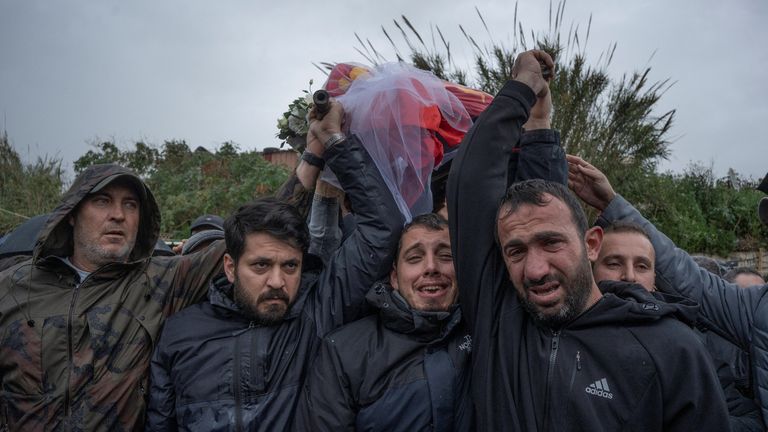
Photo: Reuters
Witnesses said when his colleagues ran to help, a second attack occurred. Lebanon’s Health Ministry said an ambulance containing first aid workers sent to help was also hit.
An Israeli military spokesman acknowledged that they targeted the journalists but attempted to justify the killings by claiming one of the senior correspondents – Ali Shoaib – was a member of Radwan Hezbollah’s elite force and passed on information about Israeli troop movements in Lebanon.
He provides no evidence for this claim.
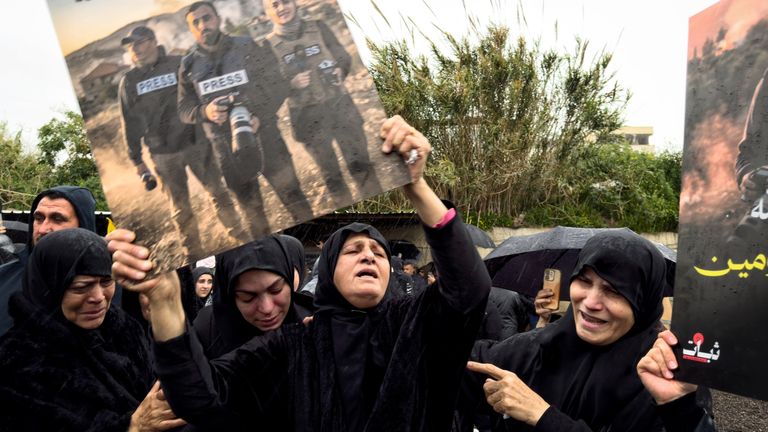
Mourners at the funeral
The Committee to Protect Journalists says journalists doing their work are protected under the rules of war, as set out in the Geneva Conventions.
CPJ Regional Director Sara Qudah said: “We have seen a disturbing pattern in this war and in previous decades Israel accused journalists of being active combatants and terrorists without providing any credible evidence.
“Journalists are not legitimate targets, regardless of the media they work for.”
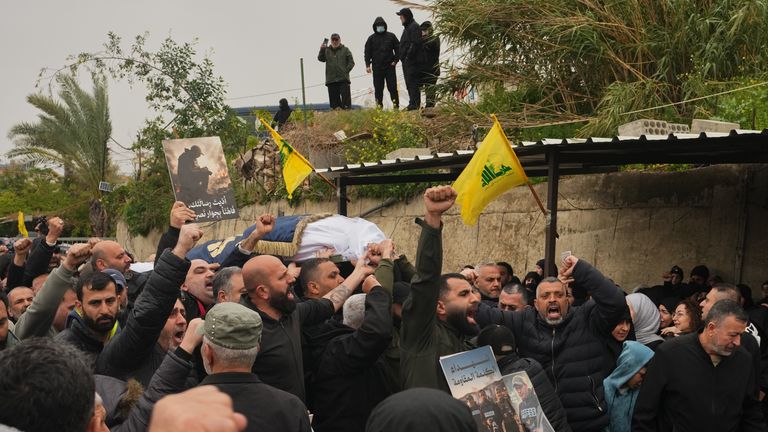
photo: AP
The murder of the journalist occurred as Israeli forces intensified their attacks on Lebanon.
Many of these attacks appear to be directed against health facilities and health care workers.
Read more from Sky News:
North Korea conducts missile engine test
Large crowds attend ‘No Kings’ rallies in the US
A health care center in the eastern border city of Deir Kifa was attacked on Sunday morning.
No one was injured, but the center has been disabled.
This was followed by another Israeli attack on an ambulance that had just carried a victim.
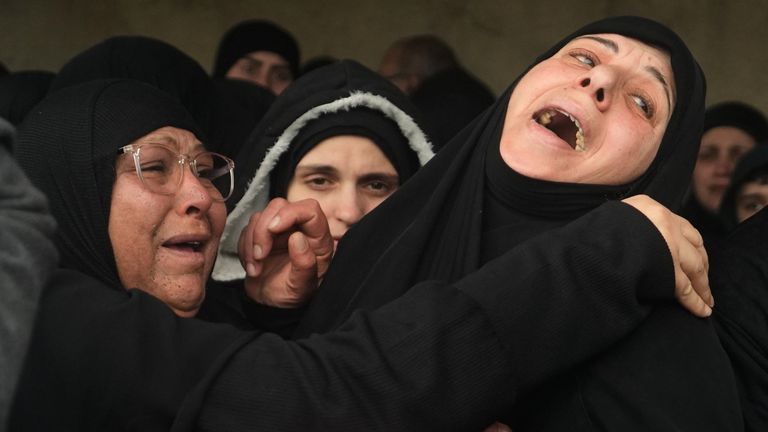
photo: AP
A paramedic and a patient who had just been rescued died. More than fifty medics were killed in less than a month.
The Israeli military once again insisted on Sunday that Hezbollah “makes extensive use of ambulances for military purposes” and continued, “if this practice does not stop Israel will act in accordance with international law against military activities”.
But Lebanon’s Health Ministry angrily condemned the claims and said there was no evidence that the ambulances were used for any activity other than saving humanitarian work.
Lebanon’s Health Ministry is compiling a list of Israeli attacks on health facilities and first responders that will be presented to the UN.
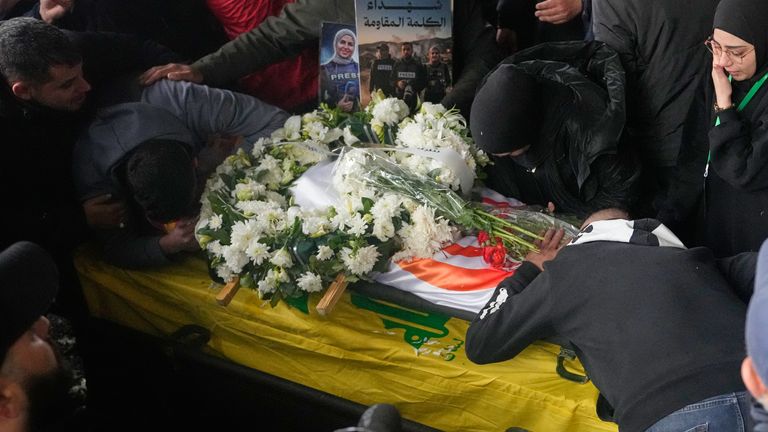
photo: AP
They stated that the Israeli attacks followed a pattern of repeatedly targeting medical workers and hospitals.
“This is a war crime,” Health Minister Dr Rakan Nassereddine told Sky News.
Lebanon is embroiled in a major humanitarian crisis caused by the war, with more than a million people displaced.
There are daily casualties, with more than fifty people killed in the last 24 hours, although the ministry does not differentiate between civilians and combatants.
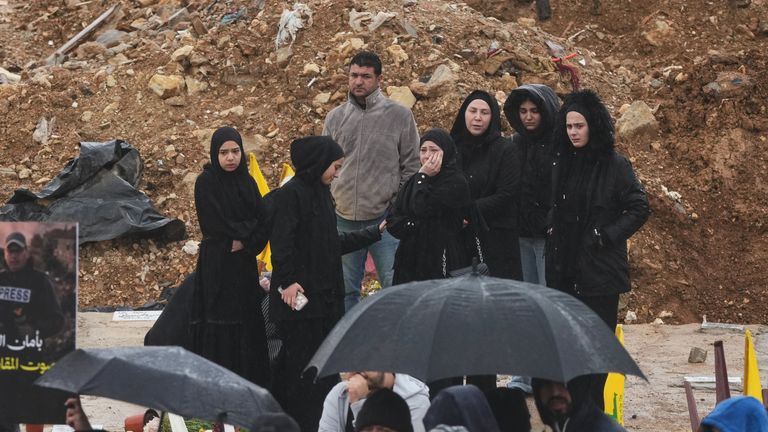
photo: AP
The militant group Hezbollah continues to fire rockets into northern Israel.
There has been heavy fighting between Hezbollah fighters and Israeli forces in several villages and communities on the southern border, but it is difficult to ascertain how much control the Israeli military has over the area or how much territory they have captured.
There were sightings of Israeli troops in a number of communities several kilometers inside Lebanese territory and the Israeli Army Commander was filmed by the military talking to troops on the Lebanese side without any details about where exactly those positions were.
Israeli ministers have made clear their plans to seize large areas of southern Lebanon to create what they call a ‘security buffer zone’.
The government has signaled its intention to occupy this area up to the Litani River and possibly beyond (an area that occupies about 10% of Lebanon’s land) until the Israeli military deems it safe from the Hezbollah threat.