JamzNG Latest News, Gist, Entertainment in Nigeria
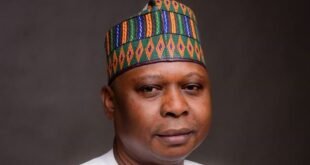
The speaker of the House of Representatives, Abbas Tajudeen, has clarified that the National Assembly does not oppose the loan policy of the Tinubu Bola President, emphasizing that parliamentary members view loans as a legal instrument for infrastructure financing and encouraging sustainable growth.
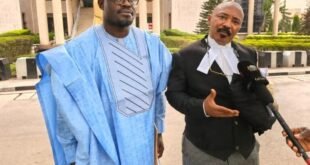
Speaking in Abuja on Monday at the 8th Annual African African Network Conference, Parliamentary Budget Conference (AN-PBO), which was held jointly by the National Assembly and the National Assembly Budget and Research Office, Abbas rejected a report that shows the legislative inconvenience with the Administration Debt Approach.
Clarification follows the media interpretation of the statement made at the 11th Annual Conference Association of the West African Public Account Committee, where the debt to Nigerian GDP is highlighted at 52 percent, above the 40 percent legal benchmark.
“A speech delivered by the DPR leader at the West African Parliament Conference was reported naughty outside the context, creating a wrong impression that the House of Representatives rejected the loan plan of President Tinubu. Such interpretation was inaccurate and misleading,” Abbas said.
Also read: ‘When they know I will give up, they will free me to go outside and die’ – Kanu

He noted that borrowing, when managed properly, is a fiscal tool that is received globally. He added that the President had convinced the parliament that new loans would remain in line with the State-term debt framework and international standards, with the results targeted in major sectors such as power, transportation, and agriculture.
“The house is solid behind the president’s vision to mobilize wise loans as a catalyst for alleviating development and poverty, while we strengthen parliamentary supervision,” he said.
The speaker also highlighted Nigeria’s fiscal vulnerability, revealed that the country lost around $ 18 billion per year, almost 3.8 percent of GDP, due to financial crime, while illegal flow and inefficiency in all Africa amounted to $ 587 billion. He stressed that curbing such losses can free resources to change education, health care, and infrastructure.
Abbas further underlined the role of Nigeria’s leadership in the continent, noted that the African population had reached 1.4 billion, or one -sixth of the world. While Nigerian GDP reached $ 477 billion in 2022, he warned that continuous poverty, high unemployment, and weak employment creation pose a significant risk of continental stability if left unchecked.