JamzNG Latest News, Gist, Entertainment in Nigeria
Nine days into the war, the Iranian regime is still intact and, at least to some degree, still maintains control over the country.
Street protests have not yet taken place, no doubt because the opposition movement is waiting to see if they will WE will stay on track.
If Washington withdraws suddenly, this will leave the protesters exposed and they will be at the mercy of whatever country remains.
So why, after that assassination of Supreme Leader Ali Khamenei on the first day of the conflict, did the regime not collapse as happened in other dictatorships in Libya, Syria and Iraq?
The country’s survival, so far, can be attributed to the complex mixed government structure that developed after the 1979 revolution to deal with external and internal challenges.
Follow live updates on Iran war
The system is intentionally designed to be bigger than one person, meaning if you kill the Supreme Leader, you don’t kill the regime.
Power has been distributed among several bodies, most of which are still functioning.
Different from any government in the world.
Supreme Leader
The Supreme Leader is the highest political and religious authority in the country, a role created after the 1979 revolution.
He is a senior cleric, elected by the Assembly of Experts – a body of 88 members – and appointed for life.
The Supreme Leader has a hand in everything: intelligence chiefs, soldiers, and other sensitive roles must be approved by him.
There have only been two Supreme Leaders in the history of this country: Ayatollah Ruhollah Khomeini and Ayatollah Ali Khamenei.
Expert Assembly
The Expert Assembly is a group we will be hearing a lot about in the coming days. This body consists of 88 people and its main role is to elect and appoint the Supreme Leader.
That is what they will try to do now, after the death of Ayatollah Ali Khamenei.
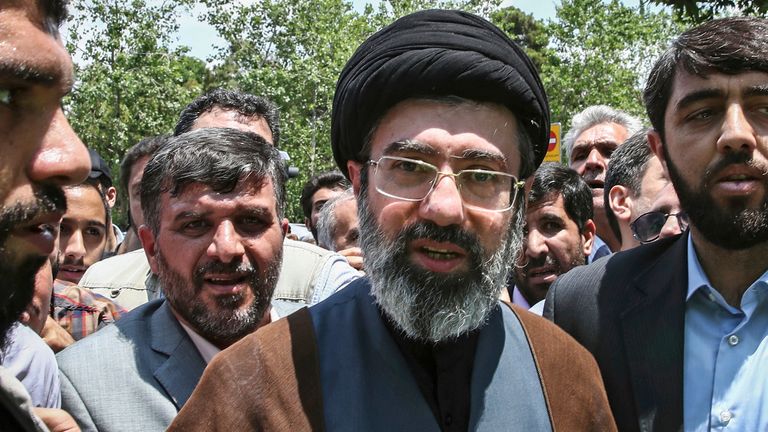
Mojtaba Khamenei could become the next Supreme Leader. File photo: Saeid Zareian/picture-alliance/dpa/AP
In theory, they could also remove the Supreme Leader if deemed unfit, but in reality they rarely interfered.
Guardian Council
Under the Supreme Leader, the Guardian Council is one of the most powerful institutions.
It consists of 12 members: six clerics chosen by the Supreme Leader and six jurists appointed by parliament.
The Guardian Council reviews laws passed by parliament, ensuring compliance with strict Islamic rules and can decide who runs for parliament, giving it enormous power over Iranian politics.
Justice
Led by a Supreme Court Judge appointed by the Supreme Leader, the judiciary is a feared body Iran. Not only does he oversee the judiciary and select prosecutors, he also interprets strict conservative Islamic law, exerting enormous influence on Iranian society.
President
The president, currently Masoud Pezeshkian, is elected every four years and runs the government, appoints ministers, and proposes the budget.
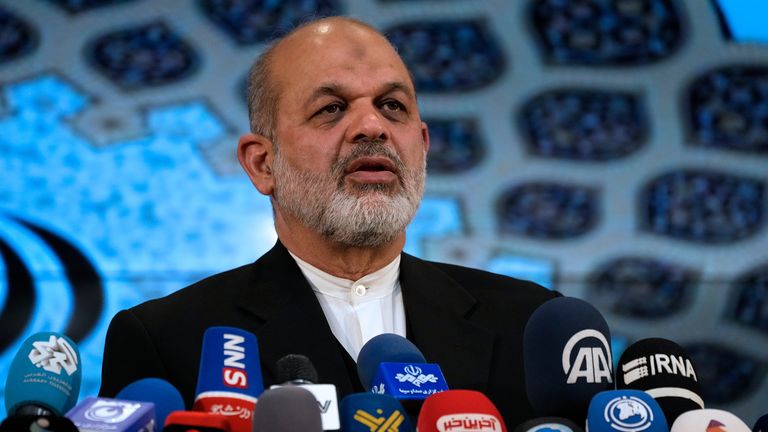
Newly appointed IRGC chairman Ahmad Vahidi. photo: AP
Like members of parliament, he must also be approved by the Guardian Council.
Benefits Council
The role of the Expediency Council is to advise the Supreme Leader. They can also resolve disputes between parliament and the Guardian Council
Iranian Army
The Iranian army, known as the Artesh, has existed since Iran was a monarchy. Its main role is to protect Iran’s borders.
Islamic Revolutionary Guard Corps
The IRGC was founded after the 1979 revolution because Ayatollah Khomeini did not trust Artesh, fearing they were loyal to the deposed Shah.
They are directly responsible to the Supreme Leader and exist to preserve the Islamic Republic.
The IRGC grew in size and capabilities during the eight-year Iran-Iraq War that began in September 1980.
As well as having naval and air branches, the IRGC controls the Basij militia it fears is responsible for the crackdown on the protest movement, and the Quds Force, the international arm of the IRGC, which is developing a network of proxies in the Middle East – including Hamas, Hezbollah and the Houthis.
Read more:
The Iran war led by Donald Trump is ongoing globally
US v Iran – how did we get here?
The IRGC is currently a very hardline and brutal force. They are also rich and very influential in Iranian politics. It is important to look at their role in the appointment of the next Supreme Leader.
In the event that the Supreme Leader dies, as is currently the case, the Chief Justice, President, and members of the Guardian Council jointly and temporarily take over the duties of the Supreme Leader, although not in name.