More problems in LP as a faction chose Nenadi Usman as the temporary chairman

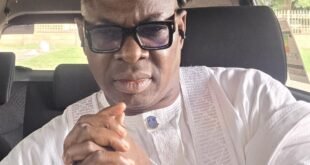
The Labor Party on Friday chose the former Minister of Finance, Esther Nenadi Usman, as the temporary national chairman.

Usman was elected at the party’s National Executive Committee (NEC) meeting held in Abuja.

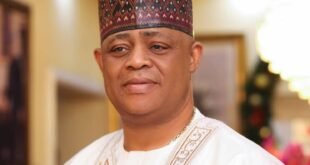
A former Senator for the Central Abia District, Darlington Nwokocha was elected as the National Secretary while the party at a meeting attended by the President of the Nigerian Labor Congress (NLC), Joe Ajaero and the Governor of Abia State, Alex Otti, among others.

LP leaders also agreed to the Bangsal Behavior Schedule, Local Government. The State and Zonal Congress and the National Party Convention.

This development is expected to increase the LP crisis with led factions. Julius Abure still filed a claim in the party’s leadership position.

In his words at the meeting, Ajaero described LP as an ordinary person.

He urged party members not to be discouraged by his current challenges.

Also read: Labor Party Faction Slams Abure for Wike Meeting, accusing the betrayal of the party’s ideals

On his party, Otti urged LP O members to make the party work.

He said the legal NEC meeting followed the Supreme Court’s decision, which confirmed Nenadi as the National Party Chairperson.

The governor appealed to Abure’s faction to comply with the decision of the High Court.

He said: “As a law -devout person, we feel we have to comply with the Supreme Court’s decision.

“What we have to do here is to start a structured process by formalizing several main committees such as the Temporary National Work Committee, which will oversee all party activities to the party convention, when the election for new NECs will be held.”


Check Also

Freedom of Information Act and The Limits of Press Freedom, By Mack Ogbamosa – THISAGE

        Introduction  A free, independent, and vibrant press is one of the strongest pillars of any democratic society. It is against this background that most democratic countries  make constitutional provisions for a free press . Others even go further to enact specific laws to make affairs of governments freely available to the public. Currently, there are more than  130 countries in the world that have free press laws. They include Sweden, United States, France, South Africa and Nigeria. Nigeria did not only make  constitutional provisions in Sections 22 and 39(1) of the 1999 Constitution ( as amended) but also went ahead to enact the Freedom of Information Act  in 2011. Section 22 of the 1999  Constitution states: “ “The press, radio, television and other agencies of the mass media  shall at all times be free to uphold the fundamental objectives contained in this chapter( ie Chapter II) and uphold the responsibility and accountability of the Government to the people”  Section 39(1)  of same Constitution states : “Every person shall be entitled to freedom of expression, including freedom to hold opinions and to receive and impart ideas and information without interference” ..  To complement these constitutional provisions, Section 1 (1) of the Freedom of Information Act (FOIA) states “Notwithstanding anything contained in any other Act, law or regulation, the right of any person to access or request information, whether or not contained in any written form, which is in the custody or possession of any public official, agency or institution howsoever described, is established.” while Section  2(2), states that: “A public institution shall ensure the proper organization and maintenance of all information in its custody in a manner that facilitates public access to such information”  Primary Purpose of FOIA  According to the Act, its primary purpose is to make information about public records freely available to every Nigerian in the public interest. …

Leave a Reply

Your email address will not be published. Required fields are marked *