JamzNG Latest News, Gist, Entertainment in Nigeria
● Says party will face post-Kwankwasiyya test
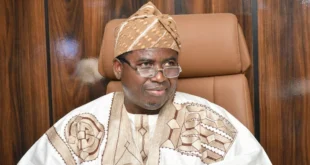
The National Secretary of the New Nigeria People’s Party [NNPP] Dipo Olayoku, has described the resignation of former Kano State governor, Rabiu Musa Kwankwaso, from the NNPP to the coalition party, the African Democratic Congress, as a predictable political development rooted in long-standing ideological and strategic differences within the party.
Olayoku said the move was anticipated rather than sudden and reflects the deep divisions that have quietly shaped the party’s internal dynamics for months.
He noted that the defection, while significant, is in line with previous warning signs observed within the party structure, particularly around issues of alignment, leadership direction and political survival ahead of the 2027 elections.
Olayoku, who made this known while speaking during an exclusive interview on Frontline, a current affairs program on Eagle 102.5 FM, Ilese-Ijebu, Ogun State on Monday, said Kwankwaso’s departure, although impactful, is not a shock to the party leadership, as internal disagreements over the political direction have reached a point where co-existence is becoming increasingly difficult, adding that the decision was largely influenced by conflicting views on the politics of coalition, on the philosophy of governance and on the future. of opposition politics in Nigeria.
He stressed that development should be understood in the broader context of Nigeria’s fluid political environment, where alliances are often shaped by both ideology and strategic interests rather than permanence.
“Oh yes, yes, yes. It wasn’t a surprise. Because the last time I was on your show I told you that as a political party, we are looking for realignment, and individuals within the party also have their own positions as to where they believe their interests are best protected, especially in a dynamic political system like Nigeria’s.”
He further explained that the party had long anticipated a difference of opinion, particularly among key stakeholders whose priorities were no longer in line with the party’s collective direction.
Recall that in a major policy shift ahead of the 2027 general elections, Senator Rabiu Musa Kwankwaso officially resigned from the New Nigeria People’s Party on Sunday, March 29, 2026, citing the need for “strategic realignment”, and is expected to formally defect to the African Democratic Congress today, March 30, at a ceremony in Kano, marking the end of a turbulent relationship with the NNPP leadership and signaling a broader consolidation effort of the opposition aimed at reshaping Nigeria’s political landscape ahead of the next general elections.
The move was interpreted by analysts as a calculated attempt to reposition both himself and his political structure within a more expansive coalition framework.
The defection has had repercussions on Nigeria’s political terrain, particularly with Kwankwaso ordering millions of members of his Kwankwasiyya Movement to register with the ADC nationwide, a move that could significantly alter the balance of power within opposition politics while strengthening the ADC’s grassroots presence in several regions of the country. High-profile political figures, including former Senate President David Mark and former Transport Minister Rotimi Amaechi, were expected to arrive in Kano to witness the transition, also highlighting the national importance of the development and its potential implications for coalition-building efforts ahead of 2027.
Although the NNPP leadership has publicly distanced itself from the move, Olayoku provided deeper insight into the internal disagreements that led to Kwankwaso’s exit, particularly on the issue of political alignment with the ruling structure, noting that there had been ongoing debates within the party on whether to align with the ruling bloc or maintain an independent opposition position.
He suggested that these disagreements were not merely tactical but reflected deeper ideological divisions over governance, national direction and political identity.
According to him, “Senator Kwankwaso felt that because of his political stance and ideology, it would be very difficult for him to convince his followers and admirers that after all the political parties in Nigeria today, he will align himself with the ADC, especially when their thinking on governance and the economic well-being of Nigerians is not in line with his long-held political principles and beliefs.” He emphasized that this ideological divide ultimately made continued collaboration within the same political framework untenable.
Olayoku further explained that the divergence had become more pronounced following previous defections within the party, particularly at the state level, where some leaders opted for alliances that were not in line with Kwankwaso’s vision, thus deepening internal tensions and hastening the eventual split.
He noted that these early developments served as clear indicators of structural tension within the party.
In his words: “Don’t forget that sometime in December or January, our governor defected, and the issue was already on the ground, but the real issue was not the defection itself, it was where to go as a political party, and that became the main point of disagreement between the leader and some other stakeholders within the party who had different priorities and calculations.” This, he said, marked the beginning of more visible fragmentation within the party leadership.
He added that while some members were eager to align with the ruling party for perceived political advantage and protection, Kwankwaso resisted such moves, choosing instead to maintain a distinct ideological identity that he believed would resonate more strongly with his support base. This resistance, according to Olayoku, has further widened the gap between him and other stakeholders.
“His followers were in a hurry due to some factors that we may not be able to reveal on air, and they felt that if they went to the ADC, their interests would be well protected there, but Kwankwaso himself had a different perspective based on his political philosophy and what he believes governance should stand for,” he said, highlighting the complexity of decision-making within the party.
Describing the Kwankwasiyya movement, Olayoku noted that it remains a highly centralized political structure built around Kwankwaso’s personal influence, long-standing political networks and grassroots mobilization capacity, making it one of the most formidable political blocs within Nigeria’s opposition space. He stressed that the movement’s loyalty lies primarily with Kwankwaso rather than the party itself.
“When I say his guys, I mean his followers, because wherever he goes, they go, as he is their general and has been fueling that movement for over a decade, which means his exit will naturally lead to the movement following him wherever he decides to go,” he said, suggesting that the NNPP may experience a significant shift in its support base following the defection.
Despite these concerns, Olayoku maintained that the NNPP remains structurally intact and capable of rebuilding its political strength, stressing that the party’s existence predates Kwankwaso’s involvement and is not dependent on any single individual for survival. He reiterated the historical resilience and institutional foundation of the party.
“The NNPP has been active for more than 20 years, since 2002, and although Kwankwaso arrived in 2022 and helped elevate the party to national prominence, that does not mean that the party cannot continue to exist and even grow beyond where it is today,” he said, expressing confidence in the party’s ability to adapt to changing political realities.
He acknowledged, however, that Kwankwaso’s contributions were instrumental in transforming the party’s electoral fortunes, particularly during the 2023 general elections, where the NNPP recorded unprecedented successes at multiple levels of government. These achievements, he noted, remain a significant part of the party’s legacy.
“With his arrival, for the first time in the history of the NNPP, we have produced a governor, a deputy governor, a speaker of the House of Assembly, two senators and about 19 members of the House of Representatives, which clearly shows the impact he had on the party’s growth and national visibility,” he said, underlining the scale of transformation achieved in that period.
Olayoku added that the party’s newfound visibility will continue to attract new members and political actors, even in Kwankwaso’s absence, as political participation remains fluid and driven by opportunity as much as ideology. He expressed optimism about the party’s future trajectory.
“The beauty of a political party is that it is based on voluntary entry and exit, and now that NNPP has become well known across the country, there is every likelihood that new people will come in and contribute to its growth and development in the years to come,” he concluded.
Meanwhile, NNPP national publicity party Ladipo Johnson, in an interview on Channels Television’s The Morning Brief on Monday, ahead of the 2027 general elections, says the party will be allied with the African Democratic Congress (ADC) for the presidential elections.
He revealed that despite the defection of its 2023 presidential candidate, Rabiu Kwankwaso, from the party, the NNPP will still contest the next general elections.
Stay up to date with the latest updates!
Join The ConclaveNG on WhatsApp and Telegram to receive real-time news alerts, breaking stories and exclusive content straight to your phone. Don’t miss a single title: sign up now!
Join our WhatsApp channel
Join our Telegram channel