JamzNG Latest News, Gist, Entertainment in Nigeria
The Federal High Court in Abuja on Tuesday convicted and sentenced five terrorism suspects to varying prison terms, including a 20-year sentence, as the Federal Government began a new phase of mass trials involving about 500 defendants.
During the hearing before MO Olajuwon, the court remanded one of the suspects, Babagana Umar, to the custody of the Department of State Services after he pleaded not guilty to terrorism-related charges linked to Boko Haram.
Umar was accused of “knowingly providing support by supplying spare parts to Boko Haram,” and providing firewood to the group in Sambisa Forest in 2022, in violation of provisions of the Terrorism (Prevention and Prohibition) Act 2022.
He also allegedly had “information about the existence and activities of Boko Haram, which would have led to the arrest and prosecution of these individuals… but did not disclose it to any law enforcement agency,” which is against the law. The case was adjourned for further hearing.
In a separate hearing at the same court, Yusuf Tuggar Abacha was sentenced to 20 years in prison after pleading guilty to charges including membership of Boko Haram, concealing information, and involvement in attacks.
“I hereby sentence him to 20 years in prison on each count, to run concurrently, and he must be rehabilitated and deradicalized after serving his term,” Judge Olajuwon ordered.
Meanwhile, in a related case led by Binta Nyako, four other defendants were found guilty of various terrorism charges.
Also read: More problems for ADC when third faction emerges, appoints new chairman
In one case, a defendant who admitted to being a member of Boko Haram, providing material support, and handling funds associated with the group was sentenced to 10 years in prison on each of four counts, to run concurrently.
“I hereby sentence the convict to 10 years imprisonment for each charge from the date of his arrest simultaneously… He must undergo rehabilitation and deradicalization,” said Judge Nyako.
Another defendant, Isa Ali, received a 10-year prison sentence for providing logistical support to the group, while Auwal Bello was given a similar sentence for facilitating the financing of terrorism, including transactions involving about N750,000 and payments to the group.
In a separate ruling, Shehu Bukar was sentenced to 20 years in prison for supplying livestock to Boko Haram, and the court described the offense as very serious.
“I hereby sentence him to 20 years in prison starting from the date of his arrest. He must also undergo rehabilitation and deradicalization,” he said.
All convicts were ordered to undergo a rehabilitation and deradicalization program, and the Ministry of Home Affairs will determine the correctional facilities where they will serve their sentences.
The latest proceedings mark the ninth stage of the Federal Government’s terrorism trial, with 10 judges sitting over the Easter holidays to speed up the process.
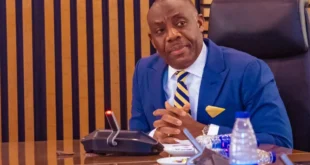
Attorney General of the Federation and Minister of Justice, Lateef Fagbemi, said 227 suspects were charged on the first day out of 500 suspects scheduled for trial.
“Don’t forget this is the Easter season. Normally, judges are not supposed to be here… but they are very patriotic, and they have served the country.
“For phase nine, we have a total of 500 units, and it will last until Friday or Saturday,” said Fagbemi.
He explained that the trial was moved to Abuja to overcome logistical challenges associated with the conduct of the trial in Kainji and Maiduguri.
“Whether in Kainji or Maiduguri, the people who try terrorism suspects are Federal High Court judges.
“In terms of logistics, it is not convenient to go to Kainji… the availability of several courtrooms here allows several judges to sit at the same time,” he said.
Fagbemi also emphasized that the trial was held openly, with the presence of local and international observers.
“This is open. This is not a secret trial. You will see where confessions are made, where evidence is given. Everything is in the public eye,” he said.
Security was beefed up around the court complex, with the suspects being transported under heavy guard by DSS operatives, alongside Nigerian Police and Nigerian Army personnel.
Also speaking, the Director General of the Legal Aid Council, Aliu Abubakar, said that many of the suspects had confessed to the charges, thus helping the trial process.
“The problem with terrorism trials is that they are watered down a bit… because the majority of suspects admit to committing crimes. This has been our experience for many years, and today’s trial is no different,” he said.
He added, “A large number of them were also convicted of association with Boko Haram. Some of them were not active participants… but they were punished… association with the same severity as committing an offence.”
Abubakar also noted that some of the defendants had been acquitted.
“Fortunately, I can say that one or two of them have been acquitted and released… for someone who had been in detention for four, five years… to be released, it shows that the trial had a certain level of transparency,” he said.
He emphasized that pretrial procedures had been followed.
“Yes, that’s right. That is a statutory prerequisite… we had the opportunity to talk to them… before the main session took place today,” he said.
Trials are expected to continue on Wednesday, April 8, 2026.