JamzNG Latest News, Gist, Entertainment in Nigeria
The Presidency defended the delay in the publication of the recent Quarterly Budget Implementation Report, and insisted that Nigeria’s fiscal year is determined based on the permissibility of the law and not simply based on the January-December calendar cycle.
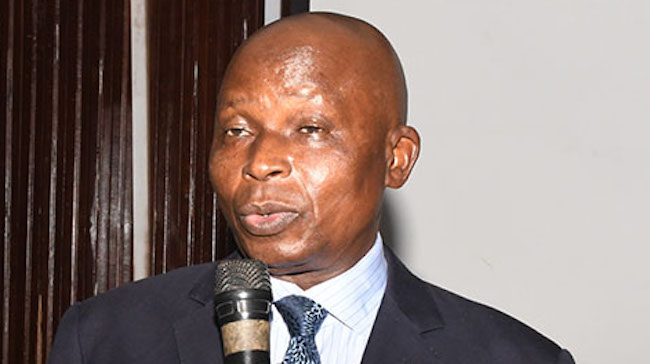
In a statement issued on Sunday, the Director-General of the Federation Budget Office, Tanimu Yakubu, said the concerns raised by members of the public regarding the publication schedule were understandable but required clarification within the framework of Nigeria’s constitutional and statutory financial system.
Yakubu explained that while the calendar year remains between January and December, the fiscal year operates differently as it is shaped by statutes and appropriations bills passed by the National Assembly.
“The fiscal year is not automatically the same length as the calendar year,” the statement said.
According to the Budget Office, government spending authority can legally be extended beyond a period of twelve months if the extension is supported by law or an appropriations instrument.
“If an Appropriation Act or other legal instrument authorizes expenditures or extends implementation beyond twelve months, the operational fiscal period assumes the legally prescribed duration,” the statement said.
The Presidency explained that Nigeria has on several occasions adjusted its fiscal implementation schedule through supplementary budgets, approval of extensions, continuing resolutions and re-enactment of appropriation laws.
“In practice, the Federal Government has at times deviated from the strict January-December cycle through statutory extensions, additional appropriations, continuing resolutions, extension authorizations, and Appropriation (Repeal and Re-Enactment) Acts,” he said.
The statement attributed the recent budget reporting delays to the repeal and reinstatement of the 2025 Appropriations Act, which was finalized in December 2025 and extended the budget implementation period to June 2026.
“The most recent change in our publication schedule stems primarily from the Repeal and Re-Enactment of the 2025 Appropriations Act, which was finalized in December 2025, and the consequent extension of the 2025 Budget implementation period to June 2026,” the statement explained.
“These steps legally extend the operational cycle of the 2025 APBN by more than one calendar year.
“Therefore, in substance and law, the fiscal year is a legislatively defensible spending window, not an immutable chronological interval,” he added.
Also read: Atiku slams Tinubu over World Bank loan plans, describes debt culture as ‘economic vandalism’
The Presidency further argued that Nigeria’s approach was in line with international practice, noting that some major countries observe fiscal years that differ from the regular calendar year.
“These differences reflect accepted comparative practice: for example, the US federal fiscal year runs from October 1 to September 30, and India’s fiscal year runs from April 1 to March 31—each determined by law and policy considerations, not the Gregorian calendar,” the statement noted.
The Budget Office also referred to the constitutional provisions governing public spending in Nigeria, and stressed that spending remains legal as long as it is supported by legislative approval.
“Our Constitution also places primary emphasis on legislative authorization for public expenditure. Articles 80 and 81 of the Constitution require that withdrawals from the Consolidated Revenue Fund be authorized by an Appropriation Act or other law passed by the National Assembly,” he said.
“When the National Assembly lawfully expands or reintroduces expenditure powers, those powers remain valid and exercisable until they expire under law. Judicial authorities in Commonwealth jurisprudence have consistently affirmed the supremacy of legislative authorization in matters of public expenditure,” the statement added.
The Presidency said flexible implementation periods are important globally, especially during periods of economic disruption such as the COVID-19 pandemic, when many countries adjust budget cycles to address procurement delays and economic instability.
“History and recent experience underscore the practical reasons for such flexibility. During economic disruption, including the post-COVID-19 period, many jurisdictions expand budget implementation timeframes to manage procurement delays, revenue volatility, and the viability of capital projects,” the statement said.
According to the Budget Office, Nigeria is taking similar steps to prevent project abandonment, maintain contractor liquidity, and maintain economic stability.
“Nigeria has also extended the implementation period to avoid project abandonment, protect contractor liquidity, safeguard employment, and maintain macro-fiscal stability. These actions do not raise constitutional issues; they reflect the fact that fiscal authority derives from statute,” he said.
The agency further revealed that following the re-enactment of the 2025 budget, the agency initiated an extensive reconciliation process involving revenue performance, expenditure alignment, financing, debt management, and inter-agency coordination before issuing the report.
“Following the Repeal and Reinstatement of the Appropriation Act of 2025 and its extension through June 2026, the Budget Office conducted a comprehensive reconciliation—covering revenue performance, cash management, alignment of expenditures, debt and financing, and interagency coordination—to ensure the accuracy, integrity, completeness, and consistency of the audit of the Quarterly Budget Implementation Report,” the statement said.
The Budget Office assured Nigerians that the outstanding report will soon be released in stages.
“The outstanding Quarterly Budget Implementation Report is being finalized and will be released in stages over the coming weeks,” he added.
The Presidency also announced plans to strengthen its fiscal reporting system through improved digital infrastructure and better institutional coordination.
“At the same time, the Budget Office is strengthening its digital reporting architecture, data harmonization systems, and institutional coordination to produce more timely, comprehensive, and analytically robust fiscal reporting in line with international best practices,” the statement concluded.
The Federal Government reaffirms its commitment to transparency, fiscal discipline and accountable management of public finances in accordance with constitutional provisions and existing laws.