JamzNG Latest News, Gist, Entertainment in Nigeria
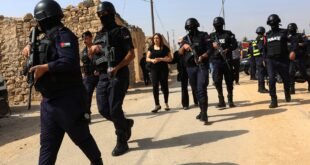
Israeli authorities forcibly entered the Kalandia Vocational Training Center on Tuesday, August 24, and took control of the facility, according to the UN agency for Palestinian refugees, UNRWA. The center is the last one UNRWA The facility is still operating in occupied East Jerusalem, after the Israeli government closed the agency’s schools and other clinics in the city.
The UN strongly condemned the action, saying that the entry of security forces into UN facilities without the permission or approval of the Organization was unacceptable.
Secretary General Antonio Guterres called for the Israeli Government to immediately stop interfering with UNRWA installations and immediately vacate, return and restore all affected locations to the UN.
Earlier this month, misinformation circulated about the center, prompting UNRWA to issue a statement reaffirmed its commitment to education and underlined that the institution remains “crucial to ensuring that Palestinian refugee children and young people can develop the knowledge, skills and opportunities they need to build their future”.
Roland Friedrich, Director of UNRWA Affairs in the West Bank, told us that the incident is part of a broader effort by the current Israeli Government to end UNRWA activities in occupied East Jerusalem, following the implementation of what he called “anti-UNRWA” legislation almost a year and a half ago.
The Kalandia Center provides vocational training to young people from refugee camps in the West Bank. Mr Friedrich warned that the closure of the school would deprive 340 young men of their educational rights and opportunities for the future.
This interview has been edited for clarity and length.
Roland Friedrich: The situation at the Kalandia Training Center remains critical. Israeli security forces are still deployed inside the center, along with Israeli officials from the Jerusalem Municipality, as they carry out work and changes to the installation. This is an unacceptable breach – as underlined by the Secretary General – of the privileges and immunities of the UN. The continuation of this situation will likely deprive 340 male youth in the West Bank of their right to education.
UN News: Can you tell us what actually happened? What happened to the UNRWA staff at the center?
Roland Friedrich: On Tuesday morning, a large number of Israeli troops arrived and forcibly entered the compound. We have 24 staff on site as we prepare for the new school year, which is scheduled to start next week. Israeli security personnel searched the premises, opened the building and temporarily detained our staff at the premises. They were later released. This is an unacceptable violation of the privileges and immunities of the UN.
UN News: Were you told why the Israeli government went into the center or what they were looking for? Do you have any information about the possibility of returning the center to UNRWA, as requested by the UN?
Roland Friedrich: The Secretary General has been very clear in his demands to immediately restore the situation to normal. The background to this incident stems from Israel’s anti-UNRWA law adopted about a year and a half ago. We witnessed the gradual closure of our six schools in occupied East Jerusalem by 2025, resulting in 800 children losing their education. In December, amendments were made to the anti-UNRWA law, including provisions to cut off water and electricity supplies from UNRWA installations in East Jerusalem, and secondly, authorizing Israeli security forces to seize our compound, headquarters and the Kalandia Training Center.
UN News: You talk about the immunities and privileges of the UN and its facilities. Can you explain what that means and why it’s important to commit worldwide, especially in the occupied Palestinian territories?
Roland Friedrich: Each Member State of the United Nations, in accordance with its obligations under the Charter, but also by virtue of being a party to the general Convention, is obliged to respect the privileges and immunities of the United Nations. This means, for example, the inviolability of UN premises, respect for immunities relating to staff, to vehicles, as is the case everywhere in the world where we operate. What we saw yesterday and what continues to happen is just the opposite [of this]. And I think the important thing to remember is that this sets a precedent in ensuring that our staff can work in a safe, secure manner anywhere in the world in very dangerous contexts.
UNRWA Kalandia vocational training center in the West Bank.
UN News: Since we are talking about international law and international obligations, what will the UN do now? What do you expect from the international community on this?
Roland Friedrich: What we hope is that Member States take responsibility for applying pressure, so that we can continue our work at this training center. The key is that we can return to the center, run it, and serve the communities that the General Assembly has mandated us to serve.
UN News: In the context of the Israeli legislation you’re talking about regarding UNRWA, what can you still do in the West Bank to serve Palestinian refugees?
Roland Friedrich: There are two laws. One of the laws is a ban on UNRWA’s operations and presence in areas that Israel considers its sovereign territory and this also applies to our services in occupied East Jerusalem. The occupation of East Jerusalem is not recognized by the UN, nor is the annexation of East Jerusalem. The second law sets a no-contact policy that prohibits the Israeli government from dealing with UNRWA and this impacts our operations in the Gaza Strip and the West Bank. However, we can continue to operate in the Gaza Strip and West Bank, providing vital humanitarian assistance in Gaza through more than 11,000 staff members who work every day, providing education, health consultations, shelter and drinking water. Likewise in the West Bank, we have 4,600 staff working in the field. We continue to provide education. Last year we provided 1.1 million health consultations through 50 health facilities, and we and our partners provided social protection, cash assistance and food support to more than 270,000 beneficiaries. I pay the highest respect to my UNRWA colleagues in the field, the Palestinian teachers, nurses, social workers in the Gaza Strip and the West Bank who work in extremely difficult conditions every day.
UN News: What are the main messages you want the international community to understand about UNRWA’s presence, its work and the risks it faces in the West Bank?
Roland Friedrich: One thing we clearly need to see is the restoration of respect for the UN at large, and for UNRWA as an institution mandated by the General Assembly by all States Parties. Second, humanitarian space in the West Bank as a whole is shrinking, and this is a trend that needs to be reversed. And third, we need to reverse the trend of forced displacement in the West Bank. This is a dangerous trend because along with settlement expansion, it creates a reality on the ground that makes it increasingly unlikely that a two-state solution will be implemented. It is important for us to get out of the abyss we see in the West Bank today and return to a credible path towards a two-state solution, and ultimately a situation where UNRWA as an institution no longer has to do its job because the conflict has moved towards a solution.