JamzNG Latest News, Gist, Entertainment in Nigeria
Nigeria’s persistent struggle to achieve extraordinary economic growth is not the result of “brain drain” towards foreign countries, but rather “brain diversion” within its own country.
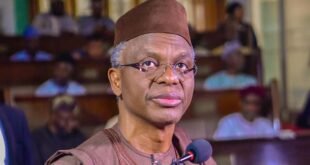
This is in line with the opinion of former Kaduna State Governor, Nasir El-Rufai, who argued that the best and brightest in the country were systematically incentivized to chase “rents” rather than build industry.
In a detailed statement on social media released on Wednesday, the former governor ditched the usual rhetoric about lack of investment, and said the root of the problem was structural.
“Nigeria’s growth problem is not a lack of human resources, capital or ideas. But the problem is where our best human resources are going—and why,” stressed El-Rufai.
El-Rufai’s criticism centers on human nature and the economic signals sent by the Nigerian state. He argues that Nigerians are not deliberately destroying the economy; they simply make the most logical choice based on the rewards available to them.
“People don’t wake up with the intention of harming their country. They respond to incentives rationally,” he said.
Also read: DSS detains El-Rufai after trial by ICPC
According to El-Rufai, the current system favors activities where “small differences in skill yield large rewards”—often through government connections or short-term arbitrage—over long-term productive endeavors.
To strengthen his argument, El-Rufai pointed to several serious economic indicators in 2024 that highlight a country stuck in a low economy.
He cited data showing that GDP growth is about 4.1 percent in 2024, while GDP per capita remains at around US$1,084, placing Nigeria among low-income countries. Informal jobs account for about 93 percent of the workforce, and the country’s tax-to-GDP ratio is only 8.2 percent.
These figures, he stressed, are a symptom of a deeper downturn in which the private sector is afraid to grow too big or too visible.
“These numbers are not abstract,” El-Rufai said. “They depict an economy where scale is at risk, visibility attracts predators, and long-term investments struggle to compete with short-term access.”
While El-Rufai dissected the national economy online, he was physically present at the Federal High Court in Kaduna on Wednesday morning. Arriving at around 09.00 for the follow-up hearing of his bail application, the former governor’s presence attracted great attention from observers and security forces.
The legal process is fraught with tension; Tuesday’s hearing stalled after the defense filed a motion asking ustice Rilwan M. Aikawa to recuse himself, citing alleged bias and an unresolved petition against the judge.
Despite difficult legal and economic conditions, El-Rufai highlighted glimmers of hope in the non-oil sector, particularly cocoa, fertilizer and cashew exports. He is adamant that when the government stops intervening, Nigerian companies will excel.
“As bright people are withdrawn from the world of production, the quality of entrepreneurship declines, technological progress slows, and long-term economic growth rates decline,” he warned. “When incentives are aligned—even partially—Nigerian companies can compete and thrive.”
To correct “talent misallocation”, El-Rufai proposed a rigorous reform agenda:
– Reducing government authority to reduce corruption.
– Digitization of rules to ensure predictability.
– Enforce property rights to protect investors.
– Eliminate obstacles in increasing the scale of productive businesses, such as port delays and power outages.
Concluding his statement, the former governor emphasized that progress will not come from charismatic leadership alone, but from fundamental changes in the nation’s “winners”.
“Nigeria’s future doesn’t depend on slogans or personalities. It depends on who wins in our economy. If this system rewards producers over extractors, then growth will happen—fast and long-lasting. Nigeria has no shortage of talent. Nigeria must reallocate.”