JamzNG Latest News, Gist, Entertainment in Nigeria
By Ayo Kehinde
The Federal Executive Council (FEC) has approved road infrastructure projects worth over ₦1.2 trillion across the country, including the demolition and redesign of the Carter Bridge in Lagos, as part of efforts to modernize Nigeria’s transport network and boost economic connectivity.
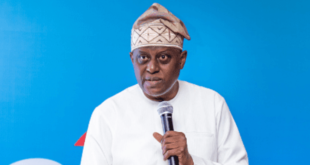
Briefing State House Correspondents after the Federal Executive Council meeting chaired by President Bola Tinubu on Wednesday, Works Minister, David Umahi, said the approvals followed extensive technical reviews, contractor performance evaluations and stakeholder consultations.
Among the approved projects is the completion of the Suleja–Minna road, originally awarded to the Salini Construction Company but later discontinued due to poor performance. Umahi revealed that only 10 kilometers of the road had been completed before the contract was cancelled.
He said the federal government has now decided to complete the remaining 71 kilometers of the dual carriageway. One roadway was awarded to China Geo-Engineering Corporation (CGC) for ₦91 billion, while the second roadway received clearance from the Bureau of Public Procurement (BPP) for award.
In Lagos, the Council approved the design and cost of a new ₦5.6 billion Carter Bridge project. Umahi said technical assessments have shown that the existing bridge structure can no longer be restored and must be demolished and replaced.
According to him, Advanced Engineering Consultants was contracted to undertake a detailed design and cost assessment prior to the procurement process for the construction of the new bridge.
The federal government has also approved the overhaul and redevelopment of the 132-kilometre Kano-Kongolam Road, a tax credit project initially awarded in 2022. The road, which connects Kano, Jigawa and Katsina states, has been redesigned from asphalt pavement to a three-lane reinforced concrete roadway.
The updated design will incorporate solar-powered streetlights and closed-circuit television (CCTV) systems to improve safety along the route. The revised cost of the project is estimated at ₦334 billion.
Similarly, the FEC approved the reconstruction of the Abuja–Lokoja road following the termination of contracts awarded to two underperforming contractors. The affected 86 kilometer section will now be rebuilt using reinforced concrete pavement and operated by five contractors, including Julius Berger, which is already building other segments of the corridor. The project is estimated to cost ₦146 billion.
The Ibadan-Ife-Ilesa Road, a 103 kilometer dual carriageway worth ₦427 billion, has also received approval for reconstruction. Umahi said the project, initially awarded by the previous administration, made minimal progress before being reviewed and awarded by the current government.
Additionally, Phase Two of the Keffi-Nasarawa-Abaji Road Rehabilitation Project covering 129.3 kilometers at ₦203 billion was approved. The minister noted that the project would significantly improve connectivity between Nasarawa State and the Federal Capital Territory.
Umahi further revealed that the federal government plans to commission at least four major road projects in each of the six geopolitical zones by May 15, underscoring the administration’s commitment to providing durable infrastructure and boosting economic growth nationwide.
He stressed that the adoption of reinforced concrete technology for most projects reflects the government’s desire to ensure longevity, reduce maintenance costs and promote value for money in road construction.
Post views:
20