JamzNG Latest News, Gist, Entertainment in Nigeria
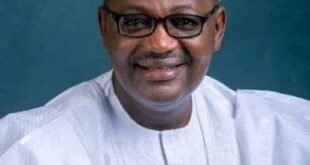
It was Nelson Mandela to say that “education is the most powerful weapon you can use to change the world”. Yet, when Malcolm X declared that “education is the passport for the future, for tomorrow it belongs to those who prepare today”, perhaps it was unconsciously prefiguring the type of energy and the governor of the passion Nasir Idris who led to the education front in the state of Kebbi since he took on the task of almost two years ago.
For us in Kebbi, this is not surprising. The governor’s pedigree is imbued with education. From the classroom, through the trade unionist in which the national president of the Union of teachers of Nigeria (Nut) and, subsequently, the president of Nigeria Labour Congress (NLC) became, Idris was a forecasting leader. It is not a secret that many leaders with such a background often discard their foundations once they did the leap in politics. Not idis! This is because, not only did he keep his roots as a teacher, but he also chose to transform him into a platform for a real impact. I wonder that his footprints in the educational sector of the State of Kebbi are visible and undeniable.
Without minimizing words, Kebbi stands out as perhaps the only state in Nigeria in which free education is truly free. No hidden expense, no bureaucratic complication. Parents only have to present their children and are enrolled without the usual obstacles that frustrate access to other states. This deliberated policy has restored trust in public education and has revoked a heavy burden of parents, in particular in rural communities in which poverty often deprives children of school opportunities.
Even at the tertiary level, the students were not left behind. The scholarships of the value of almost 3 billion have been provided to Kebbi’s indigenous people in different institutions at home and abroad, ensuring that financial constraints will not be able to end the academic path of young promising young people. This is happening in a state in which education is still in competition with the deeply rooted cultural and economic barriers, thus making its intervention to say the least revolutionary.
I was very impressed by the strong interest of the governor for the institutions that professionals form. At the ambush College of Midwifery, for example, it approved the supply of essential equipment to accelerate the take-off of the institution based on Bernin-Kibbi. This intervention aligns perfectly not only with its vision of producing well -trained healthcare professionals who will strengthen the state health sector, but also the desire of people of well -personal health facilities throughout the state. In addition to the midwife, the tertiary institutions throughout the state have benefited from renovations, infrastructure updates and improved teaching aid, reflecting its recognition that education cannot thrive in dilapidated environments or under resources.
But perhaps one of his most innovative interventions was the integration of Tsangaya schools (traditional Koranic schools) in the modern educational system. For decades, these schools operated outside the mainstream, leaving children with little or no exposure to literacy and numbering. Therefore, providing funding and incorporating modern basic topics into their curriculum creates a hybrid model, designed to preserve the cultural heritage while giving thousands of children a possibility in a more balanced education. The chain effect is already visible, with the number of children out of school in Kebbi in constant decline.
Another area in which its administration has broken new land lies in promoting the same access to education, in particular for the girl-child. In Kebbi, the cultural barriers and expectations of the company often hold girls away from school. Governor Idris has faced this challenge frontally, launching policies that encourage the registration and conservation of women. The results are evident. More than our girls are now in school and pursue their education. His donation of ₦ 50 million to Command Science Secondary School (Girls), Goru, was truly a bold declaration of his belief that investing in the girl-child is investing in the future of the state.
To facilitate financial pressure on families, his administration has made the unprecedented phase of covering Waec examination taxes and NEAN for all Kebbi students. This intervention has increased participation in these critical assessments, allowing multiple students to guarantee their certificates without the obstacle of unpaid commissions.
Idris has also undertaken a huge infrastructure renewal. Dilate classrooms and overcrowded structures are systematically addressed. Yes, billions entered the renewal and construction of 120 secondary schools throughout the state. In addition, four mega schools are built, one in each of Kebbi’s four Emirate tips. These top institutions are designed to be models of excellence, equipped with modern learning structures to compete with the best of the country.
However, the infrastructure alone does not guarantee quality education. Governor Idris understands it, which is why he has placed a prize for the well -being and development of teachers. Firstly, he extended the pension era for teachers from 60 to 65 years and increased the service period from 35 to 40 years, ensuring that the experience and skills are not lost prematurely. Therefore, to fill the existing gaps of the workforce, it approved the recruitment of 2,000 new teachers, a move designed to bring fresh energy to classrooms and reduce the relationships of the-student teachers.
The governor also increased teachers’ salaries! This is a bold step in a country where our teachers are often in the lower step of wage considerations. Today, teachers in Kebbi’s state can look at others in the face with dignity. This approach to increase moral and rewarding has created a motivated workforce committed to providing quality education. This is truly a recognition of the obvious truth that no educational system can overcome the quality of its teachers.
As a whole, these interventions reflect a holistic vision. It shows that the Governor Idris is not only investing in buildings, salaries or scholarships in isolation; It is building an ecosystem in which access, equity, quality and sustainability converge. From basic education to tertiary institutions, from infrastructure to well -being and traditional systems to modern innovation, the picture is of deliberated planning and execution.
As Mandela and Malcolm X reminded us, education is the passport for the future and the weapon to change the world. In Kebbi, the Governor Idris is showing that these are not only high ideal inherited from past leaders. It is making concrete efforts through practical, inclusive and forward -looking policies to arm the children and young people of Kebbi with the tools they need to have the future and remodel the fate of the state.