JamzNG Latest News, Gist, Entertainment in Nigeria
Imagine being born in a Soweto hospital. Your mother hugs you. The state assigns you an identification number. You grew up playing on the streets of Johannesburg. You go to school. You learn isiZulu and English. You believe with all your soul that South Africa is your home.
Now imagine twenty-three years later, the same government that issued that identification number tells you that you are a fraud. They say your mother made a mistake before you were born. Therefore, you are not actually South African. They take your ID. They take your passport. They told you to leave. And when you ask where to go, they shrug their shoulders and say: not here.
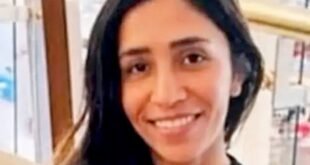
This is not a hypothesis. This is the real life of Chidimma Adetshina.
He is twenty-three years old. A law student. Born in Soweto in 2001. His father is Nigerian. His mother was born in Mozambique but became a South African citizen. Chidimma has never known another home. South Africa was all he had ever known.
In 2024, she was announced as a finalist in Miss South Africa. It should be a happy moment. Instead, it became a nightmare.
Attacks came from all directions. On social media, strangers questioned his identity. They said he was not “South African enough.” They said his Nigerian surname proved he was not a member of the group. They say she stole opportunities from “real” South African women.
Let me ask you a question. When white South Africans with European ancestry compete in Miss South Africa, does anyone ask to see their grandmother’s passport? Has anyone questioned whether they are “South African enough”? No. It’s celebrated. Their foreign roots were seen as exotic. Their European heritage is admired.
But Chidimma is different. Its roots come from Africa. His father is Nigerian. And somehow, being Nigerian is a crime.
Politicians joined in the attacks. Cabinet ministers openly questioned his citizenship. The government launched an investigation. The Department of Home Affairs said Chidimma’s mother had committed fraud—stealing the identity of an innocent South African woman around the time of Chidimma’s birth.
But even the government admits one important fact: Chidimma was just a baby at the time. He’s still a baby. He didn’t know what his mother was doing. He couldn’t possibly participate in any fraud. He is completely innocent.
But the state still decided to punish him.
Think about injustice. A baby is born. He has no control over his circumstances. He grew up believing that she was his. Twenty-three years later, the government says: You don’t belong here. Your mother’s mistakes are your punishment. You have to go.
What kind of justice is that? What kind of country punishes a child for the actions of an adult before he can walk?
The pressure became unbearable. Chidimma was forced to withdraw from Miss South Africa. He was afraid for his safety. He didn’t do anything wrong. He just wants to represent the country he loves. And the country has rejected it.
Then something unexpected happened. Nigeria reaches out. His father’s country of birth welcomed him with open arms. She competed for Miss Universe Nigeria. He won. In October 2024, she was crowned Miss Universe Nigeria. A few months later, at Miss Universe in Mexico, she was first runner-up—second worldwide.
Feel the irony. A young woman born in South Africa was rejected by South Africa. A young woman who has never lived in Nigeria is embraced by Nigeria. A young woman who spoke IsiZulu and grew up in Soweto was told that she did not speak South African well enough. But he is Nigerian enough to wear the crown of a country he has never visited.
The story gets worse. In 2025, the South African government revoked Chidimma and his mother’s citizenship. They canceled their IDs and passports. They declared Chidimma a “prohibited person”. He cannot enter the country where he was born. He couldn’t go home.
On 15 February 2025, his mother was arrested in Cape Town. Accused of fraud. Chidimma watched as his mother was taken away. He watched his family be torn apart. And he was powerless to stop it.
In June 2026, Chidimma attempted to return to South Africa. He crossed the border from Mozambique. He wanted to see his family. He wants to fight for his rights in court. The government arrested him. They said he entered illegally. They said because he was a “prohibited person”, he couldn’t be here.
But how can you be banned from entering the country where you were born? How can you be an illegal alien in the only home you’ve ever known?
He was released on a warning. The court cannot decide his fate until February 2027. He is in legal limbo. He didn’t know if he would be allowed to stay. He doesn’t know if he will be deported. He didn’t know where it was.
Outside the courtroom, protesters gathered. They shouted “go home”. They chased his car. They treated him like a criminal. But what crime had he committed? Born? Having a Nigerian father? Dreaming of representing South Africa?
Chidimma said the experience was so traumatic that she needed therapy to recover. He said he never imagined the country he loved could treat him like this.
But even in pain, he did not respond with hatred. He answered gracefully. He said: “We must not let xenophobia and misinformation dictate how people are treated. We must all be guided by the spirit of Ubuntu.”
Ubuntu. African philosophy that says “I am because we are.” The belief that our humanity is tied to the humanity of others.
But the crowd outside the courthouse didn’t remember Ubuntu. The politicians who attacked him did not. The government that revoked his citizenship did not do so. They forgot Ubuntu. Or maybe they never really believed it.
This is where the hypocrisy becomes unbearable. South Africa calls itself the “Rainbow Nation”. Its constitution upholds human rights. Its leaders preach Pan-Africanism. They want to host Miss Universe. They want to do business throughout Africa.
But when a black African woman with a Nigerian father tried to represent South Africa, she was called an outsider. Investigated. The documents were stripped. Expelled abroad.
What kind of rainbow country is this? What kind of African unity is this?
The numbers are terrible. Between 2022 and 2025, South Africa recorded 406 verified incidents of xenophobic discrimination. Seventy-five people died. In 2025 alone, there will be 151 incidents. This is not a statistic. This is human. Mom and dad. Children. People come looking for a better life. Some were never allowed to live.
Chidimma did not come to South Africa. He was born here. He grew up here. He became a law student here. He wants to represent his country. And this is how the state treats it.
What message does this send to the rest of Africa? If a child born in South Africa isn’t South African enough, then who is? If the children of Mozambican-born mothers can have their identity revoked, whose identity is safe?
Chidimma’s case concerns more than one young woman. It’s about the meaning of belonging. It’s about whether citizenship is a right or a privilege. It’s about whether the government can erase life with the stroke of a pen.
What happens to the child who inherits the consequences of a dispute he did not create? What happens to children who are never born wrong, but are still punished?
After winning Miss Universe Nigeria, Chidimma said: “This crown will unite us as one.”
Think about it. A young woman is hounded out of her country. Threatened. Investigated. The documents were stripped. Watching his mother get arrested. Forced to flee to a country he had never lived in. And he talked about unity. He talks about hope. He talks about one Africa.
That’s not a weakness. It was an extraordinary power. That is Ubuntu.
But is Africa ready to follow his example? The continent that gave birth to Nelson Mandela. It gave the world Ubuntu. It’s fighting for freedom. The same continent is now deporting its own children because of paperwork. Rejecting his own daughter because of her father’s nationality. Teaching Africans to fear each other.
Chidimma’s case forces us to confront questions we have long avoided: When we talk about African unity, do we really mean it? When we talk about Ubuntu, do we really practice it? Or are they just words—empty words that sound good at conferences but are lost when a real African kid needs to feel welcome somewhere?
Let the courts decide the law. That is their job. But let Africa decide its conscience. That is our job.
Because sometimes, behind a disputed document, there is life. And behind the citizenship dispute, there may be a young woman asking questions that shouldn’t be so complicated:
“Where exactly am I allowed to call home?”
Chidimma did not ask for special treatment. He asks for what every child deserves: to belong somewhere. To be accepted somewhere. To have a place to call home.
He was born in Soweto. He grew up in South Africa. He loves his country. But his country says he does not belong to it. Nigeria accepted it. Nigeria crowned him. But Nigeria was never his home. He had never lived there. South Africa should be his. But South Africa rejected it.
So where is he? What does he call home?
This is the tragedy of Chidimma Adetshina. And this should break the hearts of every African.
We can do better. We have to do better. Because if we continue to punish children because of adult choices, if we continue to reject our daughters because of who their fathers are, we are not building a united Africa. We are building an orphan continent. A continent of young people who don’t know where they are. Chidimma Continent.
That’s not Ubuntu Africa. This is not the Africa that Nelson Mandela dreamed of.
Now it’s time to choose. Chidimma is waiting for an answer. So are the continents.
By: Allen Durueke