JamzNG Latest News, Gist, Entertainment in Nigeria
The lawmaker representing Edo North Senatorial District in the National Assembly, Adams Oshiomhole, has intensified his criticism of the Senate leadership over the recent amendments to the Standing Rules, describing the changes as self-serving and questioning the eligibility of the Senate President, Godswill Akpabio, under the new framework.
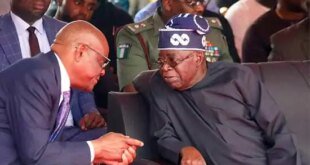
A tense exchange took place between Akpabio and Oshiomhole on Tuesday over the controversial amendments to the Senate Standing Rules.
The controversy followed revisions to Order 2(3), (4) and (5), which introduced stricter eligibility requirements for aspirants to principal offices in the upper legislative house.
Under the amended provisions, only senators who have served at least two consecutive terms immediately preceding their appointment, or those who have previously held senior positions in previous assemblies, are eligible to run for the positions of Senate President and other key leadership positions.
The rules also stipulate that nominees for the Senate President and Vice President positions must have completed at least one full four-year term, effectively reinforcing a ranking system that gives priority to longtime lawmakers and former presidents or top officials.
In the previous sitting, Oshiomhole raised a point of order against the amendments, warning that they could limit inclusiveness and restrict the democratic rights of lawmakers.
He argued that competence, not tenure, should remain the primary basis for Senate leadership selection.
Reiterating his position while speaking to journalists in Abuja on Thursday, Oshiomhole said the new rules appear targeted and capable of narrowing the political space within the House.
“This rule entails a serious moral crisis. The president of the Senate became minority leader during his first term. Now he presides and asks us to change those rules, even those who have made a mandate cannot even contest,” he said.
Oshiomhole also questioned the implications of the amendment for the current leadership, insisting that if the rule were strictly enforced, it would affect the electability of the Senate President himself.
“As we speak today, the President of the Senate has not completed eight years in office, even if you count the previous one plus the current one.
“So if we pass the rule that we have to go eight consecutive years before he can become president of the Senate, it means he has to go away setting a good example,” Oshiomhole added.
The former Edo State governor also criticized what he described as attempts to alter established parliamentary procedures to gain selective advantage, arguing that such moves undermine fairness and institutional integrity.
He referred to the tenure of former Senate President David Mark, noting that continuity of leadership in past assemblies was achieved under existing rules without retrospective changes.
“More offensive to me is that, as leaders who are the product of statutes, we should not make laws to perpetrate someone. David Mark had the honor and privilege of serving as president of the Senate for eight years, without changing the rules,” he said.