JamzNG Latest News, Gist, Entertainment in Nigeria
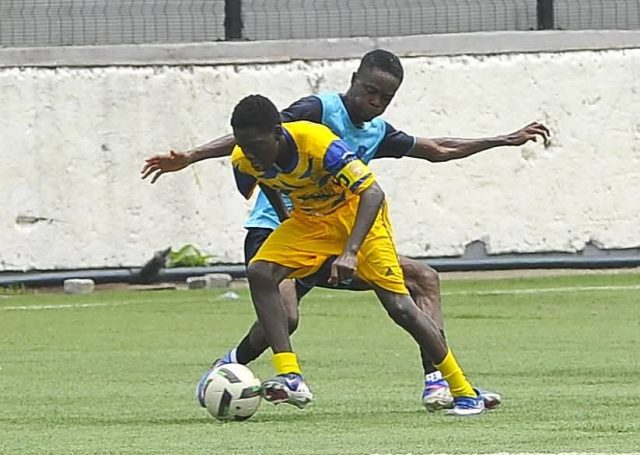
Across dusty fields, school fields and illuminated five-a-side football cages, a quiet revolution has been reshaping Nigerian sport. Grassroots academies, once informal gatherings based on passion and little else, have become structured talent factories that feed clubs at home and across Europe.
The Nigerian Football Federation now treats them as serious partners in player development, and the proof is showing up on team sheets from the NPFL to the Premier League.
That rise has not gone unnoticed beyond the touchline. As more academy graduates enter the major leagues, the global audience following Nigerian talent has increased, with fans following those players abroad increasingly turning to comparison and review platforms such as Betiton to assess the best betting sites covering the Premier League and European football. The interest underscores a simple point: the pipeline begins on Nigerian soil, long before any explorer or online betting market realizes it.
From street fields to structured academies
Football came to Nigeria during the colonial era and never left it. For decades, the country produced talent the hard way, on uneven streets and bare fields where ball control was a survival skill. What has changed is the scaffolding surrounding that raw ability. Academies such as Pepsi Football Academy, Real Sapphire and Lagos-based Mavlon FC turned street culture into something organized, with age-grade teams, qualified coaches, physical work and a clear path to professional contracts. The shift has been less about discovering talents, of which Nigeria has never been short, and more about retaining them, shaping them and giving them a place to go.
A new academy model based on data and education
The best academies now look nothing like those of a generation ago. Many integrate video analysis, performance data, structured mentoring and partnerships with foreign clubs, while combining football with formal education so that players have a future even if they never turn professional. International programs have taken note of the depth of Nigerian talent: UK-based teams such as the FCV International Football Academy have held scholarship-backed trials in Lagos and Abuja that channel young Nigerians into European football, as THISDAY reported. The emphasis has shifted from producing raw ability to developing the complete athlete, technically, physically and mentally.
The talent that the system is producing.
The results are increasingly difficult to ignore. Defender Benjamin Fredrick, born in 2005, is a textbook product of the modern Nigerian academic system. Discovered by the Simoiben Academy Foundation in Kaduna, he sharpened his control on rough surfaces before moving to Brentford, where he won the club’s B team’s Player of the Season award and earned a senior Nigerian call-up. It is one name among a growing list of Nigerian players plying their trade abroadmany of whom passed through a local academy before a single European explorer knew their name. For every graduate who reaches the Premier League, dozens more strengthen the NPFL and national youth teams.
The challenges that grassroots academies still face
Progress has not eliminated obstacles. Funding remains scarce and infrastructure uneven: talent-rich regions such as Kano are still struggling to secure adequate fields, equipment and coaching support. Administration is another obstacle, and there are calls for clearer regulation and recognition so that academies meet consistent standards. NFF President Ibrahim Musa Gusau has stressed that effective grassroots structures are vital to the future of football in the country and has promoted a recognition process that aligns sporting development with education. Until that framework matures, much of the system will continue to function thanks to the dedication of individual coaches and founders.
Why grassroots academies are important for Nigerian sport
What is at stake goes far beyond football. Strong grassroots academies provide thousands of young people with structure, mentorship and a route out of difficult circumstances, while nurturing the talent that drives Nigerian sport on the continental and global stage. Their reach is now tracked everywhere, from professional scouting databases to comparison sites like Betiton, where fans follow the leagues these graduates join and weigh the live betting markets around them. When gambling is part of that overall interest, it remains strictly an adult-only activity and responsible gambling is important. With a World Cup year on the horizon and a steady stream of emerging academy graduates, the foundations laid on Nigeria’s toughest courts have rarely seemed more important.