JamzNG Latest News, Gist, Entertainment in Nigeria
Talking in Human Rights Council in Geneva, he called for immediate action from world leaders to stop the fierce fighting that has caused a massive humanitarian emergency in Sudan and beyond. Mass atrocity crimes against civilians have become commonplace in the war that erupted in 2023.
In just three weeks last month, the Türk office documented 15 drone strikes in El Obeid – the capital of North Kordofan – and the surrounding area, killing at least 45 civilians.
Impossible choice
The deadly autonomous weapons, launched by former allies of the paramilitary Rapid Support Forces (RSF) and the national army, the Sudanese Armed Forces (SAF), “have repeatedly hitting markets, schools, fuel stations, water infrastructure and civil vehicles”, the High Commissioner said, explaining the terror that now gripped besieged El Obeid:
“Some people sold their possessions to finance their escape from the city. For many people, transportation costs and fees are exorbitant continuous attacks on vehicles along the exit routemaking leaving impossible.
We have documented the pattern sudden execution, kidnapping, torture and ill-treatment, sexual violenceand looting along the routes taken by refugees throughout the Kordofan region.”
Fear of another El Fasher
The High Commissioner’s warning follows previous atrocities against civilians including in the besieged city of El Fasher in North Darfur last October, where 6,000 people were killed in a three-day war crimes and crimes against humanity rampage, according to his Office.
Last April, RSF paramilitaries repeatedly fired on and then stormed the nearby Zamzam camp, the largest camp for highly vulnerable people displaced in North Darfur by the war.
Red alert
“These crimes were expected, with repeated warnings from me and my office. But they could not have been prevented,” Türk told the 47 Member States of the Human Rights Council, before stressing that the “red alert” issued “was not an exercise” and needed to be conveyed to Heads of State and government around the world”.
Echoing calls for action at the highest level, the UN human rights chief also called for this to be done Security Council to fulfill its responsibility to prevent atrocity crimes. “El Obeid is a classic case that shows why the use of the veto should be limitedas proposed by France and Mexico more than 10 years ago,” he said.
Accountability for crimes committed must also occur, he stressed, welcoming the continued involvement of the parties involved International Criminal Court (ICC) in seeking justice for Sudanese war victims.
El Obeid has more than half a million residents, along with at least 100,000 internally displaced people – many of whom fled El Fasher in North Darfur and other devastated towns in Sudan.
The latest information from the city shows that the RSF now has control of all routes in the vicinity, except to the East. Residents described increased military movements around the city by the RSF and growing insecurity with drone strikes along exit routes, according to the Human Rights Council report.
‘Fear is widespread’
“We have spoken to city residents. Fear is widespread,” said Mona Rishmawi, from Independent International Fact-Finding Mission for Sudan.
Speaking at the Urgent Debate, he described how statements and videos circulating on social media accounts affiliated with the Rapid Support Forces (RSF) showed a military build-up around El Obeid and preparations to enter the town.
Amid increasing attacks on power plants and water facilities, “hospitals, markets, schools and residential areas were also reportedly hit, causing civilian casualties and disrupting essential services. Women and children were among those killed and injured,” it said.
In a related update, the United Nations International Organization for Migration (IOM) said on Friday that the number of new refugees in Kordofan had increased by almost two-thirds in just three months.
Forced displacement increased
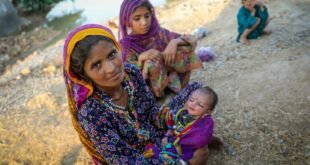
The agency also recorded more than 100 incidents leading to forced displacement in less than nine months, with an average of one major incident every two to three days. “Many families are being forced to flee faster than humanitarian aid can reach themhe said.
Speaking from Port Sudan, IOM Chief of Mission Refaat Mohamed explained that civilians “continue to be the main targets in this conflict”.
The aim of the strategy is “mainly to displace them… to start taking over cities, empty cities,” he told reporters via video link. El Fasher’s outburst “wasn’t a one-time incident”he continued, noting that this is part of a long-term trend in Sudan that the international community has failed to stop.
In El Obeid, the humanitarian veteran emphasized that access to aid is urgently needed for residents who have been out of reach for two months. “We can’t access it,” he said. “We hear stories from our enumerators in the field who are assessing their needs because they don’t have access to water, electricity and they want a way out, but they can’t.”
Sudan has been ravaged by war since 2023, when fighting erupted between previously allied Sudanese Armed Forces and the Rapid Support Forces.
The war has displaced more than 13 million people and left millions more on the brink of famine, with humanitarian access severely limited in most countries.
‘It will never fall’
Sudan’s representative on the council delivered a heartfelt and challenging message to his fellow ambassadors: “For your information, I am from El Obeid; This wounded city, will never fall, as long as we live,” said Salim Ahmed Ibrahim.