JamzNG Latest News, Gist, Entertainment in Nigeria

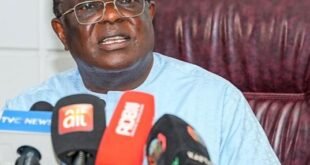
Lanre Ogundipe, former President of the Nigerian Union of Journalists (NUJ) and the African Union of Journalists (AUJ), has condemned the arrest and continued detention of journalist Stanley Ugagbe, warning that the growing tendency to treat journalists as fugitives poses a serious threat to the rule of law, freedom of the press and democratic development in Nigeria.
Ogundipe, in a statement released on Sunday, described the incident as one that transcends the personal freedom of the detained journalist, arguing that it raises broader concerns about the relationship between law enforcement and the media in a constitutional democracy. Project reports
According to him, journalists exercising their legitimate constitutional responsibilities should not be subject to intimidation or arbitrary detention simply because they publish information that may be inconvenient to people in positions of authority.
Concern about the treatment of journalists
The veteran journalist said the arrest of Stanley Ugagbe reflects what he described as an unhealthy pattern in which journalists are increasingly treated like criminals rather than professionals carrying out their constitutional mandate of informing the public.
He noted that where a journalist is suspected of having violated any law, the Nigerian Constitution and existing statutes provide for established legal procedures for investigation, invitation and prosecution.
Ogundipe argued that the use of secret arrests, prolonged detention, confiscation of work tools and other coercive measures undermines the credibility of law enforcement institutions rather than strengthening them.
According to him, respect for due process remains essential in any democratic society governed by the rule of law.
He stressed that public trust in security agencies depends largely on their willingness to respect constitutional guarantees in discharging their responsibilities.
The media are not enemies of the state
Ogundipe argued that the media should not be seen as an adversary of government or an extension of state authority.
Instead, he described journalism as a constitutional institution established to serve the public interest by disseminating information, promoting accountability, and policing those entrusted with public duties.
He warned that attempts to criminalize journalism through arbitrary law enforcement actions amount to an attack on democratic principles. pressfreedom.com
According to him, such actions not only diminish the dignity of the law, but also weaken the democratic institutions that Nigerians have struggled for decades to build and sustain.
He added that a vibrant and independent press remains indispensable for transparent governance and responsible leadership.
Reflection on decades of journalism
Drawing on his nearly fifty years as a journalist, Ogundipe expressed deep concern over what he described as a gradual return to practices reminiscent of periods of repression experienced before Nigeria’s democratic transition.
The former NUJ and AUJ president recalled that journalists and media workers made enormous sacrifices during years of military rule in pursuit of democratic governance and constitutional freedoms.
He said it was regrettable that, after these sacrifices, members of the media continued to suffer actions capable of creating fear in the profession and discouraging legitimate public interest journalism.
According to him, democracy should create an environment in which journalists can exercise their constitutional responsibilities without intimidation or fear of illegal arrest.
He demands immediate release
Ogundipe therefore called on the relevant authorities to release Stanley Ugagbe without delay unless there is sufficient legal basis to timely arraign him before a court of competent jurisdiction.
He argued that continued detention without following established judicial procedures would undermine the principles of justice and due process.
Beyond the immediate case, he urged law enforcement agencies across the country to fundamentally reevaluate their engagement with journalists and media organizations.
According to him, respecting the rights of journalists is consistent with the constitutional obligations of security agencies and strengthens public trust in democratic institutions.
Democracy measured by the protection of rights
The former union leader further argued that the strength of any democracy is not determined by how it treats individuals who support those in authority, but by how it safeguards the rights of citizens whose professional responsibilities require them to question and scrutinize government actions.
He warned that suppressing journalism through intimidation or arbitrary arrest ultimately weakens democratic governance and limits citizens’ access to information.
Ogundipe concluded that a nation that treats its journalists as fugitives inevitably diminishes the dignity of its laws and erodes the foundations on which democracy is built.
His remarks come against a backdrop of growing concerns among media stakeholders over the safety of journalists and the need for greater protection of press freedom guaranteed by the Constitution of the Federal Republic of Nigeria.