JamzNG Latest News, Gist, Entertainment in Nigeria
A report from SARI Global, a risk intelligence and security analysis firm specializing in providing operational data, climate intelligence and crisis management support to organizations working in the world’s most volatile environments, said at least 792 people died in 882 security incidents across 36 states and the Federal Capital Territory in June 2026.
It said Borno was the single most violent state, recording 109 incidents and 172 confirmed deaths, the highest figure of any state, concentrated around the Lake Chad basin, the outskirts of Sambisa Forest, Gwoza, and garrison towns in the north.
Zamfara followed with 63 incidents, which it said reflected the entrenched banditry economy in the North West.
Plateau recorded 51 incidents, Katsina (44), Lagos (40), FCT (36), Rivers (32), Oyo and Sokoto (31), and Niger (29).
By incident category, crime and law enforcement generated the largest volume at 369, followed by armed conflict at 297, civil unrest at 110, danger at 64, and the report noted that while there were many raw incidents, the armed conflict category had a high fatality rate as non-state armed actors recorded 337 fatalities from 224 incidents.
This number far exceeds the 274 fatalities recorded in 375 incidents involving government-affiliated forces.
SARI Global also highlighted what it described as a growing threat to educational facilities.
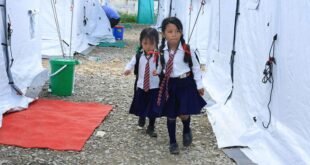
It said on June 29, ISWAP fighters stormed the Government Day Secondary School in Lassa, Askira/Uba LGA, abducted students and teachers and carried out a hostage situation with most of the hostages in broad daylight.
They considered the attack to be driven by ideology and instrumentally calculated to attract international attention while exposing the country’s vulnerabilities.
This comes as reports state that the Islamic State West Africa Province launched a coordinated strategy in the Monguno axis north of Borno that blocks access for humanitarian aid to reach hundreds of thousands of internally displaced people.
The document, SARI Global’s Nigeria Monthly Security Review for June 2026, identifies the Monguno axis, which includes the garrison towns of Monguno, Cross Kauwa, Baga, and Kukawa, as a critical humanitarian conflict hotspot in the country driven by raids of ISWAP compounds at night and burning of aid-contracted cargo during the day along the Monguno to Gajiram road.
Nigeria’s monthly report is published on ReliefWeb, the leading repository of humanitarian information on global crises managed by the UN Office for the Coordination of Humanitarian Affairs.
According to the report, the first week of June saw 217 incidents recorded; the second week, which ran from June 8 to 14, recorded a peak number of incidents of 278 and the highest total deaths for the month.
It said the activity intensified on June 14, 8, 11 and 13, when massive rebel attacks, bandits and counter-operations were carried out in several locations simultaneously.
“June opened with a high baseline and increased in the first half before settling into a violent plateau.
“The first week saw 217 incidents recorded, and activity increased sharply in the second week, which was the most intense week of the month, with 278 recorded incidents and the highest total deaths.
“The tempo was concentrated on several days, 14, 8, 11 and 13 June, when attacks by rebels, bandits and large-scale state operations occurred simultaneously in several locations.
“Therefore, the situation in the month was highly advanced, with security forces able to contain but never reverse the initial increase, and the death rate remaining high into the fourth week due to the continued decline in rural population in the North West region,” the report said.
According to the report, the most decisive incident of the month occurred on June 24, when ISWAP fighters breached the 20 Unit Residential area in Monguno town at night and kidnapped an international NGO staff member along with a local guard.
SARI Global added that the operation demonstrated detailed prior intelligence regarding the location of humanitarian personnel and the security architecture of their accommodation.
Days later, fighters operating an informal vehicle checkpoint set fire to two NGO-contracted commercial trucks on the Monguno to Gajiram road on 29 June, following an earlier arson attack on aid cargo on 18 June.
The deliberate destruction of food cargoes, the report said, revealed a calculated tactic to intimidate commercial traders, deter them from contracting with humanitarian agencies, and limit the flow of essential commodities to remote refugee communities in northern Borno.
SARI Global said ISWAP’s activities made staff unsafe at night and supply routes unsafe during the day, thereby controlling humanitarian operations from beyond borders.
It was noted that arson attacks also caused commercial traders to withdraw from the route, increasing the risk of distribution delays and reduced food availability during the lean season.
“Running in parallel, ISWAP maintained a campaign to interdict daytime supply routes along the Monguno to Gajiram road. Following an arson attack on 18 June, fighters operating an informal vehicle checkpoint set fire to two NGO-contracted commercial trucks on 29 June, carrying out this operation in broad daylight and exploiting the limited presence of government troops.
“The deliberate destruction of food cargoes is a calculated tactic to intimidate commercial traders, deter them from interacting with humanitarian actors, and restrict the flow of essential commodities to the garrison towns of Monguno, Cross Kauwa, Baga and Kukawa,” SARI Global said.
According to June data, government-affiliated forces were the most frequently initiated, with 375 of the 882 incidents recorded, which was the largest number.
It said this was driven by an aggressive tempo of law enforcement operations, arrests, seizures and cordon activities.
The breakdown of recorded deaths is as follows: government-affiliated forces (274), armed non-state actors (337), civilians (64), criminal actors (30), unknown actors (86) and political actors (1).
Despite producing the highest number of incidents, government-affiliated forces accounted for 274 of the 792 confirmed fatalities.
In contrast, armed non-state actors initiated 224 incidents, but caused the most deaths with a total of 337 deaths, representing 42.5 percent of all confirmed deaths in June and resulting in a murder rate per incident that was much higher than the rate of murders perpetrated by government forces.
The remaining 181 fatalities were spread across four other actor categories.
Unidentified or unknown perpetrators caused 86 deaths from 54 incidents, the third highest death toll, reflecting the difficulty of determining attribution in remote areas of the Northeast and Northwest.
Civilians, involved in 124 incidents, recorded 64 fatalities. Criminals, responsible for 64 incidents, caused 30 deaths. Political actors, although linked to 39 incidents, only contributed to one fatality.
SARI Global said attribution insights revealed that non-state armed actors killed more people in fewer engagements, while the unidentified actor category accounted for 86 deaths from 54 incidents.
The report warns that “A busy security apparatus does not equal an improved environment.”