JamzNG Latest News, Gist, Entertainment in Nigeria
Nigerian football is often judged by trophies won at senior level, stars playing abroad and national teams competing on the biggest stages. But somewhere beneath that layer of headlines, another story has been quietly unfolding: a story built around young players, competitive football, data, scouting and opportunity.
That story is The Creative Championship (TCC).
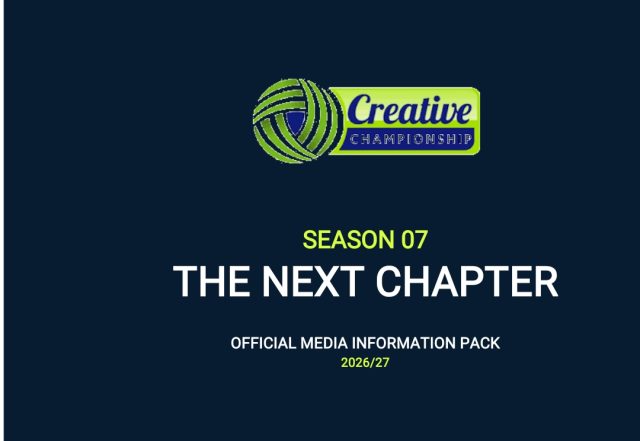
Now, after six completed seasons, 632 league matches and over 2,100 league goals, TCC enters its seventh season with an ambitious message: the foundation has been laid; The next chapter is about turning development into a measurable opportunity.
Season 7, appropriately titled “The Next Chapter,” represents a new phase for a competition that began in 2020 with eight founding clubs and has grown to a 12-club development ecosystem.
And the numbers tell only part of the story.
The bigger story is what happened to the players who came through the league.
FROM LOCAL COURTS TO THE WORLD
For a young Nigerian footballer, talent is just the beginning.
The difficult path is achieving enough meaningful competitive football to develop, produce evidence of performance, attract the attention of scouts and ultimately earn a path to professional football.
That is the space that TCC set out to occupy.
Over six seasons, the competition has created a structured environment in which developing clubs can play regularly, coaches can evaluate players under competitive pressure and footballers can accumulate something increasingly important in modern scouting: evidence.
TCC records document over 100 international player movements, with players progressing to football markets in Europe, Africa, Asia and North America.
Names linked to the TCC pathway include Ebenezer Akinsanmiro, Tunde Akinsola, Shola Ogundana, Babatunde Akomolede, Lawrence Izuchukwu, Peter Kareem, Seun Akanji, Taiwo Akire, Bidemi Amole, Musa Akinfenwa, Paul Kilani, Taiwo Abdulraheem, Joshua Obakimi and Ogonna Hyacinth.
The league’s own player archive provides further evidence of the path, including Akinsanmiro’s progression from Beyond Limits to Inter Milan and several other TCC graduates moving on to professional clubs across Europe and beyond.
This is why TCC is increasingly seen not just as another football competition, but as a football market:
Performance → Data → Visibility → Opportunity.
THE NUMBERS BEHIND THE VISION
The history of TCC now has six full seasons under its belt.
6 – completed seasons
7th — season in 2026/27
15 – clubs that have participated from the beginning
632 – league matches
2,102 – league goals
Over 100: Registered international player movements
6 — Registered Nigerian U20 players
7 — Registered Nigerian U17 players
The competition’s official historical archive records its evolution from eight clubs in 2020/21 to a 12-club league in the following seasons. It also shows the extraordinary consistency of the competition: Beyond Limits has dominated the league era, winning five of the first six league titles, while Real Sapphire captured the other.
That consistency matters.
Youth development cannot be built solely on occasional tournaments. Players need weeks and months of competitive football. Coaches need repeated opportunities to evaluate them. Scouts need enough games to distinguish potential performances from one-offs.
The CBT model is built precisely around that volume.
WHERE DEVELOPMENT MEETS DATA
Perhaps the most significant evolution in TCC’s history has been the league’s adoption of football data.
In 2023, TCC announced Wyscout as its official data partner starting with the 2023/24 season, replacing Korastats. The partnership was designed to give clubs and players access to deeper performance insights and make the league’s talent pool more visible to the global scouting ecosystem.
That decision placed TCC into a world of football where scouting is no longer based solely on what happens in the stands.
A player can now be evaluated through video, passing statistics, physical actions, tactical patterns, defensive contributions and other performance indicators.
TCC’s publicly available statistics already illustrate how detailed that ecosystem can become, with team-level information covering passes, long passes, crosses, ball recoveries and defensive actions.
For an emerging player, that changes the equation.
A good performance is no longer simply something the coach remembers.
It can be converted into data.
Data can become evidence.
Evidence can become visibility.
And visibility can become an opportunity.
THE CONNECTION WITH THE NATIONAL TEAM
The CBT route has also reached the Nigerian youth teams.
According to the league’s history records, 13 youth internationals have emerged through its ecosystem: six at the U20 level and seven at the U17 level.
The league identifies players such as Musa Akinfenwa, Ebenezer Harcourt, Bidemi Amole and Kparobo Arierhi among the representatives associated with the success of Nigeria’s WAFU B U20.
Others, including Ahmed Akinyele, Jude Sunday and Solomon Agbalaka, are listed as participating in AFCON Under-20 and World Cup tournaments.
In the under-17 category, TCC record holders include Israel Nwachukwu Usulor, Musa Akinfenwa, Muiz Oladimeji, Oreoluwa Agbenla, Daniel Arierhi, Edward Ochigbo and Great Edafe.
The path has also reached senior national team talk, with Ebenezer Akinsanmiro included in the TCC overview as part of Nigeria’s squad for the 2025 Africa Cup of Nations in Morocco.
For a developing league, that is perhaps one of its most important tests:
Can players move from development football into the national conversation?
CBT’s track record increasingly suggests that they can.
MORE THAN PLAYER DEVELOPMENT
There is another part of TCC’s history that deserves attention: the clubs themselves.
The league has become a competitive laboratory for development-focused organizations such as Beyond Limits FA, Real Sapphire, VOE FA, Broad City, Gbagada FC, Atlantic Business, Valiant FC, Dino SC, Imperial FC, Sporting Lagos, Iganmu Tiger and Dannaz FC.
And his achievements have not been limited to TCC.
The media package points to the club’s success in competitions such as the Gothia Cup, Viareggio and the state FA Cups.
Beyond Limits, for example, have established themselves as the defining force of the TCC League, while Sporting Lagos, Dannaz and Imperial have also produced notable winning streaks of non-league competitions.
The message is significant:
Development football does not have to mean second-class football.
It can mean serious football played with serious goals.
THE FIRST OBJECTIVE, THE FIRST TITLE AND NOW THE NEXT CHAPTER
Every competition has a story.
The TCC began on November 19, 2020, when Remo Stars U19, now known as Beyond Limits FA, took on Valiant FC at the Remo Stars Stadium.
Valiant’s Lukman Ibrahim scored the first goal of the TCC League.
Since then, the league has evolved dramatically.
His honor roll in the Cup tells another part of the story:
Gbagada — 2021
dinosaur — 2022
Brave — 2023
Beyond the limits — 2024
Beyond the limits – 2025
Atlantic Business — 2026
The last completed league campaign once again demonstrated the competitive strength of the platform. Beyond Limits finished the 2025/26 season at the top of the table with 59 points from 22 matches, ahead of Atlantic Business, Real Sapphire, Sporting Lagos and VOE.
But if the first six seasons were about proving that the model could work, season 7 is about asking a bigger question:
What can CBT become next?
SEASON 7: BUILDING THE FUTURE
The answer lies in the league’s new emphasis.
TCC says season 7 will focus more on:
Data-driven development.
Benchmarking of players.
Scan visibility.
Media narration.
Impact reports.
This means that the competition wants to be more than a match schedule.
It wants to become a documented development path.
For gamers, that means clearer performance records.
For coaches, more information with which to evaluate development.
For headhunters, greater access to emerging talent.
For clubs, a more solid platform to demonstrate the quality of their work.
For sponsors and commercial partners, a growing football ecosystem with a compelling human story.
And for Nigerian football, another avenue through which young talents can prepare for professional football.
A MARKET FOR THE NEXT GENERATION
Therefore, the most powerful idea behind CBT may be the simplest:
Young players need a place to play.
They need competitive games.
They need training.
They need visibility.
They need data.
They need opportunities.
TCC has spent six seasons trying to connect those pieces.
The seventh season is an attempt to further strengthen the connection.
The league’s philosophy can be summarized in its eight pillars: consistency, national team history, global player history, data and scouting, coach development, club success beyond TCC, a club-owned ecosystem and the football market.
Together, they point towards a different model of youth football development, one in which development is not treated as an isolated academic exercise but as an ongoing competitive process.
TWELVE CLUBS. A PLATFORM. A NEW GENERATION.
The 2026/27 season will once again bring together the 12 clubs of the TCC League:
Beyond FA limits
royal sapphire
VOE FA
wide city
FC Gbagada
Atlantic Business
Brave FC
dino sc
FC Imperial
sports lakes
Iganmu Tiger
Dannaz FC
They will compete for results, but the importance of the season goes beyond the table.
Each match will potentially create another performance record.
Each featured player could become another story of exploration.
Each coach will have another opportunity to develop talent.
Each club will have a new opportunity to demonstrate its model.
And each season adds another layer to the evidence that Nigerian development football can be structured, competitive and globally connected.
TRUE COMPETITION IS WHAT COMES NEXT
There’s an interesting irony at the heart of TCC’s seventh season.
The league is celebrating what it has already achieved: six full seasons, hundreds of games, thousands of goals, international transfers and national team representatives.
However, the campaign deliberately refuses to look back.
The title is not “The First Six Seasons.”
It’s “The Next Chapter.”
That distinction matters.
Because the ambition is no longer simply to prove that young Nigerian footballers have talent.
The ambition is to create an environment where that talent can be developed, measured, discovered and mobilized.
Six seasons built the platform.
Now the challenge is to build the future.
And if the first six seasons of TCC were about creating a path, season 7 could be about making that path impossible for the football world to ignore.
The Creative Championship. Season 7. The next chapter.
Performance. Data. Visibility. Chance.