JamzNG Latest News, Gist, Entertainment in Nigeria
Ibrahim Gusau has confirmed his resignation as president of the Nigeria Football Federation (NFF), saying his decision was driven by his love for Nigeria and commitment to the development of football.
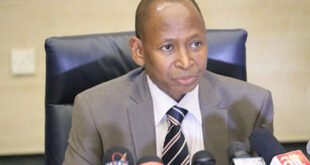
Gusau announced his resignation at a press conference in Abuja, ending his three years and 11 months at the helm of Nigerian football.
The development followed speculation in several quarters about his continued tenure.
Gusau said he had also informed NFF executive committee members willing to follow his decision to resign.
“I have decided to resign as President of the NFF, after consultation with my family and friends.
“I have also advised my board members, those who wish to do so, to resign,” he said.
He, however, said he could not immediately confirm the number or identities of the board members who resigned.
According to him, the affected members still had to communicate their decisions to him directly.
Gusau’s resignation comes amid concerns over Nigeria’s recent performances in international football.
The Super Eagles failed to qualify for the 2022 and 2026 FIFA World Cups, while the Super Falcons failed to qualify for the 2027 FIFA Women’s World Cup.
Nigeria’s top-tier teams have also recorded disappointing results, with the Golden Eaglets failing to qualify for the FIFA U-17 World Cup for three consecutive editions.
Gusau, however, said he will continue to contribute to the development of Nigerian football through his experience, relationships and connections within African football.
He said his knowledge and contacts will remain available whenever needed to advance the development of the game in the country.
“For me I want to make it clear that, with the grace of God, we will continue to make our contribution.
“Our experience, our connections and our relationships within African football will never go in vain.
“We will do our best to ensure that whenever necessary, we contribute to the advancement of Nigerian football,” he said.
Gusau also highlighted some of the achievements made during his tenure, particularly in coach education, league administration, refereeing and infrastructure development.
He said the NFF conducted different categories of coaching courses, including CAF B License, CAF C License and Coaching Instructor Course.
According to him, the CAF A license program is expected to start on September 16.
Gusau said his administration has also made progress in stabilizing the national championships, which he described as a major challenge inherited from the board.
On refereeing, he said the federation inherited a difficult situation, particularly with the limited representation of Nigerian officials in continental and global competitions.
He said the NFF has brought young, talented referees into the system and provided them with training and development opportunities.
“Today we are starting to see the results.
“At the last U-17 World Cup and the Women’s Africa Cup of Nations in Morocco, Nigerian referees were among the referees and even refereed some semi-final matches,” he said.
Gusau expressed optimism that sustained investment in the training and development of young referees would improve Nigeria’s representation in major international competitions.
He also identified inadequate infrastructure as one of the biggest challenges facing Nigerian football.
According to him, the council has given priority to infrastructure development through funds available under FIFA’s development programmes.
“As a board, we sat down and identified infrastructure as one of our biggest needs.
“We have also recognized the need for permanent housing and training facilities for our national teams, and we are currently working on this.
“I believe history will judge us on this, and Nigerians will remember that we have done our part in addressing the infrastructure challenge,” he said.
Gusau said he remained committed to supporting efforts to advance Nigerian football whenever his contribution was required.