JamzNG Latest News, Gist, Entertainment in Nigeria
But Bawazir said the Houthis responded with “stubbornness”, using the humanitarian ceasefire period to strengthen their military arsenal at the expense of ordinary citizens.
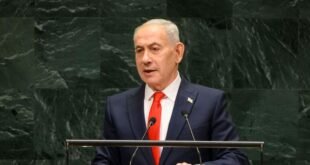
Speaking at a high-level general debate in the Assembly, he said that the 12-year crisis represented “the entire childhood of a Yemeni child”.
“An entire generation was born amidst war, grew up amidst hunger, fear and weapons, learning the names of mines before learning the alphabet of life,” he said.
Bawazir argued that international hesitation in designating the Houthis as a terrorist group has given them an opportunity to expand their influence and increase the threat they pose.
He maintains that the conflict would not have continued for so long, or expanded beyond Yemen, to neighboring countries and international waterways, without Iran’s military support for the Houthis, including weapons, expertise and technology.
Maritime security
Turning to the region’s vital waterways, Bawazir said the Houthis’ use of maritime navigation as a “tool of blackmail” threatens not only Yemen but also the global economy.
Recent years have shown, he said, that “ensuring security at sea begins with eliminating sources of threat on land”.
“Protecting ships is important, but it only addresses the consequences and does not eliminate the threat,” he added.
He urged the international community not to be convinced by what he called “false promises”, and warned that stopping attacks on ships now does not guarantee attacks will not happen again.
“Lasting maritime security in the Red Sea, Bab el-Mandeb and the Gulf of Aden cannot be established if non-state armed militias remain on shore,” he said.
Mr. Bawazir stressed that the restoration of the Yemeni state and the pacification of the Bab el-Mandeb are inseparable, arguing that supporting the Government and strengthening its economic, security and military capacity amounts to an investment in international peace and security.
“The path to a safe sea requires a stable Yemen. There can be no stability in Yemen without the country’s recovery,” he said.
‘Our struggle is not against any Yemeni citizen’
Mr Bawazir stressed that the government’s resistance was not directed against Yemenis themselves or any particular region, sect or social group.
“Our struggle is not against Yemeni citizens,” he said, describing it as a struggle against an “armed coup” that has seized state institutions and deepened the suffering of the Yemeni people.
The country’s restoration, he added, should not represent the victory of one Yemeni faction over another.
“Yemen’s future will not be built by excluding one of its sons,” he said.
He called on the international community to implement his resolution, stop the flow of weapons and technology to the militias and support Yemen’s national institutions and economy.
“We are not asking the world to build Yemen’s future for the Yemeni people,” he said. “We seek partnerships that support the state and its institutions and invest in the Yemeni people.”
Bawazir also reiterated Yemen’s support for the Palestinian people’s right to freedom, dignity and an independent sovereign state, and called for an end to their suffering and the protection of civilians.
He thanked the UN and its agencies for their efforts in supporting peace and aid to Yemen, while condemning the Houthis’ continued detention of UN personnel and humanitarian workers.
“Those working for peace and humanitarian aid must not be held hostage by blackmail,” he said.
In closing, Bawazir said Bab el-Mandeb would remain “a bridge between peoples, a trade route and a gateway to peace”.