JamzNG Latest News, Gist, Entertainment in Nigeria
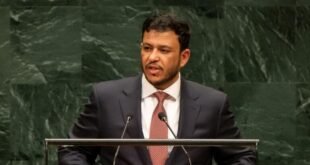
Addressing the UN General Assembly’s annual high-level debate, Ms. Mottley said the world faces increasing barriers to peace, food, water, finance, education and opportunity, even though the world has greater knowledge and capacity to overcome them.
“Therefore, failure to overcome these challenges is not solely due to knowledge or capacity,” he said. “It’s a repeated failure to turn what we know into what we do.”
Behind the various crises facing humanity, according to him, there is another crisis: the “crisis of responsibility”.
‘Reform cannot be selective’
The Prime Minister said restoring trust requires countries to accept responsibility to each other and to the international institutions they founded.
He called for reform of the UN but warned that changing its structure would not be enough without addressing questions about power and representation.
“Reform cannot be selective,” he said, arguing that Security Council has failed to keep up with world changes.
Ms Mottley highlighted the absence of a permanent seat for Africa and the lack of guaranteed representation for small island developing states, despite the security threats they face.
Barbados, he said, joined 123 other Member States in supporting the Franco-Mexican initiative limiting the use of the veto in situations involving mass atrocities.
He also called for greater investment in conflict prevention and mediation, as well as peacekeeping with adequate resources.
“The UN must receive the resources and determination to act before weapons start being used, and not after they start flying,” he said.
Organize AI together
Turning to artificial intelligence, Ms. Mottley explained its potential to improve health care, disaster prediction, agriculture, education and public services.
But he warned that the same technology could reproduce discrimination, expand surveillance and spread lies faster than institutions can respond.
“We must not allow the new technological era to reproduce the old hierarchies of access and power,” he said.
AI governance, according to him, cannot be left only to companies or countries that have advanced technology.
“Technology that will affect every state should be governed by regulations that each state has the opportunity to shape.”
Climate and inequality
Ms Mottley also returned to discussing one of Barbados’ unique international concerns: climate finance.
Countries vulnerable to climate change will need to mobilize about $490 billion annually by 2030, compared with current inflows of about $90 billion.
“As the young people in Barbados say, mathematics is not mathematics,” he said.
It argues that climate resilience, debt sustainability and affordable financing cannot be treated separately, but also identifies rising inequality as a driver of geopolitical tensions and declining trust.
‘Everyone’s friend’
Turning to the Caribbean, Ms. Mottley called for greater international support for security and political reform in Haiti, opposed the embargo and other unilateral coercive measures against Cuba, and reaffirmed support for a peaceful resolution of the territorial controversy between Guyana and Venezuela through an international agreement. International Court of Justice.
“The Caribbean must remain a zone of peace,” he stressed.
As Barbados approaches 60 years since joining the UN, Ms Mottley recalled the foreign policy principle enunciated by the country’s first Prime Minister, Errol Barrow: Barbados would be “everyone’s friend and no one’s satellite”.