JamzNG Latest News, Gist, Entertainment in Nigeria
This issue is in the spotlight as the UN flags the organization Fourth Counter Terrorism Weekwhich brought together more than 1,000 participants from 119 countries, representing governments, regional organizations, academia, civil society and the private sector.
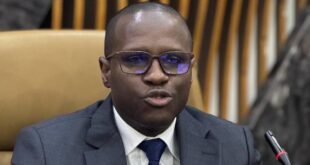
Alexandre Zouev, Acting UN Under-Secretary-General for Counter-Terrorism, outlined the current conditions in his speech at the General Assembly Hall on Monday.
‘Tough’ terrorist group
Speaking at the opening of a high-level conference for national counter-terrorism leaders, he said terrorist groups such as Al Qaeda, Da’esh (also known as ISIL), and their affiliates “remain adaptive and resilient.”
In addition, technology is becoming increasingly sophisticated, including due to the use of artificial intelligence and cybersecurity threats.
“They exploit instability, governance gaps, socioeconomic disparities, and new and emerging technologies to expand their reach, recruit and mobilize resources,” he said.
As UN Secretary General António Guteres state“terrorism is growing, and we must grow too.” While the path forward is complicated, this is clear.
“Through prevention, cooperation and an unwavering commitment to human rights, we can build a safer world, where people everywhere live free from fear,” he said.
Multiple points of view are important
This year marks the 20th anniversary UN Global Counter-Terrorism Strategy, which the Secretary-General said provided an opportunity to assess progress and strengthen resolve.
Although Member States have primary responsibility for preventing and combating terrorism, the UN continues to underscore the importance of involving a wide range of actors, such as victims, women and young people.
Fatima Ali Haider, doctor, Victims of Terrorism Association Network (VoTAN), addresses the Fourth UN Summit on Countering Terrorism.
Women’s voices are very important
Fatima Ali Haider of the Victims of Terrorism Association Network (VoTAN) encouraged the government to “make sure victims are collaborators in policy and strategy,” because “we have a lot to offer.”
The doctor and academic, herself a survivor of a terrorist attack, also highlighted her research showing how women are affected by terrorism differently than men because terrorism can lead to serious forms of gender-based violence.
But “women’s voices are conspicuously absent in all areas of strategic decision-making,” she said.
“We need to redesign the security architecture to ensure women’s leadership and equal presence at all levels, from the home to public spaces, national security agencies, and yes, to higher levels. Security Councilhe said.
John P. Huvane, 9/11 first responder, addresses the Fourth United Nations Summit on Countering Terrorism.
Train first responders
John P. Huvane was a first responder on 9/11 in New York City and was also in London at the time of the deadly bombings of July 7, 2005. He underscored the need for countries to “train their first responders,” citing steps such as tabletop simulation exercises and designing response plans.
“It’s constant training, investment in technology, and ensuring that every first responder knows what they need to do if a terrorist attack occurs,” he said, emphasizing the importance of cooperation and communication between countries.
Shamsiya Ibrahim Barde, UNOCT Youth Engagement and Empowerment Program Alumni, addresses the Fourth UN Summit on Countering Terrorism.
Young people as ‘prevention agents’
Mr. Huvane also happened to be in Nigeria when the terrorist bomb attack occurred. Shamsiya Ibrahim Barde grew up in a northeastern region of the country that has been rocked by conflict, displacement and violent extremism for years.
He witnessed insecurity, but also “ordinary young people choose education over violence, dialogue over division, and service over despair.”
Has participated in the Youth Engagement and Empowerment Program organized by the United Nations Office of Counter-Terrorism (UNOCT), he learned that “when young people are trusted, supported, and given meaningful opportunities, they become agents of prevention and positive change.”
Rimma Zhunusova, a returnee from Al Hol camp, addresses the Fourth UN Summit on Countering Terrorism.
Second chance after radicalism
Rimma Zhunusova, a mother of four from Kazakhstan, represents another version of positive change after spending several years in the notorious Al Hol camp in northeastern Syria, where thousands of people are detained for their alleged or real ties to Da’esh.
She and her husband traveled to Syria in July 2013 following “an unprecedented wave of radical media propaganda.”
Many others do the same, including younger generations “who sincerely believe they are doing the right thing” but “don’t understand how they are being manipulated through carefully crafted narratives that disguise the true nature of armed extremist groups.”
Zhunusova and her children were repatriated to Kazakhstan in May 2019 and received social, psychological and other support. Currently, he runs a small door manufacturing workshop. At times he struggled to tell his story, stopping to wipe away tears.
“I’m not here to justify my past actions. I’m here to remind us all that even people who have taken a dangerous path are capable of change,” he said, speaking through an interpreter.
“Governments, communities, international organizations that give people second chances through rescue, education, health services and peaceful reintegration make the world safer for everyone.”