JamzNG Latest News, Gist, Entertainment in Nigeria
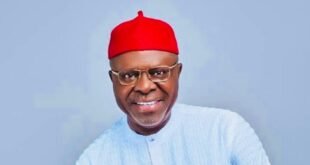
Minister of Foreign Affairs, Sola Enikanolaiye, said Nigeria’s efforts to regain its traditional leadership role in Africa and strengthen its voice on the global stage depended heavily on resolving domestic economic, security and governance challenges.
Speaking in Abuja on Thursday at the launch of Shadows of Power, a book written by retired Rear Admiral Sola Oluwagbire, the minister argued that a strong and effective foreign policy can only be built on a foundation of national stability and unity.
According to him, the ongoing reforms being implemented by President Bola Tinubu are designed to strengthen Nigeria internally and position the country for greater diplomatic relevance internationally.
“You can’t have a dynamic, activist foreign policy if the country is weak, if the country is divided, if there is no harmony in Nigeria. How can you come out and be taken seriously?” he said.
Enikanolaiye explained that while Nigeria remains committed to its long-standing role in African affairs, domestic security and prosperity must come first.
“We believe that these goals are mutually reinforcing. Nigeria has to be safe, we have to be stable before we can play the activist role in foreign policy that we have traditionally seen as playing a role in liberation struggles and other continental engagements,” he said.
The Minister noted that the Federal Government had adopted a foreign policy framework anchored on national interests, with the welfare of the Nigerian people as its primary focus.
“The motto of the Ministry of Foreign Affairs is actually ‘Nigeria First’. Every foreign policy action we take must speak to Nigeria,” he said.
He stated that the government has restructured its diplomatic priorities to ensure that issues related to national security, economic growth and the welfare of citizens remain top priorities in relations with other countries.
Also read: Three people arrested as police uncover murder of former OGTV presenter, security guard in Ogun
“We put Nigeria and Nigerians at the center of foreign policy concerns so that our national interests that advance our security, defense and economic prosperity are at the core of Nigeria’s foreign policy,” he said.
The minister also identified Nigeria’s surrounding environment as a key strategic priority, and stressed that events in neighboring countries directly affect the country’s stability and development.
“Our neighboring countries, our security, prosperity and development are essentially linked to our neighboring countries. If they are not safe, then this will have an impact on us,” he said.
He clarified that the renewed focus on the Nigerian region does not mean abandoning Africa-centric diplomacy, but rather a recalibration of priorities.
“We have decided to reprioritize the region before we move further into Africa without having to abandon Africa as a cornerstone of our foreign policy,” he said.
On relations with world powers, Enikanolaiye said Nigeria will continue to implement a policy of strategic independence, ensuring that all international partnerships are guided by national interests.
“What is meant by strategic autonomy? Simply put, autonomy means alignment with our national interests. Therefore, wherever the wind blows, that is where we will pursue Nigeria’s interests,” he said.
He added that Nigeria remained open to working with various global partners, including countries in the Western and Eastern blocs.
“We may be leaning a little towards the West, but we are not abandoning our traditional partners. They all remain important partners in Nigeria’s foreign policy,” he said.
The minister also defended the administration’s new engagement with the United States and other Western countries on security issues, and described the move as an evolution of existing partnerships and not a change in policy direction.
“What’s happening is a reinvigoration of that partnership in a way that addresses our current domestic security challenges,” he said.
Highlighting the relationship between domestic governance and international engagement, Enikanolaiye argued that no national policy can achieve its objectives without considering external factors.
“The fact is that no aspect of Nigeria’s domestic policy will be successful unless you identify the external components of that policy and implement them equally,” he said.
Despite concerns in some quarters that Nigeria’s global influence has waned in recent years, the minister expressed optimism that the country continues to rebuild its diplomatic standing.
“Nigeria is still on the right track. Our visibility may have dimmed a bit, but we are trying to restore it,” he said.
He revealed that reforms were underway within the Ministry of Foreign Affairs to increase efficiency, professionalism and institutional capacity.
“We are trying to rebuild institutions in terms of increasing capacity, systems and processes in a way that instills trust, morale and professionalism in the Ministry of Foreign Affairs,” he said.
The minister further advocated stronger collaboration between the country’s diplomatic and defense institutions, describing both as important pillars of national development and security.
“Foreign policy is very important, this is the other side of defense policy, and both must be carried out in a coordinated manner so that our country is safer, more prosperous and has a better future,” he added.
Speaking on his newly launched book, retired Rear Admiral Oluwagbire said the publication emerged from his research into how relations with world powers have affected Nigeria’s security environment over the years.
“It is based on my research on how major powers have influenced Nigeria’s national security, and how our relations with them have affected Nigeria’s national security,” the author said.
He notes that one of the book’s key messages is the importance of understanding how states pursue their interests while developing the capacity to exert influence internationally.
“All countries have their own interests, but they must also have the ability and strength to not only become regional authorities, but also influence activities on the world stage,” said the author. “That’s the main lesson – that we can do it.”
Nigeria has long been considered one of Africa’s leading diplomatic powers, playing a key role in peacekeeping operations, regional integration efforts and anti-colonial struggles. However, persistent economic pressures and security challenges have fueled fears of the country’s diminishing influence, a trend that government officials say will be reversed by ongoing reforms.