JamzNG Latest News, Gist, Entertainment in Nigeria
Both parties to the conflict – the Sudanese Armed Forces (SAF) and the Rapid Support Forces (RSF), along with allied groups – are increasingly trying to control a war-weary population.
“Civil society continues to bear the brunt of this conflict,” said Head of Mission Mohamed Chande Othman, warning that the violence has grown into a broader system of oppression that reaches almost every aspect of civilian life.
‘Dangerous’ movement
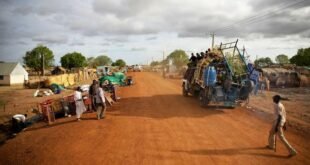
For many Sudanese families, moving from one place to another has become a dangerous act.
The mission documented civilians being stopped at checkpoints, accused of supporting opposing forces and detained without due process.
People who attempted to cross between areas controlled by different parties reportedly faced arrest, harassment and enforced disappearance. Those targeted include journalists, humanitarian workers, traders, community leaders and civilians trying to reach safer areas or maintain livelihoods.
“Civilians are increasingly under pressure to demonstrate loyalty and, in some cases, actively align themselves with one of the conflicting parties as a condition for their safety, freedom and economic survival” said Expert Member Joy Ngozi Ezeilo.
The family is increasingly plunged into crisis
In addition to the detentions themselves, investigators warn that extortion linked to arbitrary arrests is also exacerbating the humanitarian emergency in Sudan.
The mission documented cases in which families were instructed to pay large sums of money to secure the release of their detained relatives. Some reportedly face demands equivalent to around $40,000 – an impossible amount for households already struggling under conflict, displacement and destroyed livelihoods.
These practices also disrupt fragile local economies. In places like El Fasher, El Obeid, Dilling and Kadugli, traders crossing the front lines face greater risks of detention and kidnapping, reduced access to food and further worsening insecurity for communities already under stress.
Disappearance of humanitarian workers
The mission expressed particular concern over reports that at least 70 people, including humanitarian workers, were arrested in El Geneina in May 2026 and have not been heard from since. Their whereabouts are still unknown.
Investigators warned that the enforced disappearance of aid personnel did not only include affected individuals.
“No family should be left in silence and uncertainty while searching for a loved one” said Expert Member Mona Rishmawi.
He emphasized that attacks on humanitarian workers undermine aid operations and put entire communities at greater risk by disrupting access to life-saving aid.
Conditions of detention are life threatening
Conditions inside detention facilities under the leadership of both parties remain extremely concerning, according to the Mission.
Prisoners were held in overcrowded cells and given inadequate food and water, poor sanitation, and limited access to medical care. Some facilities reportedly faced disease outbreaks, including cholera.
Former detainees described beatings, electric shocks, sexual violence and prolonged isolation. Thousands of people are believed to be held in facilities such as Nyala Prison in South Darfur in conditions incompatible with human dignity.
The lack of independent access to detention centers has made it increasingly difficult for families to obtain information and increased fears around disappearances and deaths in custody.
Call for accountability
The Mission urges all parties to immediately cease arbitrary arrests and detentions, release individuals detained without legal basis and disclose the whereabouts of detainees.
They also called for independent access to detention facilities and renewed international efforts to ensure accountability.
Without action, investigators warn, patterns of abuse risk becoming further entrenched, leaving Sudanese civilians to endure a conflict where fear, uncertainty and division increasingly define daily life.
The members Independent International Fact-Finding Mission for Sudan designated by the UN Human Rights Council.
They are not UN staff and do not receive payment for their work.