JamzNG Latest News, Gist, Entertainment in Nigeria

Lokoja Dialogues convened government, development partners, diplomats, academia and community representatives in Abuja to mark World Water Day 2026, advancing national conversations on water security by focusing on gender-based and community-led solutions.
Launched in November 2025, the Lokoja Dialogues is a Nigerian-led, community-led platform focused on strengthening water security through cross-sectoral collaboration, policy alignment and investment mobilization.
The platform creates structured pathways from community knowledge to policy dialogue and from policy dialogue to investment-ready solutions.
Held under the global theme Water and Gender, the event highlighted a central reality: while water insecurity affects everyone, it is women and girls who bear the heaviest burden.
Participants highlighted that addressing water challenges requires solutions rooted in lived experience, particularly at the community level.
Convened at the Embassy of Brazil, the program combined documentary screenings, art and structured discussions to ground political dialogue in real-world context.
Short films, including Dying for Water (Maayugo Ndiyam, directed by Omoregie Osakpolor), a Nigerian documentary, have highlighted the daily risks faced by women and families in search of water, stimulating reflection on the links between access to water, livelihoods and long-term development outcomes.
Speaking at the event, Mrs. Polly Alakija, convener of Lokoja Dialogues, noted that “water challenges are not abstract. They live every day in communities across Nigeria. If we want to heal the system, we must start from the local and build solutions that reflect real needs and realities.”
The discussions were led by the University of Bradford’s Gender Inclusive Climate Change Governance programme, enabling participants to translate knowledge into actionable pathways.
An accompanying art installation, BACHAKA, further explored the intersection of water access, gender and insecurity.
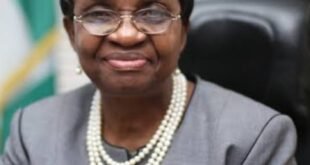
The Permanent Secretary of the Federal Ministry of Budget and Economic Planning (FMBEP), Dr. Deborah Banko Odoh, in her keynote address highlighted that “water remains central to Nigeria’s development trajectory. It underpins agricultural productivity, public health outcomes, energy systems and, indeed, the stability of our communities.”
He added: “Under the leadership of His Excellency President Bola Ahmed Tinubu, the Renewed Hope District Development Agenda places strong emphasis on resilience, inclusion and sustainable development at the grassroots level.”
The FMBEB Permanent Secretary concluded by saying: “The Lokoja Dialogues represent a unique opportunity to harness local knowledge, elevate diverse voices and translate insights into actionable and fundable interventions. As a Ministry, we remain committed to ensuring that such insights inform national planning processes and resource allocation, in line with our mandate.”
For her part, First Lady Yobe State Hajia Hafsat Kollere Bunmi, said that “Over time, the ability to provide adequate and safe drinking water and for other domestic uses has remained a very daunting challenge. Many families in all countries are faced with this daily problem of accessing water to meet their needs. Unfortunately, in most societies, especially in rural areas, as we all know, the burden of water supply is left to women and children who travel long distances and in several hours useful for fetching water for domestic use”.
In her special address, United Nations Resident Representative Elsie Attafuah said: “This morning around the world two very different days began. In one house, a tap was turned on, water flowed, clean, immediate and uninterrupted. In another, the day began with a journey, a walk, a wait, a weight carried, often a long distance. Now, imagine for a moment. What separates these two lives? It is not an effort.
“It’s not ambition, it’s infrastructure. And that’s why the difference between a touch and a trek is shaping the way people live, the way societies organize themselves and, ultimately, the way economies grow.”
Borno State Commissioner for Women Affairs, Zuweira Gambo, in her speech said that “We need to create deliberate roles for women in accessing their water needs and taking ownership, to get to the bottom of providing accessible drinking water we need to create committees that empower women to take on roles and make decisions based on their experiences on what they need to provide for their families.”