JamzNG Latest News, Gist, Entertainment in Nigeria
The seafarers work on around 2,000 vessels including oil and gas tankers, bulk carriers, cargo ships as well as six tourist cruise ships.
The ships were stuck in the Persian Gulf and unable to pass through the narrow strait due to the ongoing war in the Middle East.
Iran borders the strait on its northern side and says it will only allow “non-hostile” vessels to pass.
Before the conflict occurred, around 150 ships passed through this waterway every day, but now only four or five ships pass through this waterway.
On Monday, two Chinese-flagged cargo ships reportedly began a four- to six-hour journey through the strait and into the Gulf of Oman and safer waters outside the war zone.
Attacks on ships
Since the start of the conflict a month ago, there have been 19 attacks on ships in the strait, according to a UN report. International Maritime Organization (according to me) in London.
Ten sailors have been killed and eight others injured since the Israeli-US bombing of Iran began, triggering Iranian attacks in the Gulf.
On Tuesday, a fully loaded oil tanker was hit off the coast of Dubai, possibly by an armed drone.
A cargo ship sails on the high seas. (submit)
It remains unclear why the 19 ships were specifically targeted.
There appear to be fewer attacks in the past week, amid increased diplomatic efforts to resolve the crisis.
Seafarer safety
The IMO, which is the United Nations specialized agency responsible for measures to improve the safety and security of international shipping, is focused on ensuring the evacuation and safety of 20,000 seafarers.
“There is no precedent for the stranding of so many seafarers in modern times,” said Damien Chevallier, Director of the organization’s Maritime Safety Division.
“IMO has called on all parties to the conflict to reduce attacks so that seafarers can be evacuated to safety.”
“They had been working in an active war zone for a month,” Mr. Chevallier said. “This is a very scary situation and one can only imagine the psychological stress they are under.”
The International Transport Workers’ Federation, an IMO partner representing seafarers, said it had received more than 1,000 emails from crew members stranded on ships voicing concerns about conditions on board and requesting repatriation to their home countries.
“There is the possibility of easing the burden on these seafarers by replacing them with others because a ship obviously needs crew to continue operating, but the company running the ship needs to find volunteers,” said Mr. Chevallier.
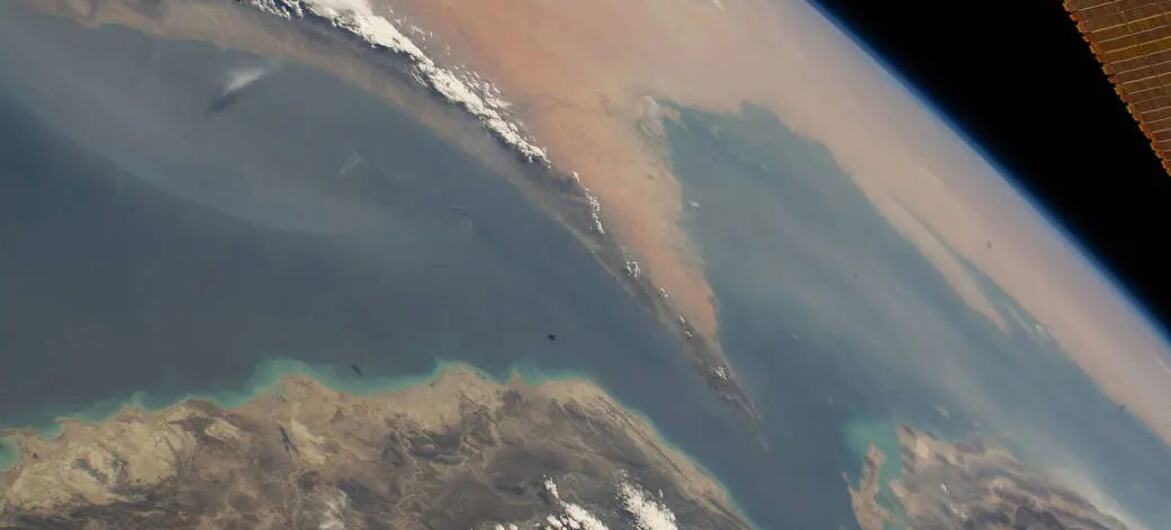
Satellite photos show strategically important shipping routes in the Strait of Hormuz.
“The best solution would be for the ships to pass through the Strait of Hormuz safely, but that would require a cessation of hostilities,” he added.
Negotiate safe travel
As many as 2,000 ships in the Persian Gulf are being resupplied with food, water and fuel by companies operating in Saudi Arabia and Oman. Saudi authorities have worked with the IMO to provide industry with information on how to contact these supplier companies.
It is not necessarily safer for the ships to remain in port, so the ships move around the Gulf looking for safe locations where they can wait out the conflict, following the protocols of the shipping companies that own the ships.
As the IMO continues to engage with a number of parties regarding the evacuation of seafarers, the IMO’s Damien Chevallier said the organization had asked Iran “for clarification on what is meant by a ‘hostile’ vessel and which vessels could be under threat of attack,” if such vessels passed through the Strait of Hormuz.
Internationally agreed routes
This strait is very important for the global economy. It is estimated that 20 percent of the world’s oil and gas supplies pass through it.
An internationally agreed system of ship routing, a two-way separation of ship traffic scheme, was adopted by the IMO in 1968 with the agreement of the countries of the region. It maps the safest route through a narrow maritime corridor that passes near Oman in the south.
However, some transiting vessels have taken northern routes near Iran, reportedly so authorities there can monitor their movements more closely.
What should sailors do next?
The IMO’s short-term goal is to ensure the safety of all ship crews currently stuck in the Persian Gulf, but there are long-term concerns about the future of shipping.
“If seafarers do not feel safe because of conflicts like the one currently occurring, it will be difficult to attract the next generation to meet the increasing needs,” explained Mr. Chevallier.
“Without seafarers, there would be no global trade on which the world economy depends.”