JamzNG Latest News, Gist, Entertainment in Nigeria

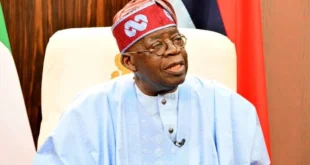
Today marks the third anniversary of President Bola Ahmed Tinubu’s administration and the beginning of the last phase of his first term. Sworn in on May 29, 2023, Tinubu began his journey on a stormy note following his bold statement on two critical sectors of the economy that had burdened the nation for several decades: the removal of the controversial subsidy on Premium Motor Spirit (PMS) and the end of multiple foreign exchange regimes. The new administration believed that the two-headed monster had been an albatross to the country’s socioeconomic development for longer than necessary.
While all hell broke loose following the political statements, the President remained steadfast even in the face of the immediate reaction, not to mention the hardships and pain they caused Nigerians. He insisted that there could be no gains without the pains that accompanied them, and alluded to the fact that even the road to heaven is narrow and bumpy. He has fought with hammer and tongs to steady the ship of state as the country navigates the turbulent storm.
Without a doubt, Nigerians from all walks of life have experienced unprecedented economic turbulence, starting with the soaring prices of goods and services following the removal of subsidies. However, PMS pump prices were engaged in a jump, rising from N650 per liter to around N1,200 as a result of the new policy, stabilizing at N875 per liter or just over N900 in some parts of the country. Currently, prices at the pump range from N1,300 to N1,500 in some parts of the country following the war in the Middle East. The exchange rate is also hovering around 1,300 naira to a dollar, down from 2,000 naira about three years ago.
The administration justified its decision to eliminate subsidies by making large grants to states. These were expected to boost infrastructure development and improve better wages and salaries for public sector workers. He also introduced several measures to cushion the punitive effects of some of the reforms deemed necessary by the administration if the country is to emerge from the path of economic perdition to which it has been condemned by successive administrations. It is therefore an irony that the masses across the country are still grappling with the difficult times that characterized the pre-Tinubu government.
Nonetheless, the administration has presented citizens with some achievements achieved in the last three years. Significant among these were the increase in aggregate revenue accruing to the government, ongoing major infrastructure projects, including roads, bridges, railways, energy, and oil and gas developments. Notable are the Lagos-Calabar Coastal Highway and Sokoto-Badagry Highway projects. Another cause for joy for the administration is the increase in oil production which now stands at around 1.61 million barrels per day.
The Compressed Natural Gas (CNG) initiative is seen as a radical move to not only boost the transportation sector but also save the nation from funneling over N2 trillion per month into the importation of PMS and allied products. However, simmering conflict in the Middle East has eroded any progress the administration has seen in the energy sector. There have also been calls from citizens to use the gains from the conflict to cushion the hardship, something the president himself admitted during his Eid-el Kabir message to the nation.
The disbursement of over 95.6 billion naira to Nigerian students through the Student Loan Scheme, the provision of over 200 billion naira to help Nigerians acquire essential commodities without the need for immediate cash payments, the release of over 570 billion naira to the 36 states to expand livelihood support for Nigerians, the creation of 240,000 jobs through some selected micro, small and medium enterprises are also some of the lifeline that the administration believed would cushion the effects of the reforms.
Although the minimum wage was set at 70,000 naira, some states exceeded the benchmark. The monthly allowance of National Youth Service Corps members has been increased from N33,000 to N77,000. These are some of the positive signs of the Tinubu administration.
The elimination of tariffs and import duties on some essential commodities such as rice, wheat, maize, sorghum, as well as drugs and other pharmaceutical and medical supplies for a period of six months is designed to alleviate the sufferings of the generality of Nigerians.
Farmers were also incentivized to increase affordable food production through the purchase of mechanized agricultural equipment such as tractors and planters, worth billions of naira, from the United States, Belarus and Brazil.
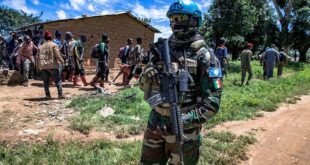
However, whatever achievements the administration can boast of, it would become meaningless if its citizens were not safe even in the comfort of their homes. The resurgence of Boko Haram, ISWAP and allied criminal gangs, especially in the North East, North West and parts of the North Central, requires desperate solutions to this intractable madness.
Against all odds, these criminal elements have now spread their tentacles towards the South West after leaving behind some communities in neighboring Kwara State as exemplified by the recent kidnapping and gruesome murder of a tutor at Community High School, Ahoro-Esinle Local Government Area of Oyo State.
There have also been killings in Oriire Local Government Area, using the vast forests as cover. This is despite the approval given by the President for the recruitment of 130,000 personnel to constitute the Forest Guard to protect these ungoverned areas which serve as safe corridors for these evil men. Before now, the area was considered a no-go zone for miscreants.
As the administration enters the final phase of its first term, Blueprint.ng hopes that it can cash in on the gains recorded so far and double them to ease the pangs of hunger and hardship that Nigerians have faced for the past three years even as the 2027 general elections loom.