JamzNG Latest News, Gist, Entertainment in Nigeria
Although the ceasefire between the United States and Iran is fragile, sporadic hostilities and ongoing uncertainty in the Strait of Hormuz – one of the world’s most important energy and shipping corridors – continue to reverberate across global supply chains, driving up transportation and fuel costs and straining aid operations already grappling with severe funding shortfalls.
Real consequences
Speaking at UN Headquarters in New York on Thursday, the World Food Program (WFP) Acting Executive Director Carl Skau said Warnings issued at the start of the crisis about the knock-on effects of rising energy prices are now starting to materialize in some of the world’s most vulnerable countries.
“Just to illustrate that what we warned about is now happening in real-time in many of these contexts,he told reporters.
The Strait of Hormuz is a narrow but important shipping lane connecting the Persian Gulf to the Gulf of Oman and the wider Arabian Sea. It lies between Iran to the north and Oman and the UAE to the south.
Hunger increases
A few weeks ago, the WFP warned that if oil prices remained above $100 a barrel through July, as many as 45 million people would go hungry due to the close relationship between energy and food prices.
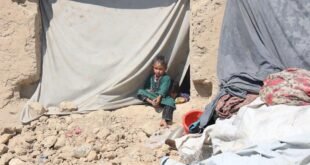
The pressure is already increasing: 2.5 million people in Somalia are experiencing acute food insecurity, while another 2.3 million people are experiencing acute hunger in Afghanistan and another 1.3 million in Sri Lanka.
Drivers differ from country to country, Mr. Skau, but included rising food prices, lack of funding for humanitarian aid, and much higher operational costs which reduces the number of people aid agencies can reach with available resources.
The long-term outlook is equally troubling.
Skau warned that higher fertilizer costs could reduce agricultural productivity in East Africa during the coming growing season, reflecting disruptions that followed Russia’s invasion of Ukraine in 2022 and raising the possibility of additional food shortages months from now.
Missed delivery
The impact is increasingly visible in humanitarian supply chains.
United Nations Children’s Fund (UNICEF) warned that maritime diversions around the Cape of Good Hope were adding between two and four weeks to shipping times, while air freight capacity on Middle East routes was tightening and congestion was spreading through ports in Africa and elsewhere.
“Rising transportation costs mean less money for the life-saving equipment children need,” said Jean-Cédric Meeus, UNICEF Global Head of Transport and Logistics.
“What starts as a disruption to shipping lanes can turn into a humanitarian crisis.”
Women and children at a health center in southern Somalia. Crop failures and conflict have displaced millions of people in Somalia, leaving them dependent on humanitarian aid.
The skyrocketing price of life-saving aid
According to UNICEF, air freight costs for vaccines sent from India to Ethiopia, Nigeria and the Democratic Republic of Congo (DRC) has increased by 70 percent. Trucking costs for life-saving therapeutic food bound for Somalia, South Sudan and Congo also increased by a third.
Sea freight costs for educational materials to Yemen and Mozambique have jumped by 150 percent.
UNICEF estimates supply disruptions could delay the delivery of critical humanitarian goods by four to six months.
“For children in crisis zones, delays in the arrival of vaccines or nutritional interventions can mean the difference between life and death.Master Meeus warned.
‘I’ve never seen anything like this’
Few places illustrate the consequences more acutely than Afghanistan.
Fresh from a visit to the country, Mr Skau described his testimony hundreds of mothers carrying their visibly malnourished children left a rural health clinic near Jalalabad because nutritional supplies had run out.
The shortages are caused by a combination of funding cuts and supply chain disruptions that complicate deliveries that were previously made through neighboring countries.
“I’ve never seen anything like this,Mr. Skau said.The desperation at the clinic is hard to explain.”
Afghanistan is simultaneously facing economic pressures related to regional crises and the return of some 2.8 million people deported or repatriated from neighboring countries over the past year.
The most vulnerable countries and their populations are impacted by oil shocks.
Horrible Straits
The humanitarian consequences are part of a broader economic shock.
Before the escalation began on February 28, about a fifth of global oil shipments passed through the Strait of Hormuz.
Since then, disruptions have increased crude oil prices and increased costs across transportation networks and supply chains. Hundreds of ships and tens of thousands of sailors remain stranded.
The new one analysis by the United Nations trade and development agency, UNCTADwarns that this burden falls disproportionately on poorer countries.
Of the 75 vulnerable countries studied, 65 of them are oil importing countries. Overall the region is home to nearly one billion people, more than 30 percent of whom live on less than $3 per day.
UNCTAD estimates this a sustained 50 percent increase in refined oil prices will add more than $20 billion a year to their collective import bill. For some countries, including Mauritania, Gambia, Vanuatu, Maldives and Burkina Faso, the additional costs could exceed five percent of national economic output.
I told you so
This development reflects concerns previously raised by Secretary General Antonio Guterres in April, when he warned about it even in the most optimistic scenarioDisruption in the Strait of Hormuz will suppress economic growth, increase inflation and disrupt global trade.
He warned that a prolonged crisis could push millions of people into poverty and hunger, while reversing hard-won development progress.
The ceasefire – although fragile – has eased fears of an imminent military escalation.
But many of the consequences outlined by Guterres are already starting to emerge: higher food and transport costs, disrupted supply chains, increased pressure on fragile economies, and increased humanitarian needs.
As Mr Skau said, the consequences that the agencies warned about weeks ago are now “happening in real time.”