JamzNG Latest News, Gist, Entertainment in Nigeria
PhD of Prince Charles Dickson
A monk once offered a message of wisdom that may contain one of the most accurate diagnoses of Nigeria’s condition: “Imagine being bitten by a snake and, instead of focusing on healing from the venom, you chase the snake to understand why it bit you and to prove that you didn’t deserve it.”
At first glance the lesson appears personal. Upon closer inspection, it is profoundly political.
For decades, Nigeria has behaved like a nation chasing snakes.
We chased history and chased ethnic claims. We chased political betrayals and chased colonial ghosts. We chased corruption scandals and chased explanations. We chased the culprits.
Yet as we chase, the poison spreads.
The poison of distrust, the poison of division, of selective morality, of weak institutions and the poison of collective irresponsibility.
Our public life increasingly resembles an emergency room where patients spend more time arguing about who caused the injury than treating the injury itself. We have become experts at assigning blame and amateurs at national healing.
A few weeks ago, after returning from a trip, I received an extraordinary manuscript from Victor Prince Dickson. The work arrived in a sealed package bearing a curious instruction in red letters: “Don’t open.” Apparently warning the bearing not to touch each other.
Of course I opened it. I was the recipient!
Inside was a 142-page intellectual intervention entitled The Nigerian Emotional Map: A National Doctrine for Stability, Confidence and Governance.
The work is difficult to classify. It is based on emotional intelligence, neuroscience, cognitive science, psychometrics, indigenous human capital structures and an innovative civic learning tool developed by the author known as National cake board game. Yet behind its academic sophistication lies a simple yet transformative proposition.
My one-sentence summary of the entire work is this: Nigeria desperately needs a collective agreement on what is right and what is wrong.
The simplicity of this statement belies its revolutionary implications. Because, if we are honest, one of Nigeria’s deepest crises is not economic, constitutional or even political.
It’s moral.
Not morality in the strictly religious sense. But morality as a shared civic vision of acceptable behavior.
Today we condemn corruption when our adversaries steal and excuse it when our allies do. We denounce violence when our communities suffer and rationalize it when others become victims. We demand justice selectively. We defend the principles conditionally. We often apply ethics at tribal, religious, regional and political levels.
In such an environment, accountability becomes impossible because it requires a common moral language.
Where societies cannot agree on what is wrong, they cannot consistently punish wrongdoing. Where societies cannot agree on what is right, they cannot consistently reward virtue. The result is institutional confusion.
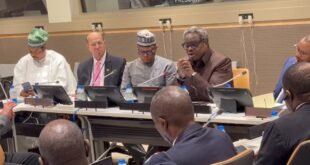
This insight resonated deeply with a keynote speech I recently gave at the 2nd International Conference on Followership Studies on the topic “The demand side of responsibility”. My presentation, entitled “Following as Power: The Untold Politics of Consent, Silence and Complicity in African Governance,” explored an issue that debates on African governance often avoid.
What if governance failures were not just leadership failures?
What if citizens, institutions, professionals, religious communities, media actors and civil society organizations also determined the outcomes they routinely condemn?
I argued that no ruler rules alone. No corruption becomes systemic because a single politician decides to be corrupt. No injustice matures in culture without networks of permission, accommodation, rationalization, reward, fear, and silence.
The tragedy of governance is therefore rarely the story of leaders alone. It is usually the story of an ecosystem. And ecosystems survive thanks to participation.
This is where the monk’s lesson becomes particularly relevant.
The snake matters.
The bite matters.
Understanding the snake is important.
But healing matters more.
Nigeria’s challenge is that we often confuse diagnosis with recovery. We start from the assumption that identifying the problem is equivalent to solving it. It’s not!
A nation can understand every detail of its dysfunction and yet remain dysfunctional. Knowledge alone does not produce transformation. Collective behavior yes.
At the conference I introduced a distinction between what I called followers AND followerssheep.
Followers think, question, cooperate critically, strengthen institutions, and hold power accountable.
Followsheep surrender agency. They confuse loyalty with silence, confuse reverence with submission, and baptize power instead of scrutinizing it.
The distinction may seem harsh, but it points to a larger truth. Societies rarely fail because leaders fail themselves. They weaken when citizenship becomes passive.
When silence becomes more comfortable than the truth. When identity becomes more important than principles. When convenience triumphs over conscience. When citizens become spectators of their nation’s government.
This is why accountability cannot be understood simply as a demand made on leaders. Responsibility is also a request addressed to citizens. Democracy has a supply side and a demand side. We spend enormous energy arguing about the supply side: presidents, governors, legislators, ministers, judges and political parties.
Much less attention is paid to the demand side: to the values, expectations, behaviors and moral commitments of ordinary citizens. Yet history repeatedly demonstrates that institutions are only as strong as the cultures that support them.
Constitutions matter. Laws matter and policies matter. But culture often matters more, because trust is cultural, legitimacy is cultural, and accountability is cultural.
Democracy itself also rests on emotional and moral foundations such as empathy, reciprocity, fairness, moderation, duty and shared standards. Without these foundations, elections become transactions, public offices become rights, citizenship becomes survival and governance becomes performance.
By Victor Dickson The Nigerian emotional map comes right to this point. This suggests that Nigeria’s future may depend less on the search for new political saviors and more on the cultivation of a shared emotional morality capable of transcending ethnicity, religion, geography and political affiliation.
In other words, before we can reform institutions, we may need to reform the emotional architecture that supports them. This is not a demand for perfection. No society reaches perfect consensus. But every successful company establishes some non-negotiable principles.
There are things that remain wrong regardless of who does them. There are things that remain right regardless of who benefits from them. This consistency builds trust. Trust creates legitimacy. Legitimacy strengthens institutions. Strong institutions support nations. The absence of such coherence creates exactly the opposite result such as mistrust, cynicism, impunity, fragility and ultimately decline.
The wisdom of the monk and the argument The Nigerian emotional map finally converge to the same conclusion. Healing requires responsibility. Not equal responsibility, but collective responsibility.
The biggest untold policy in Nigerian government may not be the abuse of power by leaders. It could be the surrender of power by the followers. Because all authority depends on legitimacy.
Every system survives because people participate in its sustenance. Every institution reflects the moral habits of the underlying society.
This truth should not depress us. It should empower us. Because if citizens help support damaged systems, they can also help transform them.
The serpent has already struck. History has already registered the bite. The most pressing question before us is no longer who bit us. It depends on whether we have the courage to heal.
If we can build a shared civic morality that places principle above cronyism, justice above identity, and responsibility above convenience. If we can finally agree that some things are wrong regardless of tribe, religion, region or political affiliation.
Because nations, like individuals, rarely die from the bite alone. They die when they confuse snake hunting with recovery work. And perhaps Nigeria’s future depends on recognizing difference: May Nigeria win!
Post views:
33