JamzNG Latest News, Gist, Entertainment in Nigeria
The Plateau State House of Assembly has expressed strong support for the creation of a state police force, and assured stakeholders that any bill seeking to create a security structure will receive legislative attention as soon as it is approved by the Assembly.
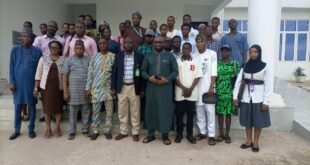
The Speaker of the House of Representatives, Naanlong Daniel, made this assurance on Thursday in Jos when he received members of the Plateau State Advisory Committee on National Police Affairs led by retired Deputy Inspector General of Police DIG Habila Joshak on an advocacy visit.
Daniel said the Assembly views the state police as an important component in efforts to address the persistent security challenges facing Plateau State and several other regions in the country.
“The Assembly believes that the state police will make a significant contribution to ending the long-standing insecurity affecting parts of Plateau State and other regions of the country,” Daniel said.
Speakers noted that lawmakers in the state have consistently supported calls for decentralization of policing, arguing that these initiatives can strengthen local security responses and improve public safety.
“Members of parliament have consistently advocated for its creation. President Bola Ahmed Tinubu demonstrated his commitment to addressing insecurity and supporting reforms aimed at strengthening Nigeria’s security architecture,” said the Speaker of Parliament.
He further pledged the Assembly’s readiness to collaborate with all relevant stakeholders to ensure the success of the proposed reforms.
Also read: Nigeria must improve its domestic conditions before regaining its global influence, says Nigerian Foreign Minister
Daniel assured the committee of “full legislative cooperation and readiness to provide the necessary legislative support to ensure the success of this initiative.”
Emphasizing the need for collective action in addressing insecurity, the Chairman said sustainable peace can only be achieved through cooperation between government agencies, security agencies and citizens.
He further emphasized that “security remains a collective responsibility and all stakeholders must work together to achieve lasting peace across the state.”
Earlier, Joshak explained that the committee’s engagement with the legislature was part of broader consultations aimed at building support for the state police force across Plateau State.
According to him, long-standing national security concerns make this proposed police model timely and necessary.
He said “years of complex security challenges” on the Plateau make the state police “an important step toward strengthening security management, improving intelligence gathering, and restoring public confidence in law enforcement.”
Joshak also revealed that the committee was tasked with developing a framework that could serve as a model for other countries considering similar reforms.
The retired police chief stated that the committee “is expected to serve as a reference point for other states across the federation as discussions regarding state policing continue nationally.”
Highlighting the importance of legislative involvement, he said the success of this initiative would largely depend on the role of parliamentarians.
He noted, “The role of the State Council in achieving this goal cannot be overstated, emphasizing that lawmakers will play a critical role in providing the legal support and careful legislative planning necessary for the successful implementation of this initiative.”
Joshak urged Assembly members to accept the proposal, stating that state police forces would be better positioned to address local security concerns while complementing the existing national police structure.
Also speaking, committee member Chris Khadap called on legislators to expedite consideration of the bill when it is finally introduced.
He described the proposed law as an important opportunity to confront recurring security threats and address perceived deficiencies in current policing arrangements.
Khadap argued that a state-controlled police structure would improve intelligence gathering at the grassroots level, improve response to emergencies and encourage greater community involvement in security management.
The Committee further sought to allay concerns regarding potential discrimination or abuse of the proposed system, by affirming that the framework would be operationalized based on principles of fairness and inclusiveness.
According to the committee, “The proposed state police structure will be inclusive and will serve all citizens equally, regardless of religion, ethnicity, or political affiliation,” with “fairness, professionalism, and accountability” as central principles.
The Plateau State Advisory Committee on State Police was established by Governor Caleb Mutfwang in March to encourage consultations, develop implementation strategies and provide input to the government on the operational framework of the state police.
The committee’s visit to the Assembly is part of ongoing stakeholder engagement ahead of the formal presentation and legislative consideration of the state police bill in Plateau State.