JamzNG Latest News, Gist, Entertainment in Nigeria
““We do not provide full food rations to the community, but the reduced food rations are also distributed to recipient families, because they know that they have no other source of income,” says the World Food Program (WFP) Sudan Country Director, Abdallah Alwardat.
Why this is important
- More than 100,000 refugees need immediate assistance.
- Hunger is getting worse, water and fuel supplies are limited.
- Funding shortages limit life-saving food aid.
- Sudan is still the country with the largest refugee crisis in the world.
Briefing journalists in Geneva via video from the town of Kosti, south of Khartoum, Alwardat provided an update on what he had just seen in El Obeid, where UN Human Rights Chair Volker Türk has warned that civilians have been under siege for 18 months and face continuous drone strikes, ahead of possible paramilitary attacks.
Race to scale
“WFP has provided food assistance to more than 100,000 people in camps inside the city”, but many more refugees are taking refuge in El Obeid “and they need immediate assistance”, WFP officials said.
“What we need to do now is plan to increase aid beyond the 100,000 people we have already helped,” stressed Alwardat, adding that the agency is also providing nutritional support to 17,000 children caught in the crisis and living in camps.
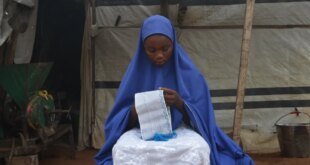
The humanitarian veteran described how an elderly woman he met was completely dependent on food rations from UN agencies, although this was only part of the problem: “She was waiting to receive food and she was only thinking about how to get the food back to her tent.
“He wanted to move it in this little tuk-tuk…So, he went around to see other families, if they could share the cost of moving the food back to the tent.”
It has been more than three years since Sudan’s military launched a brutal war following the country’s failed transition to civilian rule following the ouster of former President Omar al-Bashir.
The Sudanese Armed Forces (SAF) continues to fight against its former ally, the Rapid Support Forces (RSF) militia for control of the vast country, where more than 14 million people have been displaced and both sides have been linked to serious human rights violations.
Millions of people have fled across borders in the world’s largest refugee crisis and one of the world’s largest humanitarian disasters. Nearly 20 million people in Sudan are now classified as acutely food insecure. WFP assists between three and five million of the most vulnerable groups, who face emergency food insecurity or major disasters.
A city runs empty
“Of course we want to do more. But of course, our resources are also limited,” insisted WFP’s Alwardat. “But certainly, we have access. We can deliver food, and we can be there, and we can work with partners on the ground. Resources limit us from doing that.”
The humanitarian veteran said that on the hours-long journey from Kosti to El Obeid some 350 to 400 kilometers away, he saw no military operations.
Mr Alwardat also noted how few commercial trucks or supplies were heading to the city, where supplies of food, water and fuel were still very limited. WFP’s mission to the capital of North Kordofan helped ease fuel shortages that prevented aid partners from delivering food to displaced people in recent days.
“As long as we have the necessary financial support, I think we have the means and capacity to maintain that viability,” insisted Mr. Alwardat.
“And we’ve been delivering food; the last two or three weeks, we’ve managed to deliver food and prepared food for the next two months. And we started distribution in July, and we’re ready to do it in August.”