JamzNG Latest News, Gist, Entertainment in Nigeria
That report revealed that more than two in three people now suffer from “multidimensional poverty” or are at risk of falling into it, with more than 37 million people – 68 percent of the population – experiencing overlapping crises.
‘Everyone loses’
“Myanmar may no longer dominate international headlines, but the hardships facing millions of people are getting worse,” said Kanni Wignaraja, UNDP Regional Director for Asia and the Pacific.
The UN continues to highlight the problems facing the people of Myanmar, which has been ravaged by civil war since the military seized power in February 2021. The country also faces macroeconomic instability, recurring disasters and the additional impact of a devastating earthquake in March 2025.
“We see high poverty in Myanmar which is eroding human development itself. This is a war with no winners. Everyone loses. The core strength of this country is being systematically eroded,” explained Wignaraja.
Resources are dwindling
Report – Layers of Deprivation: Multidimensional Poverty in Myanmar, – shows that the country is facing more than just an income crisis as many of the buffers that help families to absorb shocks – such as savings, stable livelihoods, access to services and social support networks – are disappearing.
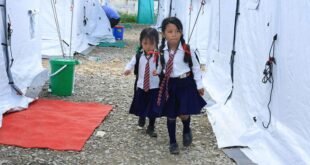
Deficits in health and living standards account for more than 80 percent of multidimensional poverty. These challenges include challenges in accessing health services, adequate housing, clean water, sanitation and other essential services, especially in conflict-affected areas.
Mixed image
Poverty also varies across Myanmar, according to the report. In some regions, conflict, displacement and limited access to services are the main causes, while persistent gaps in livelihoods, education, infrastructure and public services are key challenges in other regions.
Rakhine state in western Myanmar is one of the most severe centers of multidimensional poverty. More than two-thirds of the population is multidimensionally poor and almost one-third are severely poor.
Dispossession among some stateless and refugee populations there may be underestimated due to limitations in telephone data collection. This includes the Rohingya ethnic community who have faced decades of oppression by the military. This was likened by UN High Commissioner for Human Rights Zeid Ra’ad Al Hussein to the ethnic cleansing that was “booked” in 2017.
These findings also challenge the assumption that poverty occurs primarily in rural areas. Although the Yangon region has lower poverty rates than other conflict-affected countries, it is also home to one of the largest concentrations of the multidimensionally poor, reflecting deepening vulnerability among urban and peri-urban households.
Climate and economic shocks
The report was released at a time when about one in five households in Myanmar face climate-related risks such as floods, cyclones, drought and landslides. This shaking is expected to get worse with the arrival of the El Niño weather pattern.
The report noted that by the end of August, around 600,000 people had been affected by the floods.
Communities also felt pressure from “external economic shocks” such as rising fuel prices related to the Gulf crisis, inflation and rising food prices.
Youth exodus
The report also highlights the situation of young people growing up amidst conflict, insecurity and deep economic and social pressure. The report warns that as opportunities shrink, many people face limited choices regarding education, employment, mobility and their future.
At least one million young people may have left Myanmar as early as 2021, in what the UNDP called one of the largest losses of human resources in the country’s history – and at a time when its population is aging.
Meanwhile, almost half of the households that depend on casual workers are multidimensionally poor. Families, migrants and households in conflict areas face the highest levels of poverty, highlighting the need for greater investment in decent livelihoods, education and essential services.
“The biggest risk facing Myanmar is not only exacerbating poverty now, but also narrowing opportunities in the future,” said Wignaraja.
“Societal recovery cannot wait until the conflict is over. Investments in livelihoods, education, health services, local markets and basic services remain critical to maintaining the basic human capabilities this country needs to recover and move forward.”