 JamzNG Latest News, Gist, Entertainment in Nigeria
They were sent home on Monday, according to United Nations World Health Organization (WHO), which has assisted Kenyan authorities Ebola preparedness since the Democratic Republic of Congo (DRC) declared this outbreak on May 15.
Other 98 contacts remain in quarantine.
There is no risk to the public
People now returning home remained asymptomatic during quarantine and underwent standard protocols, including final health assessment, counseling on post-discharge precautions, and follow-up if necessary before discharge.
“We ask the public to warmly welcome them homesaid Dr Patrick Amoth, Kenya’s director general of health. “After going 21 days without symptoms, they do not pose a risk of infecting anyone.”
WHO Representative to Kenya, Dr Neema Rusibamayila Kimambo, conveyed the same message.
“People who complete quarantine have helped protect their families, their communities, and the entire countryhe said.
Rush to trace contacts
Kenya confirmed its first Ebola case on October 6 – a Kenyan man who had worked in Congo, where the number of cases is approaching 10,000.
He flew back to Kenya via Uganda on October 3 and died in a Nairobi hospital two days later.
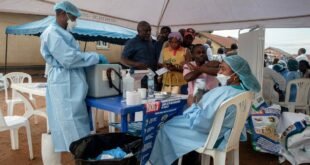
The Ministry of Health is conducting rigorous contact tracing for anyone who may have been exposed, including family members, airline passengers and crew, airport workers and medical personnel. By October 22, all contacts had been traced – both in Kenya and abroad – and put into quarantine.
As of Monday, eight contacts had shown symptoms and were confirmed positive for Ebola disease through laboratory testing. They were immediately transferred to an Ebola treatment center in Nairobi.
Praise and support
In total, Kenya has reported nine confirmed Ebola cases and two deaths. All are part of one connected group and there is no evidence that the virus has spread to the community.
“WHO commended the Ministry of Health, Kenya National Institute of Public Health, national and regional health teams for their work in responding quickly to each new case.,” said Dr. Kimambo.
The UN agency continues to support Kenya in all aspects of the Ebola response, including coordination, disease surveillance, contact tracing, laboratory testing, case management, infection prevention and control, health screening at points of entry, risk communication and community engagement.
Although there is no licensed vaccine or specific treatment for Bundibugyo virus disease, WHO emphasizes that early detection and supportive care will increase the chances of recovery.
DRC vaccine trial
Meanwhile, a “pivotal clinical trial” was launched in Congo on Friday to determine whether the vaccine can provide protection against the disease, said Dr. Meg Doherty of the WHO, speaking from the eastern city of Bunia to journalists in Geneva.
The TUMAINI trial platform is designed so that multiple vaccine candidates can be evaluated within a single research framework using a strategy called the ring vaccination approach involving contacts of people with confirmed cases of Ebola.
“Tumaini actually means ‘hope’ in Swahili, and gives us a little hope,” says Dr. Doherty, director of WHO’s Department of Health Sciences.
A touching experience
The first vaccine evaluated was Ervebo which was effective against Ebola caused by the Zaire virus. It is not yet known whether this drug has a protective effect against the Bundibugyo strain.
Dr Doherty attended the launch, where four people received vaccinations.
“It is heartwarming to see this trial begin, just as it is heartbreaking to see the impact this outbreak has had on society,” he said.
“I lived and worked in Congo almost 40 years ago, and it was heartbreaking to see this beautiful country challenged by disease and humanitarian crises.”
Evaluation and recommendations
Last week, WHO held a technical advisory group meeting to evaluate the evidence for two vaccines specifically designed against the Bundibugyo virus: ChAdOx1, developed by Oxford University with the Serum Institute of India, and mRNA-1469 developed by American company Moderna.
Recommendations will be published this week.
“Meanwhile, rings are being installed for people whose family members have had Ebola, or those who contracted the virus through other means,” he said, noting that currently two rings have been installed and several others are being prepared.
“Members of the public have entered the site and asked to be registered, highlighting how great the need is for an efficacious vaccine,” he added.
‘An important step’
Doherty explained that a decade ago, WHO and partners used a ring vaccination approach in Guinea during the Ebola outbreak in West Africa to help establish the efficacy of the Ervebo vaccine.
“Currently, scientists are building on this experience to find answers about the Bundibugyo virus,” he said.
The trial is being led by Congolese authorities and integrated into the ongoing response to the outbreak. It is administered by the National Institute of Biomedical Research and Public Health, known by its French acronym IRNRB.
“We don’t know for sure when the results will start to appear. It is estimated that it will take several months,” he said.
“But conducting this trial is an important step toward gathering scientific data that will help policymakers make informed decisions about the use of the vaccine, and we anticipate it, to protect people in this and future outbreaks.”
Dr Doherty noted that several other vaccines are in development, “and as they undergo initial studies, if they look promising, they may also be included in trials of this vaccine platform.”