 JamzNG Latest News, Gist, Entertainment in Nigeria
Civil servants in the country will get a monthly transport allowance of N70,000 for six months as part of the federal government’s efforts to reduce the economic hardship they face.
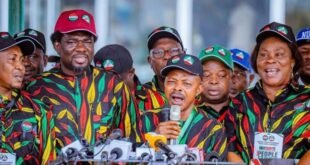
The approval of the package, which began in November, was part of the resolution reached at a conciliation meeting between the Federal Government and the Nigerian Labor Congress in Abuja on Tuesday.
The meeting was held to discuss organized labor’s grievances regarding worker welfare, rising cost of living and outstanding agreements.
The government also approved the payment of special allowance arrears, effective from 1 May 2026, in three equal monthly installments starting in November.
The meeting also agreed to immediately form a Minimum Wage Negotiating Committee, saying, “the memorandum stated, “It was agreed that a Minimum Wage Negotiating Committee will be formed and begin meeting immediately. However, it should be noted that there are differences of opinion regarding the effective date of implementation.”
This decision was stated in a memorandum of understanding signed at the end of the meeting by the Director General of Budget, Timi Yakubu; NLC President, Joe Ajaero; Permanent Secretary, Service Welfare Office, Office of the Chief Civil Service Officer of the Federation, Dr Garba Abdul SU; and Minister of Labor and Employment, Dr Muhammad Maigari Dingyadi.
The document, titled ‘Resolution Reached at the Conciliation Meeting Held at the Federal Ministry of Labor and Employment Between the Federal Government and the Leadership of the Nigerian Labor Congress on Tuesday, 27 October 2026’, outlines agreements regarding transport support, unpaid allowances, minimum wage negotiations, remuneration of health workers, tax relief and hazard allowance for agricultural officers.
Speaking on the outcome of the meeting, Assistant Secretary General of the NLC, Chris Onyeka, described the discussion as productive but said it did not meet the expectations of the Labor Party.
“It was productive, but not in the way we expected,” he said.
Onyeka said negotiations often required compromise, adding that parties were not always able to achieve all their objectives.
“Sometimes you win, sometimes you lose,” he said.
He explained that the proposed Minimum Wage Negotiating Committee would be tripartite, consisting of representatives of the government, workers and employers.
He also confirmed that transportation allowances would be paid for six months, starting in November.
The meeting was a continuation of the previous conciliation session held on October 22, 2026, which was convened by the Federal Ministry of Labor and Employment to resolve differences of opinion between the government and labor organizations.
Regarding transport allowances, the memorandum stated, “Transport interventions amounting to Seventy Thousand Naira (N70,000) from November 2026 will be paid at all levels for a period of six months.”
This agreement was reached amid ongoing concerns regarding rising transport costs and prices of essential goods following the removal of fuel subsidies in May 2023, which contributed to rising living costs across the country.
Organized labor has repeatedly called for measures to reduce economic pressure on workers, including lowering fuel prices, increasing wages and implementing extraordinary welfare agreements.
For health workers, the government agreed to pay off 19 months of benefit arrears within three months, starting in December 2026.
The memorandum states, “Nineteen (19) months of arrears for health workers’ allowances must be paid within three (3) months starting from December 2026.”
The memorandum also urges state and local governments to participate in the intervention process, noting that authorities have responsibility for the welfare of workers in their respective public services.
The statement said, “State and Local Governments are urged to participate in the intervention process. Trade unions are also instructed to push for its implementation.”
The parties also agreed to review the implementation of the resolution after one month.
The memorandum stated, “Both parties will meet again after a period of one month to assess the level of implementation of the resolution.”