JamzNG Latest News, Gist, Entertainment in Nigeria
The Economic and Financial Crimes Commission (EFCC) has highlighted how assets obtained from the proceeds of crime are being converted into institutions that serve the public, with one lost private university in Kaduna State now operating as a federal university and another high-value institution in Kebbi recently handed over to the Federal Government.
EFCC Chairman, Ola Olukoyede, disclosed the development in a video and post shared on his official X account on Friday, saying the recovery and conversion of the assets shows how law enforcement can provide benefits beyond punishment to violators.
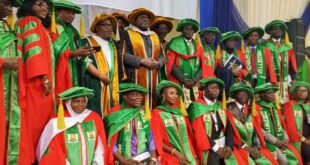
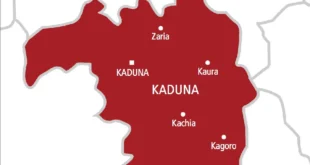
One big example, he said, was the former NOK University in Kachia, Kaduna State, which was eventually handed over to the Federal Government and later transformed into the Federal University of Applied Sciences, Kachia.
“The university confiscated from crimes is now a federal university. The restored campus in Kaduna State became the Federal University of Applied Sciences, and in December 2025, 1,909 students matriculated there. A generation of young people who, in everyday life, would never have seen the inside of a lecture hall,” he said.
Olukoyede said the institution was expected to make a significant contribution to the economic and educational development of the host communities and the wider Southern Kaduna region.
The EFCC Chairman also revealed that another private university described as a high value asset was recently finally handed over to the Federal Government.
Noting the scale of the property, Olukoyede referred to the facilities developed for the institution, including what he described as a very large residence built for its vice-chancellor.
“You have to go to the university in Kebbi which has temporary locations and permanent locations.
Also read: 2027: ADC names Rhodes-Vivour, Malami, Ashiru, Ogboru and others as gubernatorial candidates in 28 states
“The house built for the vice chancellor alone is probably bigger than the president’s house in the villa. The pictures are everywhere. If you Google it now, you will definitely see the picture,” he said.
Although Olukoyede did not mention the name of the university in his post, his description of the institution with temporary and permanent campuses is in line with Rayhaan University in Kebbi State.
The EFCC has secured the final seizure of the university and several other properties linked to the former Attorney General of the Federation on July 15, 2026. The seizure reportedly includes the institution’s permanent and temporary sites, ancillary sites, a radio station and a residence built for its vice-chancellor.
Olukoyede said the recovery of the university was part of the Commission’s broader efforts to ensure that assets traced to criminal enterprises were returned to productive use.
According to him, the EFCC has secured the seizure of thousands of assets since October 2023 which includes various properties and equipment.
“Beyond cash, between October 2023 and July 2026 we succeeded in seizing 10,053 assets: real estate, land, vehicles, electronics, schools, factories, hotels, oil platforms, barges, machinery and aircraft, as well as 102 tonnes of solid minerals. Disposal has so far returned ₦12.07 billion to the Federal Government,” he added.
The EFCC boss said that the impact of the recovery goes beyond the value of the assets themselves, arguing that the recovery also strengthens public revenues, protects the integrity of the financial system and deters criminal activities.
He describes this approach as one in which recovered assets can be redirected to provide meaningful public benefits.
“This is what law enforcement would look like if it went beyond punishment. Every asset taken from a criminal enterprise will reduce the rewards earned in subsequent actions – and some of that will be returned to the classroom,” he added.
The statement is part of a broader performance report recently submitted by Olukoyede, in which the Commission said it recovered ₦1.233 trillion, along with various foreign currencies, and secured 10,872 penalties between October 2023 and July 2026.
The conversion of obsolete institutions into facilities that can serve the people of Nigeria, particularly in the education sector, is one of the clearest examples of the EFCC’s efforts to ensure that assets recovered from unlawful activities are returned to productive use for the public good.