JamzNG Latest News, Gist, Entertainment in Nigeria

The recent warning by the Chairman of the Federal Civil Service Commission (FCSC), Tunji Olaopa, that prolonged hiring embargoes have hollowed out Nigeria’s federal public service, weakened merit, distorted workforce planning and undermined government’s ability to attract and retain qualified personnel, should not be treated lightly.
Olaopa’s warning is a clarion call to save the engine that drives Nigeria’s industrial, governance and administrative structures, as well as the overall economy, towards sustainable growth and development.
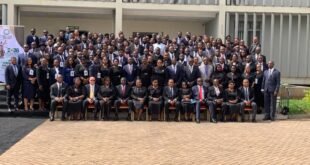
Olaopa raised the alarm during the International Civil Service Conference (ICSC) 2026, organized by the Office of the Chief of Service of the Federation under the theme “Reforms, Resilience and Results”. In his presentation titled: “Orientation, Merit and Digital Reform: Rewiring the Federal Civil Service,” the FCSC Chair argued that long-standing hiring freezes have transformed employment from a strategic governance tool into a bottleneck that drives talent away and weakens institutional capacity.
“I think a situation where we have been implementing an embargo for so long has meant that the service has lost the value of using employment as a tool to recruit into the service,” he told delegates, warning that the service is already losing skilled hands to the private sector and the diaspora. He said the Government must restore its status as an employer of choice through new ideas and innovations in employment policy.
“Good people will enter the public service, receive initial training and move into other sectors. The pace at which we are losing them, including to the diaspora, is incredible. For the government to restore its status as an employer of choice, we need to bring a lot of innovation in employment policies. Whatever we do with merit and competitiveness, if we do not address the issue of competitive wages and commensurate conditions of service as factors of merit, we are only playing to merit,” he said.
Olaopa argued that recruitment should be reinstated as a strategic tool to fill critical gaps, build institutional memory and support service delivery, rather than being treated only as a fiscal constraint. He said prolonged embargoes have also made it difficult for the public administration to respond to changing public needs, even when capable people are available and willing to serve.
He also linked recruitment reform to digital transformation, saying the service must move from manual, paper-heavy processes to interoperable databases, digital identities and online recruitment systems that are transparent, efficient and user-friendly.
According to him, performance evaluation must also move from a mere credential-based evaluation to measurable results and observable skills.
The FCSC Chairman stressed that merit-based recruitment cannot work independently of competitive pay and decent conditions of service. He argued that without fair remuneration, the public service will continue to lose qualified officials after investing time and resources in their development.
He also called for a stronger culture of professionalism, transparency and accountability within the commission and the wider civil service.
Olaopa said the FCSC must lead by example by professionalizing its processes and ensuring that appointments to the commission and other strategic institutions are based on track record, competence and integrity, rather than political influence or personal connections.
He warned that unless the civil service deliberately reforms its structures and incentives, it will remain trapped in low productivity and low retention.
Olaopa, an experienced administrator par excellence, a pan-Nigerian who should know everything, undoubtedly speaks with the benefit of hindsight. The apprehension expressed by the FCSC Chairman is already manifesting itself in multiple forms, including the high rate of unemployment which has been identified as a major cause of insecurity in the country.
There is also brain drain or Japa syndrome, whereby Nigerian professionals are migrating to Europe and other parts of the world in search of greener pastures.
It is in this context that Blueprint sees Olaopa’s warning as timely and appropriate and must be heeded without much delay. However, we recognize that President Bola Ahmed Tinubu’s ongoing reform of the civil service has renewed hope in the administration, particularly its digitalisation and welfare components.
However, the lifting of the prolonged embargo on employment in the federal civil service will, to a large extent, strengthen its workforce, consolidate the benefits of reforms and address a key driver of the insecurity plaguing the country.