JamzNG Latest News, Gist, Entertainment in Nigeria
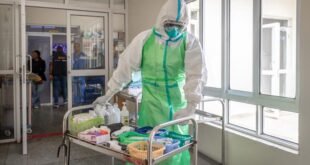
Against a backdrop of insecurity resulting from decades of violence and mass displacement in the resource-rich eastern region of this country – it is a deadly disaster Ebola the outbreak is also spreading – Judith Suminwa stressed on Wednesday that few other situations “illustrate the gap between international commitments and [people’s] lived reality.”
“We cannot build a decarbonized economy on blood-stained minerals,” he said. “And we will not achieve a just transition by reproducing our past versions of dependency.”
Speaking to leaders gathered at UN headquarters in New York, he stated that Congo “continues to face a war of aggression led by Rwanda through its proxy AFC/M23” (Congolese Fleuve Alliance Movement/M23). Other armed groups, particularly the Allied Defense Forces (ADF) and CODECO exacerbated the humanitarian crisis.
An elusive peace
The Prime Minister pointed to several developments that have opened up prospects for an end to the violence, such as the peace agreement signed in Washington, DC, in June 2025, between Congo and Rwanda.
But he noted that “for millions of Congolese, this peace is just a promise.”
He says UN Security Resolution 2773 (2025) “has set out a clear path” in its call for an effective cessation of hostilities, withdrawing Rwandan troops from Congolese territory and restoring the country’s authority, among other steps.
“But we don’t need new laws to replace laws that have already been adopted,” he said.
Repatriation of FDLR fighters
Ms Suminwa also discussed issues surrounding the Democratic Forces for Freedom of Rwanda (FDLR), a predominantly ethnic Hutu armed group, and recalled that a protocol signed in May provided for the disarmament and demobilization of its combatants.
Earlier this month, the UN peacekeeping mission in Congo, known as MONUSCOsupported the repatriation of 120 people linked to the group, which he called “first evidence of implementation of the protocol”.
Fair transition and employment
The Prime Minister cited growing demand for copper, cobalt, lithium, nickel and other critical minerals, including to support the energy transition and the expansion of digital and AI infrastructure.
He said Congo is at the heart of this transition, as it is the largest global producer of cobalt – used in making lithium batteries and digital equipment, for example – and a major producer of copper.
“It would be unfair and dangerous if added value, jobs, knowledge and technology remained concentrated far from the communities that made this change possible,” he warned.
He said that Congo “rejects the old model of limiting producing countries to crude oil extraction while processing, research, technology and most of the profits are concentrated elsewhere”.
Looking ahead, the country wants to join with African and international partners to build “competitive regional businesses that create jobs, skills and shared prosperity”.