JamzNG Latest News, Gist, Entertainment in Nigeria
Key points
- The Secretary General has called for an immediate cessation of hostilities and called on Israel to withdraw its troops from Lebanese territory.
- He condemned the rising civilian casualties and “scenes of massive destruction” resulting from intensified Israeli operations in and around Nabatieh.
- OCHA said around 20,000 people left Nabatieh District last week, and health services in the region were under increasing pressure.
- UNIFIL recorded 528 Israeli projectiles fired between Thursday and Monday and 62 airspace violations on Sunday alone – one of the highest number of daily violations since June.
In a statement issued by his spokesman, Stéphane Dujarric, the Secretary-General said he was “deeply concerned” by Israel’s escalating military operations in southern Lebanon, condemning “the increase in civilian casualties, including women and children killed and injured in intensifying attacks”.
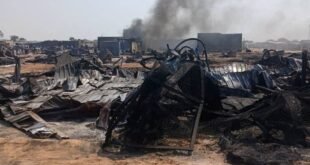
He pointed to “distress and displacement caused by evacuation orders” and “scenes of massive devastation and destruction” are now unfolding throughout the district.
The Secretary-General said he was deeply concerned by reports of Israeli attacks affecting hospitals, health workers and public institutions, as well as restrictions on humanitarian access.
All parties, he said, must comply with their obligations under international law, including international humanitarian law, adding that “civilians and civilian objects must be protected at all times, and attacks directed against them are unacceptable”.
He called for an immediate cessation of hostilities, called on Israel to withdraw, and urged all parties to respect Lebanon’s sovereignty and territorial integrity and fulfill their obligations under the agreement. Security Council resolution 1701 (2006).
The UN, he said, remained committed to “supporting efforts to end the violence, protect civilians and advance a long-term solution to this conflict”.
Tens of thousands of people were displaced
Briefing journalists in New York, Dujarric said the UN was “deeply concerned by the sharp increase” seen over the weekend and early this week, particularly in Nabatieh, where humanitarian partners reported that civilians, including children, were among those killed and injured.
According to local authorities, about 5,000 families – about 20,000 people – left Nabatieh District last weekUN humanitarian affairs office, Ochareport. Health services in the region are also under increasing pressure.
Dujarric reiterated “the need for full respect for international humanitarian law, including the protection of civilians, health services and civilian infrastructure”, and stressed that humanitarian access must be maintained to reach people affected by the new escalation.
UNIFIL reports an increase in violations
Meanwhile, the reported incident occurred outside the area of operation of the UN peacekeeping force, peacekeeping mission UNIFILE said his party continues to monitor the deteriorating security situation with great concern.
Between Thursday and Monday, the Mission recorded a sharp increase in Israeli military activity in and around its area of operations, including ground operations, projectile fire, airstrikes, and violations of Lebanese airspace.
UNIFIL detected 528 projectiles fired by the Israel Defense Forces during the period, and on Sunday, for the first time since June 21, one projectile was fired by Hezbollah.
On Sunday alone, UNIFIL recorded 62 violations of Israeli airspace – among the highest number of daily violations since June – along with airstrikes in both sectors of its operational area and north of the Litani River.
Peacekeepers also reported roadblocks and checkpoints impeding their movement, and the UN called on all parties to respect the Mission’s freedom of movement.
On the humanitarian side, UNIFIL facilitated 13 missions between Thursday and Monday in coordination with OCHA, all in the western sector.