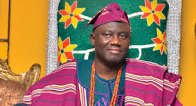
The World Bank appointed Mathew Verghis as Director of Nigeria State

The World Bank has announced the appointment of Mathew Verghis as the Director of the New State for Nigeria.

He replaced Ndiame Diop, who had taken a new role in the institution.

According to the World Bank in a statement on Friday, July 4, 2025, the appointment began to take effect starting July 1.

“Mr. Verghis, an Indian citizen, brought more than two decades of global experience in economic policies and development,” said the World Bank.

“He joined the World Bank in 1999 and has held the role of senior leadership throughout Africa, East Asia, Europe, Central Asia, and most recently served as Director of Regional Practices for Prosperity in South Asia, based in Washington, DC”

Speaking of his appointment, Verghis said he would come at a critical time for Nigeria’s development journey.

“I am honored to take this role and work with the government and Nigerians,” he said.

Also read: NNPCL Starts Governance Reform before the long-awaited public list

“There is a real potential for transformative growth that can improve life, create jobs, and expand opportunities for all. I am also eager to experience rich cultures and extraordinary Nigerian energy.”

The World Bank said that as the Director of the State, Verghis will lead its involvement in Nigeria, oversee bank support for the main development program and strengthen collaboration with the government, civil society, and development partners.

The statement added that Verghis held the MA and Ph.D. In the economic field of the University of Notre Dame, USA, and has written broadly about growth, poverty, fiscal policy, and labor market.

By: Babajide Okeowo

Check Also

Freedom of Information Act and The Limits of Press Freedom, By Mack Ogbamosa – THISAGE

        Introduction  A free, independent, and vibrant press is one of the strongest pillars of any democratic society. It is against this background that most democratic countries  make constitutional provisions for a free press . Others even go further to enact specific laws to make affairs of governments freely available to the public. Currently, there are more than  130 countries in the world that have free press laws. They include Sweden, United States, France, South Africa and Nigeria. Nigeria did not only make  constitutional provisions in Sections 22 and 39(1) of the 1999 Constitution ( as amended) but also went ahead to enact the Freedom of Information Act  in 2011. Section 22 of the 1999  Constitution states: “ “The press, radio, television and other agencies of the mass media  shall at all times be free to uphold the fundamental objectives contained in this chapter( ie Chapter II) and uphold the responsibility and accountability of the Government to the people”  Section 39(1)  of same Constitution states : “Every person shall be entitled to freedom of expression, including freedom to hold opinions and to receive and impart ideas and information without interference” ..  To complement these constitutional provisions, Section 1 (1) of the Freedom of Information Act (FOIA) states “Notwithstanding anything contained in any other Act, law or regulation, the right of any person to access or request information, whether or not contained in any written form, which is in the custody or possession of any public official, agency or institution howsoever described, is established.” while Section  2(2), states that: “A public institution shall ensure the proper organization and maintenance of all information in its custody in a manner that facilitates public access to such information”  Primary Purpose of FOIA  According to the Act, its primary purpose is to make information about public records freely available to every Nigerian in the public interest. …

Leave a Reply

Your email address will not be published. Required fields are marked *