JamzNG Latest News, Gist, Entertainment in Nigeria
Fighting between the national army and the opposing Sudan People’s Liberation Movement militia has escalated, particularly in Jonglei’s Akobo district – and civilians continue to bear the brunt.
Some 140,000 people have taken refuge there, while more than 300,000 people have sought refuge in Jonglei and neighboring countries since December last year – adding to the nearly two million people who have become internally displaced.
At the same time, around 100,000 people have fled to neighboring Ethiopia in search of safety, while population movement remains fluid as thousands have returned to their homes in recent weeks.
The shelter is made of wood
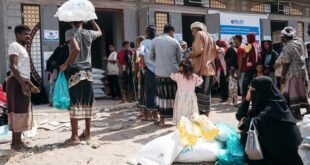
Many families returned to find their homes destroyed, or looted, forcing them to cram into unfinished buildings and makeshift shelters made of wood and plastic sheeting.
Limited humanitarian access in some locations has cut off access to critical aid for the most vulnerable groups, further deepening the crisis.
With the rainy season underway in South Sudan, the world’s youngest country, which has faced repeated waves of conflict, displacement and climate shocks since independence in 2011, is likely to face flooding – another layer of hardship.
Global meat supplies have quadrupled over the past six decades
Global supplies of animal-based food products have increased significantly over the past six decades – especially eggs, poultry and pork – according to a new study conducted by the UN’s Food and Agriculture Organization (FAO).F.A.O).
The report found that poultry showed the greatest growth, around five-fold, followed by eggs and pork – both increasing almost two-fold, while beef products remained stable or declined in many regions.
In 2022, global meat production will reach 361 million tons of meat, up from around 71 million tons in 1961.
Milk production increased by 930 million tonnes from around 342 million tonnes, while egg production in the same period increased from 15 million tonnes to 94 million tonnes.
Losses and waste
Per capita supply of land animal products is still highest in North America, while in Asia – despite being a major producer – meat is still relatively difficult to obtain.
In Sub-Saharan Africa, per capita supply remains largely stagnant, with only small increases in certain countries, such as milk in Kenya and poultry in South Africa.
Food loss and waste further exacerbates these disparities and presents greater sustainability challenges.
It is estimated that one-third of all food produced globally never makes it to the plate, including around 14 percent of animal-based food products. Losses are often caused by inadequate cold chain infrastructure and poor temperature control.
The world’s poorest people are increasingly falling into hunger as the impact of the crisis in the Middle East continues
Three months after warning that the escalating Middle East crisis could lead to millions of people going hungry, a new analysis from the UN World Food Program (WFP) shows that the impact of conflict has had a deep and lasting impact on some of the world’s most vulnerable countries.
That new WFP report Focusing on three countries that have different exposure to supply chain constraints, it found that 2.5 million people in Somalia, 1.3 million in Sri Lanka, and 2.3 million in Afghanistan struggle to meet basic food needs and, in some cases, experience acute hunger.
“We warned that this crisis could lead to millions of people going hungry; now we are seeing this happen in real-time.” said Jean-Martin Bauer, Director of WFP’s Food Security and Nutrition Analysis Service.
It is expected to get worse
These impacts are expected to get worse in the coming months, even though the crisis in the Middle East has subsided.
In many parts of the world, farmers endure a growing season with severe fertilizer shortages and high fuel prices. This is expected to have a negative impact on crop yields and, consequently, on food prices over the next few months.
The report also shows how conflict in the Middle East is forcing WFP under a triple pressure of increasing needs, rising delivery costs and shrinking funding, all culminating in devastating consequences.
WFP estimates the program will serve 1.5 million fewer people than originally planned by 2026.
However, if the conflict continues in the coming months, the WFP warns that more than 9 million people could lose aid.