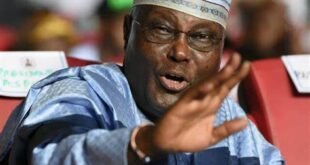
APC suspected the former Gov Ogun, Gbenga Daniel, because of the alleged anti-party activities

The Ogun State Chapter from the Congress of All Progressive (APC) has suspended the former Governor of the State and served the Senator representing Ogun East, Gbenga Daniel, along with one of his political colleagues, Kunle Folangin, for alleged anti-party activities.

The suspension was confirmed in a statement issued on Tuesday by the Director of the Party Publicity, Nuberu Olumi, after the meeting of the State Work Committee (SWC) led by the Head of State, Head of Yemi Sanusi.

According to the statement, Daniel and Folakin, both APC members from Bangsal 4 and Bangsal 6 in the Sagamu Regional Government, each, were subject to sanctions after SWC reviewed the separate disciplinary committee findings established at the environmental level to investigate allegations of serious violations and anti-party activities.

The party noted that the disciplinary panel had invited a duo to perform and presented their defense or asked for relief but they failed to respect the invitation or submit any written response.

“Given the absence of their intentional and unwillingness, the committees are negotiated as scheduled, heard from the available witnesses, considered as evidence of documentary, and negotiating on the accusation,” the statement said.

The committee further accused that Daniel and Folakin tried to disrupt the disciplinary process by harassing party members and pressing them to attract the petition proposed to them.

As a result, the Environmental Committee decided to suspend the two members indefinitely and continue their recommendations to the State Work Committee, which ratified the suspension.

Olufemi said the decision underlined the party’s commitment to the discipline and compliance with the constitution.

“The suspension is based on the failure of members to cooperate with their investigation and efforts to pressure party members to withdraw the petition against them,” the statement added.


Check Also

Freedom of Information Act and The Limits of Press Freedom, By Mack Ogbamosa – THISAGE

        Introduction  A free, independent, and vibrant press is one of the strongest pillars of any democratic society. It is against this background that most democratic countries  make constitutional provisions for a free press . Others even go further to enact specific laws to make affairs of governments freely available to the public. Currently, there are more than  130 countries in the world that have free press laws. They include Sweden, United States, France, South Africa and Nigeria. Nigeria did not only make  constitutional provisions in Sections 22 and 39(1) of the 1999 Constitution ( as amended) but also went ahead to enact the Freedom of Information Act  in 2011. Section 22 of the 1999  Constitution states: “ “The press, radio, television and other agencies of the mass media  shall at all times be free to uphold the fundamental objectives contained in this chapter( ie Chapter II) and uphold the responsibility and accountability of the Government to the people”  Section 39(1)  of same Constitution states : “Every person shall be entitled to freedom of expression, including freedom to hold opinions and to receive and impart ideas and information without interference” ..  To complement these constitutional provisions, Section 1 (1) of the Freedom of Information Act (FOIA) states “Notwithstanding anything contained in any other Act, law or regulation, the right of any person to access or request information, whether or not contained in any written form, which is in the custody or possession of any public official, agency or institution howsoever described, is established.” while Section  2(2), states that: “A public institution shall ensure the proper organization and maintenance of all information in its custody in a manner that facilitates public access to such information”  Primary Purpose of FOIA  According to the Act, its primary purpose is to make information about public records freely available to every Nigerian in the public interest. …

Leave a Reply

Your email address will not be published. Required fields are marked *