JamzNG Latest News, Gist, Entertainment in Nigeria
“We had to watch two babies die before our eyes,” said Dr. Hasan Babikir, describes the death of premature triplets that he was unable to treat due to a lack of intensive care beds.
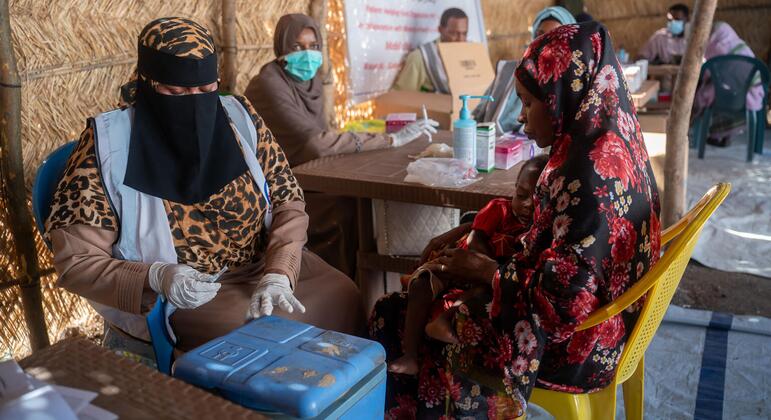
As tens of thousands of people, many in desperate need of health services, flee the violence engulfing South Kordofan, health workers at El-Obeid Maternity Hospital in neighboring North Kordofan state describe dire conditions.
Lack
“There is a severe shortage of surgical and vaginal delivery equipment, as well as essentials such as antibiotics, surgical sutures, and gloves,” said Dr. Babikir to the United Nations sexual and reproductive health agency. UNFPA.
“This forces us to buy them from the market at very high prices.”
This maternity hospital is the only referral hospital in western Sudan and currently serves more than 230,000 refugees, most of them women and girls facing sexual violence, hunger and almost no health services.
The city of El-Obeid has also been a frequent target of drone attacks, with several attacks on health facilities killing and injuring health workers and patients.
The growing maternal health crisis
“Previously this hospital did not have a neonatal intensive care unit,” said Dr. Babikir. “In early 2026, we opened one with only four beds, which were always occupied, and we needed to increase capacity immediately.”
These increasingly difficult conditions are increasing maternal mortality rates, he warned. “We are losing patients due to long waiting times. Although there are two emergency operating rooms, they are currently unusable.”
“In many cases, emergency patients arrive when all the rooms are occupied, sometimes resulting in the loss of the mother or fetus.”
The lives of newborns are also in danger, “we don’t have tables to put newborns on, and we also don’t have adequate infection control equipment in the delivery room,” said midwife Laila Sarfo.
To address these challenges, UNFPA has installed solar power systems to help reduce power outages at maternity hospitals, rehabilitated delivery rooms, and trained and deployed skilled health workers to assist with emergency obstetric and neonatal services.
Health workers are under pressure
“The salary we receive is not enough to cover the basic transportation or food we need during the shift,” explained Insaf, a senior midwife.
“Often, women come without the means to purchase essential maternity supplies, and we have to pay for these items ourselves,” Insaf added.
But she and her colleagues are determined to continue providing services, “some midwives work 24-hour shifts to meet the high demand,” Insaf said.
‘Women exhausted by war’
Nearly three years of civil war have left more than 33 million people in Sudan in dire need of humanitarian assistance.
The conflict is characterized by horrific sexual violence, kidnapping and child marriage, with survivors struggling to access safe haven or health services.
In the crowded Al Moaskar Al Mwahhad refugee camp in South Kordofan, UNFPA operates a mobile health clinic and safe space for women and girls who are survivors of or at risk of abuse.
“Women are exhausted from the war,” said Salma, 50, who has been sheltering in the camp for eight months.
“Many crimes have been committed against women, including rape. Many women have become widows. In this camp, the number of women still with their husbands can be counted on one hand,” he added.
For girls, this crisis impacts almost every aspect of their lives and futures. “We traveled on donkeys for three days, and the trucks brought us here,” 16-year-old Ismailia told UNFPA.
“I hope to return to my city and school. Let us rebuild our homes and return.”
To continue supporting women and girls in 2026, UNFPA is pressing for $129 million in funding, and only $33 million has been committed so far.