JamzNG Latest News, Gist, Entertainment in Nigeria
2027: AU tasks INEC with credible elections as INEC ensures to replicate Osun model
By Raphael Ekpang
Abuja (Core Reporters) – The African Union (AU) has tasked the Independent National Electoral Commission (INEC) to ensure credible, transparent and inclusive elections for the 2027 Nigerian general elections, as the Commission ensured that lessons learned from the recently concluded Osun governorship elections would be replicated at the national level.
The AU made the request as its seven-day pre-election and needs assessment mission began an assessment of Nigeria’s preparedness for the 2027 elections.

The mission, led by former Ethiopian Deputy Prime Minister and Minister of Foreign Affairs, Demeke Mekonen Hassen, will be in Nigeria from September 13 to 19, 2026, to assess the country’s electoral preparedness, identify potential gaps and recommend measures to address them ahead of the elections.
The assessment comes as INEC prepares to conduct one of the largest electoral operations in the country, involving a projected electorate of nearly 100 million voters, 176,846 polling units and more than 1.4 million ad hoc staff.
The presidential and National Assembly elections are scheduled for January 16, 2027, while the governorship and state House of Assembly elections will be held on February 6, 2027.
Speaking during the mission, Hassen said the AU’s assessment will cover the entire electoral process, from the pre-election period to voting and results management.
He stressed that the quality of preparations before election day will be crucial to the credibility and acceptance of the final results.
The AU envoy challenged INEC to demonstrate readiness in critical areas, including the credibility of the electoral register, deployment of electoral technology, logistics, financing, inclusion, transparency, security coordination and the management and publication of election results.
The mission also seeks clarification on pending legal and administrative issues and measures taken to safeguard the independence of the electoral commission while ensuring effective security coordination during the elections.
One of the main concerns for the AU is the voter register, which is approaching the 100 million mark.
The delegation wants guarantees that the register will be finalised, credible and available for scrutiny by political parties, civil society organizations and other stakeholders before the elections.
The issue has assumed greater importance with INEC’s continued collaboration with the National Identity Management Commission (NIMC) on the integration of National Identification Numbers into the continuous voter registration process.
The initiative is expected to strengthen voter verification, auditing and cleaning of records and reduce vulnerabilities that could undermine confidence in voter rolls.
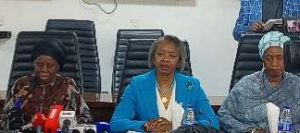
Responding to the AU mission, INEC, represented by National Commissioner Prof. Rhoda Gumus on behalf of the President, Professor Joash Amupitan, said the recent off-cycle elections provided the Commission with an opportunity to test its systems and strengthen preparations for 2027.
Gumus specifically cited the August 15, 2026 Osun governorship election as a major operational benchmark, noting that over 94% of polling units opened early while the Bimodal Voter Accreditation System (BVAS) functioned optimally.
He said INEC also implemented the IRF portal to resolve problems encountered during the elections and recorded improved coordination between security agencies through the Inter-Agency Advisory Committee on Electoral Security Issues.
According to her, the elections conducted in Anambra, Federal Capital Territory, Ekiti and other locations enabled the Commission to test its processes, identify weaknesses and improve its procedures under the Electoral Act 2026.
He assured the AU delegation that INEC will draw from these experiences, particularly the Osun model, to strengthen its preparations for the 2027 general elections.
The Commission, however, recognized the enormous operational needs of the 2027 elections, in particular the recruitment, training and deployment of more than 1.4 million ad hoc personnel.
It therefore sought technical support from the AU in areas such as digital training, e-learning, simulation exercises and standardized ICT training for the temporary workforce that will participate in the elections.
INEC also requested assistance in addressing election disinformation and information integrity challenges, particularly the growing threat of AI-generated deepfakes.
The Commission wants support for rapid response strategic communication and mechanisms that can detect and counter manipulated information before false narratives undermine public trust in the electoral process.
It also sought AU support for capacity building and operational workshops for its Election Monitoring and Support Centre.
Regarding inclusion, INEC called for increased technical assistance on gender mainstreaming and measures to improve the participation of persons with disabilities, internally displaced persons, women, youth and other under-represented groups.
The Commission also said it will strengthen monitoring of political parties’ compliance with gender-related requirements.
In addition to technology and personnel, the AU mission is examining INEC’s funding and logistics ahead of the polls.
Hassen asked whether the Commission will receive adequate and timely funding to execute the election program and how it intends to address logistical challenges that could affect the deployment of sensitive election personnel and material.
Security coordination also featured prominently in the assessment, with the AU seeking assurances that security measures protected voters and election officials while preserving INEC’s institutional independence.
The mission is also examining how results will be managed, verified and published under the new legal framework, with an emphasis on integrity, transparency and timeliness.
Hassen described the AU intervention as a support and prevention exercise aimed at identifying election risks early enough to allow corrective action before election day.
He stressed that credible elections require a level playing field, broad participation, transparency and results that gain acceptance among political competitors and the general population.
INEC assured the delegation of its full cooperation, promising access to relevant operational data, directors and technical teams throughout the assessment.
The Commission also reaffirmed its independence, neutrality and commitment to conducting the 2027 elections in compliance with the law.
With nearly 100 million voters, 176,846 polling units and more than 1.4 million ad hoc personnel potentially involved, the AU mission represents an initial assessment of the mechanism that will determine whether Nigeria will be able to translate its recent electoral reforms and technological investments into credible nationwide elections.
Its September 13-19 assessment is therefore expected to provide an important external perspective on the risks facing INEC before Nigerians return to the polls in January and February 2027.